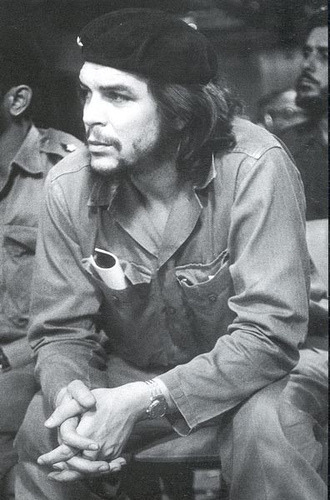
Just another story of a man who started his life as a freedom fighter and gradually turned into a dictator.
His reign can be summarized in two key numbers: 21 years in office & 99% success rate in elections. He ruled his country with an iron fist, and claimed achieving a sustainable economic development pace for Ethiopia. Not only did he introduce the ethnic federalism model, but he also maintained a relatively stablized country. However, rebel movements never disappeared from the different regions of the country.
A strong friend of the United States, A frequent stubborn foe of Egypt, he played an influential role in the Horn of Africa Region.
Here is a selection of articles that highlight different aspects of both his life & death.
A short biography
Meles Zenawi leaves behind richer, less tolerant Ethiopia
http://www.dnaindia.com/world/report_meles-zenawi-leaves-behind-richer-less-tolerant-ethiopia_1730717
Ethiopian strongman Meles Zenawi led one of Africa's most populous
nations for more than two decades, steering it along the path of
economic growth while clamping down on dissent.
A towering figure in Africa's political landscape, Prime Minister
Meles died late on Monday aged 57 at an overseas hospital where he had
been recovering from an undisclosed illness for two months, state-run
television said on Tuesday. He was born Legesse Zenawi in 1955 in Adwa,
the site of Ethiopia's most celebrated victory against colonial invaders
Italy in 1896.
He took the nom-de-guerre Meles as a tribute to
Meles Tekle, a young activist killed by the government. But the time
Colonel Mengistu Haile Mariam, the head of the Communist junta that
ruled the country from 1974 to 1987, launched his Red Terror purge in
1977, Meles had ditched his medical studies and was fighting in the
bush.
He was a rising figure in the Tigrayan People's Liberation
Front (TPLF) that he helped found as a 20-year-old, which then aligned
with other groups to form the Ethiopian People's Revolutionary
Democratic Front (EPRDF) coalition. The EPRDF entered Addis Ababa in
1991, much to the amazement of the locals.
Meles led the country
first as transitional president and later, after poorly contested
elections in 1995, as prime minister of the renamed Federal Democratic
Republic of Ethiopia, winning renewed mandates in 2005 and 2010 in polls
that rights groups said were rife with violations.
The West
welcomed Africa's youngest leader enthusiastically, grateful for his
overthrow of a communist regime and impressed with his urbane manner. It
also came to value him for the central role his country - home to one
of Africa's biggest armies - played in regional and continental
security.
Former US President Bill Clinton said Meles was part of a
"new generation" of African leaders and he was invited to join then
British Prime Minister Tony Blair's crusading Commission for Africa. At
home, the EPRDF set about trying to pull Ethiopia out of poverty,
pledging to drive growth and improve the lives of peasant farmers.
It
introduced a system of ethnic federalism, opening regional parliaments
and giving Ethiopia's main ethnic groups the chance to govern the areas
in which they dominate. Under Meles' leadership, the Horn of Africa
country also embarked on a mass of energy and infrastructure projects,
while hospitals and schools throughout the country have surged ten-fold.
Officials expect economic growth of 11% for the 2011/2012 fiscal year
that ended in June, thanks to rising agricultural output, the seventh
consecutive fiscal year of growth. However, inflation remains stubbornly
high, hitting 20 percent in July.
Meles forged close business
ties with India and Turkey as well as Asian powerhouse China, which
footed the $200 million bill for the sprawling, new headquarters of the
African Union. The former rebel has made key contributions to regional
security, twice sending troops into Somalia to battle Islamist rebels,
while Ethiopian peacekeepers have been deployed in several African
hotspots such as Sudan's Darfur and Abyei regions.
But Meles'
record of solid economic growth, poverty reduction and closer ties to
the West has been coloured by a firm crackdown on dissent. Following the
disputed polls of 2005, Ethiopia rounded up almost the entire
leadership of an opposition group that won an unprecedented number of
seats in parliament and jailed them for life for treason. In 2009
followed an anti-terror law, under which more than one hundred
opposition figures have been arrested.
The government insists it
is tackling rebel groups that have links with al Qaeda and arch-foe
Eritrea. More than 10 journalists have also been charged under the law,
according to the Committee to Protest Journalists.
The group says
Ethiopia is close to replacing Eritrea as the African country with the
highest number of journalists behind bars. Two Swedish journalists were
jailed for 11 years on charges of entering the country illegally and
aiding a rebel group. Navi Pillay, the UN High Commissioner of Human
Rights, has slammed the verdicts, saying journalists, human rights
defenders and critics were facing a "climate of intimidation".
Meles
responded with trademark defiance, labelling the duo as "messengers
boys of terror groups". During the Group of Eight summit in Chicago last
May, Meles was interrupted soon after he started to speak: "You are a
dictator! You have committed crimes against humanity!" a member of the
audience said. The bald, bespectacled strongman, visibly shocked at
first, tried to continue talking before staring down, stony-faced.
Future Impact:
http://www.bbc.co.uk/news/world-africa-19328356
Ethiopian Prime Minister Meles Zenawi has died aged 57 in a hospital abroad, the government says.
It did not give details but an EU spokesman later told journalists Mr Meles had died in Brussels, Belgium.
Mr Meles had not been seen in public for weeks and
speculation about his health mounted when he missed a summit in Addis
Ababa last month.
His deputy, Hailemariam Desalegn, becomes prime minister until elections due in 2015, state media reported.
Mr Meles took power as the leader of rebels that ousted communist leader Mengistu Haile Mariam in 1991.
He is credited with spearheading economic development in
Ethiopia - but, critics charge, at the price of respect for human
rights.
He was austere and hardworking, with a
discipline forged from years spent in the guerrilla movement - and
almost never smiled, says Elizabeth Blunt, the BBC's former
correspondent in Addis Ababa.
Liberian President Ellen Johnson Sirleaf said Mr Meles was an
"intellectual leader for the continent", and UK Prime Minister David
Cameron called him "an inspirational spokesman for Africa" who had
lifted millions out of poverty.
But a spokesman for al-Shabab Islamist militants in Somalia -
where Mr Meles twice sent troops to fight - told Reuters news agency
they were "very glad" of his death, saying Ethiopia was "sure to
collapse".
Ethiopia's Council of Ministers announced "with great sadness
the untimely death of Prime Minister Meles Zenawi" in a statement,
state TV reported.
The statement said Mr Meles had been receiving medical
treatment abroad for the past two months and that his health was
improving. But he developed a "sudden infection" on Sunday and despite
emergency treatment, died at 23:40 on Monday.
European Commission spokesman Olivier Bailly later told a
regular news briefing that Mr Meles "passed away during the night here
in Brussels".
Over some eight weeks that Mr
Meles had been absent from the public eye, concerns about his health had
grown, and in July he was said to have been admitted to hospital.
Reports suggested he was in hospital in the Belgian capital suffering
a stomach complaint but these were never confirmed by the Ethiopian
authorities.
Three weeks ago, government spokesman Bereket Simon dismissed
reports Mr Meles was critically ill, and declined to give any details
about Mr Meles's whereabouts.
A period of mourning had been declared until the funeral, for which no date has been announced.
State television said his body would be flown to Addis Ababa later on Tuesday.
Instability concerns
Mr Hailemariam, who is also Ethiopia's foreign minister, will
become acting prime minister, government spokesman Bereket Simon told
reporters.
He said an election was not necessary as the "constructional
procedure" allowed for Mr Hailemariam to "kick off as a full-fledged
prime minister".
In an earlier news conference, Mr Bereket said Mr Meles had
struggled with illness for a year, but he had continued to work
regardless.
Concerns have been expressed - including by Kenyan Prime
Minister Raila Odinga - that Mr Meles's death could lead to a power
vacuum and dangerous instability in Ethiopia.
But Mr Bereket insisted the country was stable and that "everything will continue as charted" by the late prime minister.
This theme was echoed by state television, which stated that
"even if Ethiopia has been badly affected for missing its great leader,
Prime Minister Meles Zenawi initiated fundamental policies and
strategies which will be further strengthened".
Ethiopia's economy has grown rapidly in recent years, despite
the secession of Eritrea and the subsequent war between the two
countries.
Under Mr Meles, Ethiopia became a staunch US
ally, receiving hundreds of millions of dollars in aid over the years,
and hosting the US military drones that patrol East Africa.
He won accolades from the West for sending troops to battle Islamist militants in Somalia, says the BBC's James Copnall.
But concern had been growing about the lack of democracy and human rights in Ethiopia, our correspondent in the region says.
At least 200 people died in the violence that followed the
2005 elections, and many journalists and politicians have been locked
up.
One rights critic, Commander Assefa Seifu, called Mr Meles "a devil incarnate".
"He was always talking about democracy, civil rights,
adherence to [the] constitution and the like. But it was only a lip
service," he told the BBC.
Analysis
James Copnall
BBC News
Meles Zenawi's death will have repercussions far beyond his country. He was undeniably central to everything in Ethiopia - the
good and the bad, the economic growth and development, as well as the
repressive climate denounced by opposition politicians and journalists. But he also played a key role in the region.
Since Mr Meles took power in 1991, Ethiopia has seen Eritrea
secede, then fought a war with the new country. It also twice sent
troops into Somalia to fight militants linked to al-Qaeda.
Ethiopia also has peacekeepers in Abyei, the border region claimed by both Sudan and South Sudan.
Political leaders in all these countries will be carrying out rapid calculations about what Mr Meles' death means for them.
The West has also lost a key ally in the Horn of Africa. Now the attention will switch to whether Mr Meles built a strong enough system to outlast him. He was austere and hardworking,
with a discipline forged from years spent in the guerrilla movement -
and almost never smiled, says Elizabeth Blunt, the BBC's former
correspondent in Addis Ababa. Liberian President Ellen Johnson Sirleaf said Mr Meles was an
"intellectual leader for the continent", and UK Prime Minister David
Cameron called him "an inspirational spokesman for Africa" who had
lifted millions out of poverty.
But a spokesman for al-Shabab Islamist militants in Somalia -
where Mr Meles twice sent troops to fight - told Reuters news agency
they were "very glad" of his death, saying Ethiopia was "sure to
collapse".
Ethiopia's Council of Ministers announced "with great sadness
the untimely death of Prime Minister Meles Zenawi" in a statement,
state TV reported.
The statement said Mr Meles had been receiving medical
treatment abroad for the past two months and that his health was
improving. But he developed a "sudden infection" on Sunday and despite
emergency treatment, died at 23:40 on Monday.
European Commission spokesman Olivier Bailly later told a
regular news briefing that Mr Meles "passed away during the night here
in Brussels".
How Egyptians see him:
Here is an interesting look on how Egyptian press saw his life. The title of the following article is :
Meles Zenawi....US's cop in the African Horn and the enemy of Egypt's historic share in the Nile
ميليس زيناوى.. الشرطي الأمريكي في القرن الإفريقي وحامل لواء العداوة لحصة مصر من مياه النيل
بعد فترة من التعتيم والسرية الشديدة فرضتها السلطات الإثيوبية دامت
أكثر من شهرين بشأن حقيقة مرض رئيس الوزراء ميليس زيناوي، أعلن اليوم
الثلاثاء رسميًا عن وفاته في بلجيكا عن عمر ناهز 57 عامًا.
ارتبط اسم زيناوي مع الشارع المصري للمرة الأولى عام 1994 بعد محاولة
الاغتيال الفاشلة التى تعرض لها الرئيس السابق حسني مبارك على الأراضى
الإثيوبية، وزاد هذا الارتباط في السنوات الأخيرة بسبب إصراره على منازعة
مصر في حصتها التاريخية بمياه النيل، وعدم اعترافه باتفاقية نهر النيل
الموقعة عام 1959 التى تحدد حصص كل دولة من دول حوض النيل في مياه النهر.
اتخذ زيناوى موقفًا معاديًا لمصر خلال السنوات الثلاث الأخيرة، واتهمها
بمحاولة زعزعة أمن واستقرار بلاده عبر بتمويل جماعات متمردة مسلحة تسعى
للاستيلاء على السلطة، في موقف فُسِرَ وقتها بأنه محاولة للخروج من أزماته
الداخلية ومحاصرة المعارضة له ومطالبته باصلاحات سياسية واقتصادية في
البلاد.
استطاع زيناوي أن يؤثر على دول حوض النيل، وقام بإقناع بوروندي وأوغندا
وكينيا تنزانيا ورواندا، بتوقيع الاتفاقية الإطارية الجديدة لتقاسم مياه
النيل عام 2011، الأمر الذي يهدد أمن مصر المائي بشكل كبير.
وفي سعيه لأن يثبت دعائم حكمه في إثيوبيا؛ انفتح زيناوى على القوى
الكبرى وخاصة الولايات المتحدة الأمريكية، بهدف تحويل بلاده إلى قوى
إقليمية في المنطقة مستغلًا في ذلك الحرب على الإرهاب والجماعات الجهادية
المسلحة، وسوقَ نفسه باعتباره الشرطي الأمريكي في منطقة القرن الأفريقي،
مستغلًا حالة السيولة الشديدة التي تشهدها جارته الصومال، والانفلات الأمني
الذي تعيشه بعد أن تحولت إلى قبلة لتنظيم القاعدة، والتنظيمات الجهادية.
قام زيناوي بتحريك جيشه داخل الأراضي الصومالية للمرة الأولى عام 2006
بهدف القضاء على حركة الشباب المتشددة، فيما اعتبر وقتها أكبر خطوة وثقت
علاقات إثيوبيا بالغرب منذ الإطاحة بمنجستو هيلا ميريم.
وفي عام 2011 قامت القوات الإثيوبية بدخول الصومال للمرة الثانية بدعم
أمريكي أوروبي، وأكد زيناوي أن بلاده تعتزم الإبقاء على قواتها في
الصومال إلى حين التصديق على دستور جديد للبلاد، و يصبح جيشها قادرًا على
مواجهة خطر المتشددين.
دخل زيناوى في علاقات وثيقة مع إسرائيل، وفتح الباب على مصراعيه
للأجهزة الأمنية الإسرائيلية خاصة الموساد، وتحولت أديس أبابا إلى واحدة من
أقوى قواعد الموساد في إفريقيا ومعبر تل أبيب القوى للتغلل في غرب ووسط
القارة الإفريقية، تحت ستار تصدير تكنولوجيا الري والزراعة التى تتفوق فيها
الدولة العبرية إلى القارة السمراء.
وبالرغم من الانتقادات الشديدة التى وجهت إلى زيناوي، يُحسب له القفزة
الكبيرة التى شهدها الاقتصاد الإثيوبي خلال سنوات حكمه، وتحقيقه معدلات نمو
تخطت الستة فى المائة خلال السنوات الخمس الأخيرة، وكان أكثر المجالات
نموًا في البلاد هو الزراعة، التى أولاها اهتماما شديدًا نظرًا للامكانيات
الإثيوبية الكبيرة غير المستغله فى الأراضى والمياه.
جدير بالذكر أن زيناوي ولد عام 1954 في إقليم تكراي بشمال إثيوپيا،
ودرس الطب في جامعة أديس أبابا وكانت تعرف وقتها باسم جامعة هيلا سلاسي
لمدة سنتين، ثم ترك دراسة الطب عام 1975، وانضم إلى جبهة تحرير شعب تكراي،
وعندما كان عضوا في الجبهة، أسس الاتحاد الماركسي-اللنيني لتكراي.
تولى زيناوى حكم إثيوبيا عام 1991م، بعد أن أطاح المجلس العسكري الذي
كان عضوًا بارزًا فيه بالديكتاتور السابق منجستو هيلا مريم، واستمر في
منصبه حتى عام 1995 ، ثم تولى رئاسة الوزراء منذ ذلك الحين بعد أن أجرى
اصلاحات سياسية وتعديلات غيرت نظام الحكم في البلاد من رئاسي إلى برلماني،
بهدف عدم صناعة ديكتاتور جديد، بيد أن هذا الهدف لم يتحقق بعد أن أحكم
زيناوي قبضته على إثيوبيا، واستمر على رأس النظام السياسي أكثر من 20
عامًا، كنتيجه لإصراره على وضع مادة في الدستور تنص على تحصين منصب رئيس
الوزراء من الإقالة.
حصل زيناوي على ماجستير في إدارة الأعمال من الجامعة المفتوحة في
المملكة المتحدة عام 1995، ثم ماجستير العلوم في الاقتصاد من جامعة إراسموس
في هولندا عام 2004.
في عام 1998 تعرض زيناوى إلى أقوى اختبار في حياته السياسية عندما قامت
إريتريا بغزو بلاده، مما أدى لاندلاع حرب أسفرت عن مقتل عشرات الآلاف من
الشعبين.
أظهر زيناوي خلال الحرب مع إثيوبيا قدرة سياسية وعسكرية بارعة استطاع
خلالها أن يوحد الشعب الإثيوبي خلف قواته، وتمكن من دحر القوات الإريترية
بل وسيطر على على حوالي ثلثي الأراضي الإرترية، وبالرغم من ذلك قام بتوقيع
معاهدة سلام مثيرة للجدل مع إريتريا تضمن لها امتيازات عديدة.
أثار هذا القرار غضب الكثير من الإثيوپيين وأدى إلى حالة انقسام داخل
الحزب الحاكم، بسبب قناعة كثيرين أن زيناوي يرغب في الحفاظ على الرئيس
الإريتري أسياسي أفورقي.
وفي عام 2011 تغير موقف زيناوي من أفورقي وأعلنت إثيوبيا صراحة دعمها
لجماعات إريترية متمردة تسعى للإطاحة بالرئيس أفورقي. وفي مارس الماضي أقرت
إثيوبيا للمرة الأولى أن قواتها قامت بهجمات على المتمردين داخل إريتريا،
وكانت هذه أول مرة تعترف فيها أديس أبابا بوقوع مثل تلك الهجمات منذ انتهاء
الحرب الحدودية بين البلدين
http://gate.ahram.org.eg/NewsContent/13/71/242647/%D8%A3%D8%AE%D8%A8%D8%A7%D8%B1/%D8%B9%D8%B1%D8%A8-%D9%88%D8%B9%D8%A7%D9%84%D9%85/%D9%85%D9%8A%D9%84%D9%8A%D8%B3-%D8%B2%D9%8A%D9%86%D8%A7%D9%88%D9%89-%D8%A7%D9%84%D8%B4%D8%B1%D8%B7%D9%8A-%D8%A7%D9%84%D8%A3%D9%85%D8%B1%D9%8A%D9%83%D9%8A-%D9%81%D9%8A-%D8%A7%D9%84%D9%82%D8%B1%D9%86-%D8%A7%D9%84%D8%A5%D9%81%D8%B1%D9%8A%D9%82%D9%8A-%D9%88%D8%AD%D8%A7.aspx .