Showing posts with label insurgents. Show all posts
Showing posts with label insurgents. Show all posts
Saturday, September 8, 2012


Monday, August 20, 2012
Targeting Tribal Leaders: A New Militant Tactic in Sinai
By Ashley Lindsey
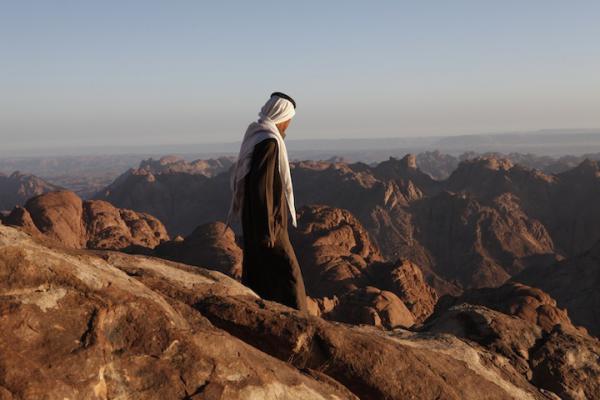
Militants killed Egyptian tribal leader Khalaf al-Menahy and his son Aug. 13 as the two were returning from a conference in east Sinai organized and attended by tribal leaders to denounce militancy, according to Sinai security forces. The senior al-Menahy was a prominent proponent of bolstering the Sinai Peninsula's representation in Egypt's parliament and of improving security in the region. He also was a prominent sheikh in the Sawarka tribe, said to be the largest in Sinai. Following his burial Aug. 13, the tribe vowed to seek vengeance.
This is the first reported case of militants attacking tribal leaders in Sinai. It comes soon after an attack on Egyptian security forces Aug. 5 and an attack on military checkpoints in northern Sinai on Aug. 8.
Although the militant tactic of targeting tribal leaders is new to Sinai, the tactic has been common in conflict zones in the Middle East and South Asia, such as in Yemen, Iraq and the Afghanistan-Pakistan border region. Though it can offer many benefits to these militants -- including weakening the targeted tribe and possibly leading to its co-option -- these kinds of attacks tend to only succeed in zones with little government control and against tribes that cannot effectively retaliate. Examining similar instances of this tactic thus provides a helpful tool for assessing the consequences of attacks against tribal elements in the Sinai Peninsula.
A Widespread Militant Tactic
Yemen
Al Qaeda in the Arabian Peninsula has operated openly in Yemen's tribal-dominated southern and eastern provinces for years. It has sought to expand its presence and operations by winning over local tribes using tactics such as strategic marriages.Lately, it appears to have begun a shift from wooing tribal leaders to intimidating them. Al Qaeda in the Arabian Peninsula recently failed in an attempt to assassinate tribal leader Majed al-Dhahab in the city of Radda in Bayda province. An important tribal leader, al-Dhahab participated in the offensive to drive al Qaeda -- and his own cousin, a local al Qaeda leader -- from the region after the militant group seized control of Radda in January. Al-Dhahab's son received a package that unbeknownst to him contained a bomb, which he was instructed to give to his father. However, the package exploded in his arms Aug. 4 before he could deliver it. Immediately after his son's death, al-Dhahab received a call warning him that the group would kill anyone who opposed it.
The group followed up with another attack on tribal elements Aug. 5. A suicide bomber detonated an explosive device at a wake in Jaar, killing 45 people. The dead included several tribal fighters who had participated in the June Yemeni government offensive against al Qaeda in the Arabian Peninsula, and the wounded included a tribal leader.
The region's tribes have not publicly vowed to retaliate against the militant group. If they are capable of doing so, they probably will respond to al Qaeda in the Arabian Peninsula's attacks. But the tribes could be too weak to mount an effective response, especially in the wake of attacks on their leadership structure. This could cause some tribesmen to abandon the fight, allowing militants to try to resume activity in the region's towns should they wish.
Iraq and the Afghanistan-Pakistan Border
Although new to Yemen, militants frequently used the tactic of attacking tribal leaders during the U.S. involvement in Iraq and Afghanistan. The tactic is still frequently used, especially in the Afghanistan-Pakistan border region. In one significant instance, in 2007 al Qaeda in Iraq assassinated high-profile Sunni tribal Sheikh Abdul-Sattar Abu Risha, who led the Anbar Awakening Council. A U.S. ally, Abu Risha had formed the council, uniting dozens of Sunni tribes in the province against al Qaeda in Iraq. His killing backfired on the militant group, generating a massive outpouring of sympathy for Abu Risha and prompting the tribes in the province to join in vowing to fight al Qaeda in Iraq to the death.In southern Afghanistan and northwestern Pakistan, the Afghan Taliban are deeply embedded into the tribal system. They have effectively used the tactic of assassinating tribal leaders to eliminate obstacles to their operations and evolution. To this end, they regularly employ suicide operations, armed assaults and roadside bombs against anti-Taliban militias known as lashkars and against tribal leaders in northwestern Pakistan.
One area particularly affected by such attacks is Bajaur, a Pakistani agency that borders Afghanistan's Kunar province. After numerous attacks on tribal leaders and members of peace committees in Bajaur, the Mamond tribe announced July 25 that the tribal leaders had formed a lashkar to prevent cross-border attacks. Hundreds of elders, leaders and religious figures of various subtribes and peace committees pledged their support for this militia. As with the killing of Abu Risha, the Afghan Taliban attacks on tribesmen and leadership in the region spurred a fiercely united response across numerous tribes, with the new militia even expressing a willingness to enter Afghanistan to attack Taliban leaders.
Upsides and Downsides of a Militant Tactic
Militant groups attack tribal leaders to increase their influence and area of operations. From the militants' perspective, removing a tribal leader ideally will weaken the targeted tribe. This could end the tribes' resistance and even lead to the its being co-opted by the militant group due to a leadership vacuum following the militant attack. The weakening of the tribe could leave the group no choice but to allow the militant group to operate unchallenged in its territory. Even though assassinated tribal leaders are replaced and the leadership structure remains intact, tribal leaders in the area could be persuaded to adopt a more accommodating stance on the presence of militants.Success for a militant group in the long term happens under two conditions. First, the militants must be acting in an area with a tribal patronage network and limited government oversight. Without such a network, attacks on tribal leaders in efforts to co-opt and intimidate that tribe would not provide any significant gain. In Yemen, for example, the patronage and tribal network are very strong and in most cases enjoy greater legitimacy and power than the government. Attacks against tribal chiefs there are accordingly tantamount to attacks on the local government. On the one hand, that means tribal networks can band together and shun foreign militant elements as one community. On the other hand, if al Qaeda in the Arabian Peninsula is able to coerce a tribe into aligning with it, the militant group will then enjoy access to that tribes' resources, will gain the ability to plan and launch attacks in that area, and could even gain better relations with neighboring tribes.
Second, the group must be militarily capable of overwhelming the targeted tribe and its allies or at least of gaining the upper hand. As can be seen from the Iraq example, killing Abu Risha backfired because his tribe was large, committed and militarily strong, and it had the support of several allied Sunni tribes that belonged to his Anbar Awakening Council.
The tactic of targeting a tribal leader thus comes with certain risks. When the aforementioned two conditions are not met, a militant group exposes itself to great danger when it targets tribal leaders.
Consequences of the Sinai Assassination
The Sinai Peninsula meets the requirement of limited government control and strong tribal networks. The question then becomes whether the Sinai tribes can muster a strong defense against the militants. In the coming weeks, it will be important to look for signs of the retaliation pledged by al-Menahy's Sawarka tribe and others allied with it. This retaliation could come in the form of attacks against the militants passing through Sawarka and its allied tribes' territory.Tribal retaliation could also come in the less aggressive, yet still effective, form of supplying increased logistical support and intelligence to the Egyptian government. Increased weapons seizures and the arrest of key leaders suggest that tribal sources on the ground are providing intelligence to Cairo. A targeted campaign against the militants already has begun, with Egyptian planes bombing the mountains of El Arish on Aug. 15. The intelligence for these attacks likely came from local tribes.
The success of tribal and Egyptian security efforts against the militants will determine whether the militants miscalculated their position in Sinai when they attacked a key tribal leader. The resilience of militants in Sinai also will help determine whether they can continue to stage attacks against Egypt and Israel.
Thursday, August 9, 2012
Spotlight: EGIS / EGID

In the aftermath of Rafah border massacre, I thought I would give it a deeper look on our Intelligence Service. I mainly wanted to know if they had done their job or not... But then the question I had to answer at the first place: Whats their job??
So I started reading the 90 articles 1971's Law 100 which defines and explains its role, status and functions.
Yet, what even seemed more interesting was their image and how they have tried to forge it recently.
Although known for being extremely secretive, they took an unprecedented PR step recentely (a month ago) by releasing a 40 minutes documentary about its history and giving a glimpse on its operations.
The well done interesting documentary certainly leaves a positive impression on any normal Egyptian citizen. Yet, the last incidents has affected the image they have been trying to build as one of the very few last standing effective bodies of the Egyptian State. The declarations of General Murad Mwafi, the ex spy chief who retired (sacked in a chic way), about having informed the president previously about the attack isnt enough to discharge the agency from the responsibility.
One book can help giving a look on its history
A History of the Egyptian Intelligence Service: A History of the Mukhabarat, 1910-2009 by Owen L. Sirrs (London: Routledge, 2010), 271 pp., endnotes, bibliography, index.
Books on Arab intelligence services are in short supply. Yaacov Caroz, a former Mossad officer, published the most recent one, The Arab Secret Services, in 1978.7 Owen Sirrs, a former senior intelligence officer and Arab specialist at DIA and now with the University of Montana has produced a fine, well-documented volume on the Egyptian intelligence service—al-mukhabarat in Arabic—that adds significantly to public knowledge. While the focus of his book is on the Egyptian service—“the oldest, largest and most effective in the Arab world”—Sirrs discusses those in other Middle Eastern countries as well.
The book is divided into four parts and begins in 1910. The first part deals with the British-sponsored service (under the Egyptian monarchy) designed to counter threats from nationalist and Islamic parties and, later, the Axis powers in WW II. It concludes with the failure of the service to prevent the coup in July 1952 that brought Nasser to power. The second part is concerned with the Nasser period (1952-70), when the domestic security service, or GID (General Investigations Directorate), the EGIS (Egyptian General Intelligence Service)—modeled after the CIA (44)—and the MID (Military Intelligence Department) were established. The major threats during this formative period came from the Muslim Brotherhood, dissident military officers, and communists. Sirrs also examines how the services performed during the Suez Crisis of 1956, the Yemen Wars in 1962-67, and the 1970 War of Attrition. Part three deals with the services under Anwar Sadat (during 1970-1981), their operations associated with the 1973 war with Israel, and the services’ failure to prevent Sadat’s assassination. Part four brings the story to the rule of the now deposed President Hosni Mubarak. The principal operations discussed here include threats from the local Islamic community and how they have been sternly and effectively muted. Sirrs also explores the controversial role of the mukhabarat—he uses this term synonymously with intelligence service—and the CIA’s rendition program.
In each part of his book, Sirrs analyzes the mukhabarat performance in several areas: collection, evaluation, counterintelligence, covert action, and liaison with foreign services. Background data on principal figures, human rights issues, organizations, and power struggles are also included. Several short case summaries illustrate operations. For example, he reviews the controversial case of Ashraf Marwan, whom both Egypt and Israel claim as their best agent. As Sirrs notes, Marwan died under suspicious circumstances and the ambiguity remains.
“One in four Arabs is Egyptian,” write Sirrs. (197) This fact and Egypt’s close links to the United States make this book an important source for the general reader, for students of international relations, and certainly for anyone desiring to become a professional intelligence officer.
https://www.cia.gov/library/center-for-the-study-of-intelligence/csi-publications/csi-studies/studies/vol.-55-no.-1/the-intelligence-officers-bookshelf.html
The death of Omar Suleiman has taken many by surprise. The poor health of Egypt's intelligence chief had been a closely guarded secret, causing the news.......................Read more about the EGIS image and Public Relations Campaign in SPOTLIGHT
Subscribe to:
Posts (Atom)