Showing posts with label egyptian army. Show all posts

Tuesday, May 28, 2013

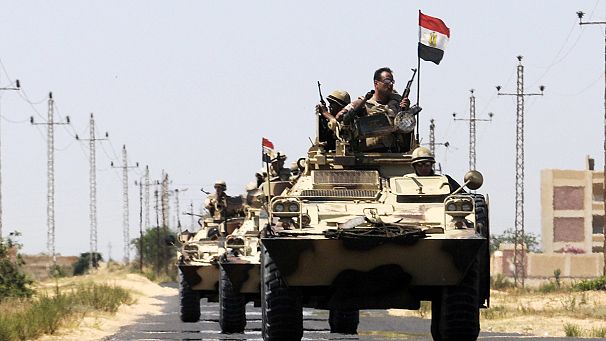
On Security, Violence, Al Qaida, Policy & the Army in Sinai...

May 16 Kidnapping Sparks Security Policy Debate in Egypt
May 27, 2013 | Ahmed Abou Taleb

http://globalriskinsights.com/2013/05/27/may-16-kidnappings-indicative-of-insecurity-in-sinai/


On the 16th of May a group of gunmen conducted a daring attack against Egyptian security forces in Sinai . They kidnapped seven people, of which six were border control police and one an army soldier, who were heading back to their homes to spend their holiday. Seven days after the kidnapping the soldiers were freed. Although this is not the first time security personnel have been kidnapped in Sinai this group in particular were received by the President, the Minister of Defense and the Minister of Internal Affairs.

The incident, which led to a strike among border control police officers, resulted in the launch of a military operation to free the soldiers. It also provoked a wider debate on security on the Sinai peninsula, raising questions on whether it has became a new base for Al Qaida in the region. Likely, it draws attention to Egypt’s changing security policy under the country’s new leadership and the potential repercussions on the relationships with both Palestinians and Israelis.

Kidnapping is one of the many sorts of violence used against security authorities in Egypt after the revolution. It became a frequently employed technique by Bedouin tribes in order to contest government decisions or demand the release of condemned and sentenced members of the tribe. While usually used against tourists, kidnappings sometimes extended to police officers.

After the January 2011 revolution, police forces faced increasing attacks against its personnel, camps and police stations, which made it difficult to resume core tasks – especially in the troubled Sinai, where many policemen were substituted with military personnel. Being subject to brutal security measures under Mubarak regime, some of the peninsula’s tribes, particularly in the geographically challenging middle Sinai area, exploited the void. Not only did they start using heavy arms, usually coming from Libya or through Gaza channels, during their smuggling and trafficking activities. They also resorted to extreme force to revenge the police and especially the State Security Service and the public order Central Security Forces.

Army personnel targeting growing in Egypt

Yet, the 16th of May assault has novel elements to take into consideration. It is the first recorded case of an army officer being kidnapped. Bedouin tribes have dared to confront police forces several times but avoided confrontation with the army. During the chaos that followed the 2011 revolution, some military checkpoints were randomly shot at by unidentified armed men, but with hardly any injuries. The only recorded army officer death was during an attack on a police station in July 2011.
Egypt's President Mohamed Morsi

Direct organized violence against the army started for the first time last August, when a jihadist group launched a sudden and shocking attack on a military border camp, during the iftar evening meal in the holy fasting month of Ramadan, leaving 16 army recruits dead. The alarming attack reflected how some radical groups think of the army soldiers as “infidels”, against which fighting in Ramadan is a sort of holy war. With no one held responsible for that attack until now, violence against the military armed forces seems to be subject to a potential increase as well as normalization. Army personnel might no longer enjoy the immunity they have enjoyed in the region and eventually become targets to attacks and kidnappings, as the police personnel have been for the last two and a half years.

Another factor marking this incident is the usage of Al Qaida-like videos, a new technique emerging in Egypt. Few days after capturing the soldiers, the kidnappers issued a video featuring the soldiers being tied and blindfolded, each citing his name and affiliation. The army recruit was in the middle and directed a message to President Morsi and the Minister of Defense on behalf of the kidnappers. Their demands were to release a group of jihadists sentenced to death after having made an armed parade and launching a heavily armed attack on a police station and a court in the capital of Northern Sinai province in July 2011. Another video was released after the liberation of the kidnapped soldiers by a self-claimed jihadist group, which declared its intention to fight the Egyptian military everywhere in the country.

As Al Qaida has become more of an ideology, using a number of guerilla war and media techniques, rather than an organization, it is hard to tell if those who made the videos were directly affiliated with Bin Laden’s or Al Zawhiri’s Qaida. Furthermore, waging internal FARC-style warfare against the army in Egypt seems like a far-fetched and dismissed plot.

However, there is still a potential threat to Egypt’s Army. The military can become an easy target because most of its soldiers are recruits who are serving their one to three years of compulsory military service. Being spread all over the country makes them subject to assaults – on their holiday for example – just like the kidnapped soldiers. Moreover, many of them were......Read More

Monday, August 20, 2012

Targeting Tribal Leaders: A New Militant Tactic in Sinai


By Ashley Lindsey

Militants killed Egyptian tribal leader Khalaf al-Menahy and his son Aug. 13 as the two were returning from a conference in east Sinai organized and attended by tribal leaders to denounce militancy, according to Sinai security forces. The senior al-Menahy was a prominent proponent of bolstering the Sinai Peninsula's representation in Egypt's parliament and of improving security in the region. He also was a prominent sheikh in the Sawarka tribe, said to be the largest in Sinai. Following his burial Aug. 13, the tribe vowed to seek vengeance.
This is the first reported case of militants attacking tribal leaders in Sinai. It comes soon after an attack on Egyptian security forces Aug. 5 and an attack on military checkpoints in northern Sinai on Aug. 8.
Although the militant tactic of targeting tribal leaders is new to Sinai, the tactic has been common in conflict zones in the Middle East and South Asia, such as in Yemen, Iraq and the Afghanistan-Pakistan border region. Though it can offer many benefits to these militants -- including weakening the targeted tribe and possibly leading to its co-option -- these kinds of attacks tend to only succeed in zones with little government control and against tribes that cannot effectively retaliate. Examining similar instances of this tactic thus provides a helpful tool for assessing the consequences of attacks against tribal elements in the Sinai Peninsula.

A Widespread Militant Tactic

Yemen

Al Qaeda in the Arabian Peninsula has operated openly in Yemen's tribal-dominated southern and eastern provinces for years. It has sought to expand its presence and operations by winning over local tribes using tactics such as strategic marriages.
Lately, it appears to have begun a shift from wooing tribal leaders to intimidating them. Al Qaeda in the Arabian Peninsula recently failed in an attempt to assassinate tribal leader Majed al-Dhahab in the city of Radda in Bayda province. An important tribal leader, al-Dhahab participated in the offensive to drive al Qaeda -- and his own cousin, a local al Qaeda leader -- from the region after the militant group seized control of Radda in January. Al-Dhahab's son received a package that unbeknownst to him contained a bomb, which he was instructed to give to his father. However, the package exploded in his arms Aug. 4 before he could deliver it. Immediately after his son's death, al-Dhahab received a call warning him that the group would kill anyone who opposed it.
The group followed up with another attack on tribal elements Aug. 5. A suicide bomber detonated an explosive device at a wake in Jaar, killing 45 people. The dead included several tribal fighters who had participated in the June Yemeni government offensive against al Qaeda in the Arabian Peninsula, and the wounded included a tribal leader.
The region's tribes have not publicly vowed to retaliate against the militant group. If they are capable of doing so, they probably will respond to al Qaeda in the Arabian Peninsula's attacks. But the tribes could be too weak to mount an effective response, especially in the wake of attacks on their leadership structure. This could cause some tribesmen to abandon the fight, allowing militants to try to resume activity in the region's towns should they wish.

Iraq and the Afghanistan-Pakistan Border

Although new to Yemen, militants frequently used the tactic of attacking tribal leaders during the U.S. involvement in Iraq and Afghanistan. The tactic is still frequently used, especially in the Afghanistan-Pakistan border region. In one significant instance, in 2007 al Qaeda in Iraq assassinated high-profile Sunni tribal Sheikh Abdul-Sattar Abu Risha, who led the Anbar Awakening Council. A U.S. ally, Abu Risha had formed the council, uniting dozens of Sunni tribes in the province against al Qaeda in Iraq. His killing backfired on the militant group, generating a massive outpouring of sympathy for Abu Risha and prompting the tribes in the province to join in vowing to fight al Qaeda in Iraq to the death.
In southern Afghanistan and northwestern Pakistan, the Afghan Taliban are deeply embedded into the tribal system. They have effectively used the tactic of assassinating tribal leaders to eliminate obstacles to their operations and evolution. To this end, they regularly employ suicide operations, armed assaults and roadside bombs against anti-Taliban militias known as lashkars and against tribal leaders in northwestern Pakistan.
One area particularly affected by such attacks is Bajaur, a Pakistani agency that borders Afghanistan's Kunar province. After numerous attacks on tribal leaders and members of peace committees in Bajaur, the Mamond tribe announced July 25 that the tribal leaders had formed a lashkar to prevent cross-border attacks. Hundreds of elders, leaders and religious figures of various subtribes and peace committees pledged their support for this militia. As with the killing of Abu Risha, the Afghan Taliban attacks on tribesmen and leadership in the region spurred a fiercely united response across numerous tribes, with the new militia even expressing a willingness to enter Afghanistan to attack Taliban leaders.


Upsides and Downsides of a Militant Tactic

Militant groups attack tribal leaders to increase their influence and area of operations. From the militants' perspective, removing a tribal leader ideally will weaken the targeted tribe. This could end the tribes' resistance and even lead to the its being co-opted by the militant group due to a leadership vacuum following the militant attack. The weakening of the tribe could leave the group no choice but to allow the militant group to operate unchallenged in its territory. Even though assassinated tribal leaders are replaced and the leadership structure remains intact, tribal leaders in the area could be persuaded to adopt a more accommodating stance on the presence of militants.
Success for a militant group in the long term happens under two conditions. First, the militants must be acting in an area with a tribal patronage network and limited government oversight. Without such a network, attacks on tribal leaders in efforts to co-opt and intimidate that tribe would not provide any significant gain. In Yemen, for example, the patronage and tribal network are very strong and in most cases enjoy greater legitimacy and power than the government. Attacks against tribal chiefs there are accordingly tantamount to attacks on the local government. On the one hand, that means tribal networks can band together and shun foreign militant elements as one community. On the other hand, if al Qaeda in the Arabian Peninsula is able to coerce a tribe into aligning with it, the militant group will then enjoy access to that tribes' resources, will gain the ability to plan and launch attacks in that area, and could even gain better relations with neighboring tribes.
Second, the group must be militarily capable of overwhelming the targeted tribe and its allies or at least of gaining the upper hand. As can be seen from the Iraq example, killing Abu Risha backfired because his tribe was large, committed and militarily strong, and it had the support of several allied Sunni tribes that belonged to his Anbar Awakening Council.
The tactic of targeting a tribal leader thus comes with certain risks. When the aforementioned two conditions are not met, a militant group exposes itself to great danger when it targets tribal leaders.


Consequences of the Sinai Assassination

The Sinai Peninsula meets the requirement of limited government control and strong tribal networks. The question then becomes whether the Sinai tribes can muster a strong defense against the militants. In the coming weeks, it will be important to look for signs of the retaliation pledged by al-Menahy's Sawarka tribe and others allied with it. This retaliation could come in the form of attacks against the militants passing through Sawarka and its allied tribes' territory.
Tribal retaliation could also come in the less aggressive, yet still effective, form of supplying increased logistical support and intelligence to the Egyptian government. Increased weapons seizures and the arrest of key leaders suggest that tribal sources on the ground are providing intelligence to Cairo. A targeted campaign against the militants already has begun, with Egyptian planes bombing the mountains of El Arish on Aug. 15. The intelligence for these attacks likely came from local tribes.
The success of tribal and Egyptian security efforts against the militants will determine whether the militants miscalculated their position in Sinai when they attacked a key tribal leader. The resilience of militants in Sinai also will help determine whether they can continue to stage attacks against Egypt and Israel.
http://www.stratfor.com/weekly/targeting-tribal-leaders-new-militant-tactic-sinai?utm_source=freelist-f&utm_medium=email&utm_campaign=20120816&utm_term=sweekly&utm_content=readmore&elq=536cf9b22736498fb84bb3f864738f1a

Sunday, February 26, 2012

Tagneed: the new me [Updated] التجنيد وأنا الجديد

/tagneed/: Arabic word that refers to the process of recruitment into armed forces / Being a soldier


Its rare that I write things about myself, but I thought it would be nice to share a bit. My expereince today excited me to express myself a bit, which is a good thing.

Backgrounder: Military service is compulsory for Egyptian males. The duration is determined by the level of education, the needs of the army and the post (either officer or soldier). Officers spend almost three years and soldiers spend about 14 months. Usually a number of the graduates of scientific majors such as engineering, medicine,....etc are recruited as officers while others are recruited as soldiers.  After accomplishing the service, the individual remains on call till the age of 30 or 32 (not sure), in case any military threats occurred.

well well well, from where to start?


In a long queue, waiting to give my mobile to the security, these two guys in front of me, talking and joking. The funky guy at some point talked very seriously about how this whole situation is nonsense, "the army should put the results on the internet, same as high school results instead of us lining up here" and the other replied while laughing loudly "or on the face (this renowned fucken abbreviation for facebook), army delivery, hahahaha".
ohhh fucken funny. as i look at them with my sleepy gonflee eyes, i just cant stop thinking, are new Egyptian generations 90% sissy or 92%???

after finally handing over the mobile, weeeeeew,  you join the gaaaaang bang.
you get under this huge iron umbrella and take a seat on one of the cold stony tiring benches. all these guys under the same roof, 3000 guys, 6000 eyes, balls and legs, all waiting for one hell of an important decision in their life,......are you going to spend one or three or zero years of your life in the army? are you leaving your family, putting all your professional, romantic, social, ....etc plans on hold and joining this whole new community for a part of your life? is it time to merge into this enormous institution and stop being yourself?
might seem a normal experience for you, but believe me you will unconsciously feel this suspense to know where exactly your life will be.

when you know its time for the army , your live turns grey because simply nothing is determined. everything is a 50%  chance. some take it too serious, some just revive this purely egyptian sense of destiny & god's will (kadaa wa kadar). i prefered the second option.
 
its one of the few moments in life where equality is alive and breathing. for hours, people from totally different backgrounds, all stuck together, waiting for long hours, and having the same chances of either to be recruited or not. you find guys from all types, all sitting there, guys whose confidence comes from their rayban glasses (although we arent sitting under the sun) and their style which reminds me with the guys who surrounded me while taking a brunch the day before at sequoya where everyone is posch and bling bling. but these same guys are currently  sitting side to side with guys who cant be except a reminder of how deep and miserable are the problems of this country.  contradictions are all around, or maybe its just the diversity of this country, black brown and white; rich, average and poor; adidas, abibos and abibas,....etc (in case you aren't egyptian, abibos is a chinese or a local replica of adidas, same lines and everything, just a d instead of a b)

while waiting for hours for any officer to come out and say anything you think a lot. well, you can speak alot but this implies that you have company, which wasnt my case. in fact, since i did my masters so this promo wasnt mine and knew no one who was applying for the army at the same time. well, anyway, i prefered to think, and mostly wonder about all those around me.
i wondered why we always distinguish between the people and the army, as if they are two different planets. it has been very flagrant after the revolution that we always point it out. arent they simply, me, my brother, my cousin, my friends? is the discipline they learn enough to make them new people, to give them new identity other than civilians? why is it they always look at us very angrily with their eyes, whose looks express disgust out of our disorder, attempts to steal places in the line, on our stupid questions, our desire to keep standing beside friends and not sit down, ...etc?? well, now i see why they are different, and actually i might feel like them in a few time.
but still, a major philosophical question is unanswered, is discipline enough to to give you a new identity? what gives you a new identity? what makes you categorized, a civilan not a military and vice versa, or any other categorization? are these categories even valid??

while sitting down, i also remembered my father's stories about the army. remembered when he was recruited as an officer then downgraded because of his history of political activity as a leader of a leftist radical underground students group. he described me that day when he and two other guys -amongst who was tarek el zomor, one of the guys who assasined sadat a couple of years later- where made soldiers instead of officers. remebered his story about the war reharsal they were having in the desert with live ammunition and when his tank got lost for 13 days till they found them, remembered his story about his tank named fatma, his story about the chemical war test,.... many stories actually.
anyway, as i remembered all these stuff, i kept thinking about the difference between the 70's which was a time of war and now. the stories of my friends about the army were hugely different, obviously they order food delivery in their units, they log on to the internet with their mobiles, they .......enough, they might be fucked up if any military personnel happened to read that.

time goes on with me wondering. on the background there was two distinct voices, the noise you hear in a mall when everyone cant just stop his dam tongue, and the other voice was the music put on. OH MY GOD. nonstop nationalist patriotic 60's style music. cool when you know the song, but i only recognized two out of the hundred displayed. seems they have this internal production of propaganda stuff, or maybe its just tv that have been filtering the songs to air, thanks god it did. some of the songs in the camp seemed like bollywood songs with a very high pitched sharp woman voice coming from far, bizarre music and then u just discover after a few minutes she is singing in arabic. by the way, most of the new songs are simply rubbish, we can talk about this later. 
i started getting this feeling i just had the night before after watching the second act of verdi's ernani in the opera: dizzy head, starter of maigrane & a backache. shit, not again.

so quickly, i  try to get distracted by anything, you look around and here you go. who is this tasteless bastard who chooses the colour of the banners and posters?  and then came to my mind this new poster they have on the vehicles, who the hell designed it? there is this soldier carrying a kid, who is almost falling from between his hands, and from far always it makes u feel the soldier is a cannibal, or holding some dead rabbit in his hand or something.
seriously, they do need some loads of  pr, marketing and communication courses, because many of the problems that happened have been caused by serious misunderstanding, miscommunication or lack of precision an ...... well thats not the subject so lets get back to the topic.

now, you got two things to run away from, the music and the posters. one option was to simply go buy a snack to eat


one hilarious thing was this little sign put over the cantine (small snacks kiosque) : Buying is optional and not compulsory. looool. i figured out later, there was this very widespread rumor (apparently inherited by generations), that the name calling wont start unless we finish all the stuff in the store and that they keep us waiting to keep buying all the stock. well, obviously not bcz we were done like 6 hours after and the store was still full with stuff.

 the second option was listening to music. luckily, i had my mp3 with me. very naturally, i put on one of my favourite songs, deep purple's sail away and i just discover my instinct led me to the right song at the right time. the lyrics were too perfect for the moment

If you're driftin' on an empty ocean  
                      With no wind to fill your sail  
The future, your horizon It's like searchin' for the holy grail
                       You feel there's no tomorrow  
As you look into the water below It's only your reflection  
                       And you still ain't got no place to go
Time will show When, I don't know
                             Sail away tomorrow Sailin' far away
To find it steal or borrow  
                             I'll be there someday Yeah, yeah
Oh woman, I keep returnin'  
                               To sing the same old song  
The story's been told, now I'm gettin' old
                                Tell me, where do I belong?
Feel like I'm goin' to surrender  
                                 Hard times I've had enough  
If I could find a place to hide my face I believe, I could get back up

Time will show When, I don't know
 
Sail away tomorrow Sailin' far away To find it steal or borrow But I'll be there someday Yeah, yeah
Sail away tomorrow Sailin' far away To find it steal or borrow But I'll be there someday Yeah, yeah, yeah, 

yeah Yeah, yeah, yeah
.
.
.
.
.
.
.
.

finally, someone gets in.
a high commander, probably a general speaks and as usual (for me at least), proves again how bad is the army men with talking or arguing. he tries to make things simple and explain the recruitment process based on random choice, with numbers and examples. at some point we just have all our mouth open and at this exact same point he asks : is it possible with all these divisions and equations that anyone interfere in the process?? huh??". and as no one answers a guy volunteers and speaks loudly no sir. luckily he didnt repeat this shit explanation.
but what surprised me again was how at a certain moment he managed to make the people clap for him, actually twice. he finally showed he understands a little bit of communication skills when he spoke away from all the rhetoric stigmatized school shit he had been repeating for over 20 minutes. it shows how although these army guys really need some serious learning, they do have this sense or common back ground with the vast majority of egyptians, and hence manage to make them deserve this mystic legendary image, again luckily.

anyway,  the explanation he did seemed to be a part of a new transparency policy. at the beginning of the day they called about 250 candidates who went inside the building and assisted in the whole process, video conference meeting with the high commander head of the department to choose the needed specialization, determine the dates, check on the random i don't know what, ....etc not much for me but still cool

after that, all i remember are lists and lists of names, specializations, birth dates, sit down, stop talking, shut the hell up, no questions now, any questions, noise, laughs, congrats, disgusted looks, tired eyes, sweating faces, and wondering eyes.........etc

well, it was time to know whether i am in and out.
Year 1988
If you arent any of the suspended cases mentioned before, then you shut up and listen. The following dates are to be given a postponement of the service
1 january 1988 till 12 january 1988
19 february 1988 till 25 february 1988
21 april til.......
may....
well thats it, he gave no suspension for the june dudes. i am in. starting april, i will be officially an egyptian army personnel serving a service of 14 months.
Army Army, here I come. 


They always say, you get to be a new person after that experience, will i?? probably yes. how will i be? I don't know.

Friday, October 7, 2011

20th Century Battlefields - 1973 Yom Kippur War

What happened on the 6th of October/Yom Kippur day?


To watch the full documentary, visit The War Room

The Memoirs of October War by Gnr.Saad El-Din El-Shazly - مذكرات حرب أكتوبر للواء سعد الدين الشاذلي


"This is a military memoir: my record as Chief of Staff of The Egyptian Armed Forces, during The Arab-Israeli War of October 1973. It is to the best of my knowledge, unique, being the only memoir of its kind by a contemporary Arab commander. I have written it with reluctance, with sorrow and with anger. When I say that my anger is directed primarily, at The President of Egypt, Anwar El Sadat, it will be understood why I, after a lifetime as a soldier serving my country and my people, was reluctant to take up a pen, and felt sorry that in the end it became an inescapable duty.

This memoir, I dedicate to the soldiers and officers of the Egyptian Armed Forces. It is their story; it tells at last, the truth about their triumph. I am proud of every single day I spent as Chief of Staff. I am proud that during my tenure, the first successful Arab offensive against Israel, was planned and executed.

I pay tribute to every officer and man, who took part in it, and in doing so, restored the pride of the Egyptian soldier. They are witnesses to the truth of what I write. Some parts of the story are known by thousands, some by hundreds, some aspects shared by only a handful. May God help and guide us, and give us the courage to say the truth, whatever may be the consequences." 
 
A very expensive cost: 
 

 In 1978, General Shazly, sharply criticized The Camp David Agreement, and publicly opposed it. As a result, he was dismissed from his position and was forced into exile. There, he wrote this book, his account of the war.
The consequences of this publication cost Shazly dearly. He was court marshaled in absentia, and received a three years prison sentence. He was denied legal representation, stripped of his political rights and had his property sequestered. All without a single witness, save a captain serving in Military Intelligence. Two charges were brought against Shazly. The first was publishing a book without prior approval. A charge, Shazly admits to. The second was divulging military secrets in his book. A charge Shazly vehemently denies, claiming the so-called "secrets" were government secrets rather than military secrets. Shazly maintains the government was trying to hide the facts.

In 1992, Shazly returned to Egypt after 14 years in exile, in Algeria; for criticizing the policies of President Anwar Sadat. He was arrested in the airport upon his return.

No trial ever took place, and Shazly was forced to serve his prison term, despite the rule of law, according to The Egyptian Constitution, that sentences received in absentia, must be retried. During his time in prison Shazly's legal team, succeeded in obtaining a ruling from The Highest Civilian Court, which stated that the prior military conviction was illegal, and declared the military ruling was unconstitutional. The court ordered Shazly's immediate release. None took place. Shazly served the remainder of his sentence.

The Crossing of The Suez, and Shazly's later book, The Arab Military option, was never published in Egypt.
They were however; published in English, French and Arabic and sold in many countries. The book has been reviewed by major publications including The Economist, The New York Times, The Christian Science Monitor, and others. The book is currently in its second printing.
http://www.el-shazly.com/about.htm

El Shazly died on 10 February 2011 at the age of 88.

To download the book in Arabic, click here   لإنزال الكتاب باللغة العربية, اضغط هنا

Saturday, September 24, 2011

Wikileaks Bulgaria: ARMS DEALER WARNS THAT EGYPT IS HUNTING FOR MANPADS

S E C R E T SECTION 01 OF 02 SOFIA 001686

SIPDIS

NOFORN
SIPDIS

DEPT. FOR PM, EUR/NCE

E.O. 12958: DECL: 12/19/2016
TAGS: ETTC PARM PTER EG BU
SUBJECT: BULGARIA: ARMS DEALER WARNS THAT EGYPT IS HUNTING
FOR MANPADS

REF: A. SOFIA 1119
¶B. SOFIA 1204
¶C. STATE 146913

Classified By: CDA Alex Karagiannis, for reasons 1.4 (b) and (d).

¶1. (S) SUMMARY: In a December 18 meeting with an Embassy Political Officer, a well-connected Bulgarian arms broker told us that he had recently rebuffed an Egyptian MoD order for Bulgarian MANPADS, which he viewed as a proliferation risk. He warned that the Egyptians seemed to view the order
as very time-sensitive and that they were likely to seek MANPADS elsewhere in the Balkans after being turned down in Bulgaria. Post has reason to suspect the source's motive for sharing this information with us; we have no way of verifying its veracity. END SUMMARY.

¶2. (S) On December 18, Nikolai Gigov called a lunch meeting with Poloff at the offices of his company -- the arms trading firm Delta Group (commonly known as "Delta G"). The purpose was to inform us that he had recently received a large order from the Egyptian Ministry of Defense. He had accepted part of the order -- for T-72 tank rounds and parts; however, he claimed to have declined the Ministry's order for 150 Strela
MANPADS systems. Gigov appeared unaware of the U.S.-Bulgarian MANPADS agreement, which is classified in both countries at the Secret level. He claimed to have rebuffed the Egyptians of his own initiative, because of his doubts about the type of missiles ordered and the urgency with which
the MoD seemed to require them.

¶3. (S) Gigov reported being confused as to why Egypt would place an order for outdated Strela missiles (he did not specify the specific model). "If you're a state," he asked rhetorically, "why not buy something better -- an Igla or Mistral system, or a Stinger?" Military planes have effective countermeasures for MANPADS such as the Strela, Gigov said -- "The only thing they're good for is shooting down a civilian aircraft." Gigov speculated openly that the weapons may have been intended to be diverted elsewhere.
When asked specifically if the order had come from Arab International Optronics, an Egyptian MoD-owned firm that has bought MANPADS parts from Bulgaria in the past (reftels), Gigov hedged, before restating that the order came "from the MoD."

¶4. (S) Gigov said that such deals typically were slow-moving affairs, but he emphasized the sense of urgency that he perceived from the Egyptian side on this particular deal. The Egyptians did not specifically describe the deal as time-sensitive, he said; however, the frequent phone calls and follow-up messages he had received from their side indicated to him that this was the case. After declining the MANPADS portion of the order, he reported being contacted by the Egyptian defense attache with a request for an explanation.

Background:

¶5. (S/NF) Nikolai Gigov is an extremely well-connected businessman, whose legitimate business interests besides Delta G include insurance and private security ventures as well as ownership of Sofia's Lokomotiv soccer club. He is widely alleged to have brokered arms deals with the former Yugoslavia in violation of UN embargoes, and may have an ongoing role in illegal traffic in methamphetamines. He has family ties to Serbia, and displays a vocal antipathy toward Muslims. Through a combination of personal ties and liberal
political donations, Gigov counts many of Bulgaria's most powerful figures as "close personal friends," including President Parvanov, Interior Minister Petkov, and Sofia Mayor Borisov. He recently put these ties to use as the local agent for EADS, helping the European consortium win the MoD's competition to supply the Bulgarian military with Eurocopter helicopters. He has also worked with General Dynamics to supply Bulgarian-origin weapons and munitions to the Afghan National Army, and has indicated to us that he is interested in representing either Boeing or Lockheed in the MoD's anticipated tender for fighter aircraft.

Comment:

¶6. (S) We believe that Gigov was attempting to curry favor with us by calling this meeting, but have no way of verifying the facts of his story. He badly wants a relationship with the U.S. Embassy -- possibly for commercial reasons and possibly in an attempt to clean up his reputation. It is possible that he is merely shopping rumors in an attempt to convince us of his bona fides; however it is impossible to dismiss his allegations. As reftels indicate, Egypt has been a traditional customer for Bulgarian MANPADS, and the detail with which Gigov recounts the purported order would make for a very ambitious fabrication.
SOFIA 00001686 002 OF 002
¶7. (U) XXXXXXXXXXXX

KARAGIANNIS

http://wikileaks.org/cable/2006/12/06SOFIA1686.html

Thursday, September 1, 2011

Wikileaks- Cairo Cables: DASD Kahl Meeting with Egyptian Military Al Assar

DASD Kahl Meeting with Egyptian Military Officials

VZCZCXYZ0000
OO RUEHWEB

DE RUEHEG #0257/01 0591345
ZNY CCCCC ZZH
O R 281345Z FEB 10
FM AMEMBASSY CAIRO
TO RUEHC/SECSTATE WASHDC IMMEDIATE 0433
INFO RHEHAAA/NATIONAL SECURITY COUNCIL WASHINGTON DC
RHMFISS/HQ USCENTCOM MACDILL AFB FL
RHMFISS/JOINT STAFF WASHINGTON DC
RUEHEG/AMEMBASSY CAIRO
RUEKJCS/SECDEF WASHINGTON DC C O N F I D E N T I A L CAIRO 000257

SIPDIS

E.O. 12958: DECL: 2020/02/28
TAGS:
SUBJECT: DASD Kahl Meeting with Egyptian Military Officials

CLASSIFIED BY: Donald A. Blome, Minister Counselor, DOS, ECPO;
REASON: 1.4(B), (D)

1. (C) Key Points:


-- On January 31, Deputy Assistant Secretary of Defense for the
Middle East Dr. Colin Kahl met with Major General Mohammad
al-Assar, Assistant to the Minister of Defense, Major General Ahmad
Moataz, Chief of the American Relations Branch, and Major General
Fouad Arafa, Consultant to the Military Intelligence Department.


-- During the meeting, Kahl discussed the need to incorporate a
military strategy that included symmetrical and asymmetrical
capabilities, pursuing a capabilities-based approach to security
assistance, FMF issues, balance of power in the region, nuclear
weapons in the Middle East, current U.S. policy towards Iran,
Egyptian efforts to counter-smuggling and interdict illicit weapons
destined for Gaza, and the release of advanced weapons systems.


-- The Egyptian defense officials continued to stress that the
threats facing the United States were different from Egypt's, and
Egypt needs to maintain a strong conventional military to counter
other armies in the region.


--------------------------------------------- ----------------------
--------------

Egypt's Current Security Concerns and National Defense Policy

--------------------------------------------- ----------------------
---------------


2. (C) During the 31 January 2010 meeting, al-Assar
constantly referred to the numerous unstable security situations in
the Middle East that influenced Egyptian military doctrine to
include: Pakistan, Afghanistan, Iraq, Syria, Lebanon/Hezbollah,
Palestine/HAMAS, Yemen, Sudan/Darfur, Somalia, Eritrea, Piracy
issues, Algeria, and al-Qaida. Al-Assar emphasized that ethnic
conflict throughout the region and border issues could have a
negative impact on Egyptian sovereignty at any time. al-Assar
commented that he did not expect any of these security situations
to resolve in the near future; instead, he believed the list would
grow even larger.


3. (C) al-Assar outlined Egypt's National Defense Policy
which he stated was based on a defensive, capabilities-based
strategy instead of threat-based. The number one priority is the
defense of Egyptian land and the Suez Canal. Other goals include:
preparedness for unexpected threats such as terrorism; the
achievement of regional stability; interoperability with Egypt's
military partners; and a leading role for Egypt in the region.
Al-Assar provided the Egyptian military's list of regional
threats/concerns such as Nile Basin water rights and the conflicts
in Darfur and southern Sudan. He commented that one never knows
what Libya might do and that it was essential that Egypt maintain
the balance of power on its eastern border. He reiterated the fact
that Israel possesses unconventional weapons and sophisticated
conventional weapons, which creates a regional imbalance and
contributes to instability. He noted that stability in the region
cannot be attained without balance of power. He stated that the
Egyptian military doctrine did not intend to gain an edge on any
other country in the region or cause offense to anyone.


4. (C) Al-Assar complained that the Egyptian military
sometimes felt pressured by the United States to reform its
doctrine and capabilities to counter asymmetric threats. He
emphasized that the threats faced by the United States were
different from Egypt's. He commented that tanks and aircraft were
necessary to fight asymmetrical threats as well. He referred to
General Patreaus' Sadr City battle plan against extremists and
noted that this plan depended on the use of tanks and aircraft in
Iraq. He called on Dr. Kahl to educate Congress about Egypt's
military needs and not put limits on the numbers of aircraft and
tanks. He noted that the Egyptian military preferred to purchase

its weapons and armaments from the United States, but that Egypt's
national security was a red line and they could go elsewhere if
they had to.


--------------------------------------------- ----

Security Assistance and Modernization

--------------------------------------------- ----


5. (C) Dr. Kahl commented that the U.S. military had learned
some hard lessons about the promises and limits of technology
during the first years of the war in Iraq. Kahl stated that there
are no longer any purely conventional military conflicts in the
world and the last large conventional war was the First Gulf War.
The current challenge for modern armies is to find the right
balance between conventional and irregular forces and doctrines to
fight what Secretary Gates refers to as "hybrid wars." Kahl
commented that the U.S. lost more tanks in Iraq to roadside bombs
than in battles with Iraqi tanks. He also noted that information
technology in the modern war was just as valuable as military
equipment in order to have the ability to rapidly communicate and
assess the environment.


6. (C) Dr. Kahl reiterated that a modern military should rely
on quality equipment rather than a large quantity of outdated
armaments, and should place a greater emphasis on the scope of its
aggregate capabilities vice number of high-end weapons platforms.


7. (C) Major General Fouad Arafa interjected during the
discussion to note that the spirit of the Camp David accord was
that there would be a 2:3 balance between Egypt and Israel's
security assistance. Egypt's role was to keep a certain balance of
power in the region that would not allow other parties to go to
war. Egypt had fulfilled this role faithfully for the last 30
years. al-Assar added that the current ratio of 2:5 was a
violation of the Camp David ratio.


--------------------------------------------- --------

Yemen, Iran, and the Weapons Free Zone

--------------------------------------------- ---------


8. (C) al-Assar noted that Iran effectively interfered in
the internal affairs of Lebanon, Palestine, and Iraq. He commented
that Iran's nuclear ambitions would significantly change the
balance of power in the region and was contributing to further
regional instability and intensifying the conflicts. Al-Assar
stated that Egypt views Iran as a threat to the region and its
conventional and unconventional weapons would only increase the
instability in the region. Al-Assar commented that if Iran was
successful in obtaining nuclear weapons, it would only encourage
other countries in the Middle East to pursue the same path.


9. (C) Al-Assar brought up President Obama's pledge to
pursue a Nuclear Weapons Free Zone (NWFZ) in the Middle East. He
called on the United States to not ignore the Israeli nuclear
program. He stated that Israel's nuclear program only gave Iran
justification for creating its own nuclear weapons. If Iran
obtained nuclear weapons, it would only embolden Iran to use
Hezbollah and HAMAS with impunity.


10. (C) Dr. Kahl stated that ultimate goal for the United States
was the creation of a NWFZ in the Middle East. However, it was not
possible to draw strict parallels between Iran's acquisition of
nuclear weapons and other Middle Eastern countries. Iran is the

only country in the world that was currently threatening to wipe an
entire country off the map, and Tehran reinforced this message
through destabilizing activities pursued by its proxies in the
region. The goal of a NWFZ in the Middle East could take 10-20
years to achieve; however, the international community could not
wait 20 years to address Iran's nuclear program and needed to
figure out ways to slow down the clock on the Iran's nuclear
ambitions.


11. (C) Major General Fouad Arafa joined the conversation stating
that Iran was using the various Middle East conflicts for its own
ambitions and was gaining power because of its interference in the
internal affairs of the Middle Eastern countries. It was essential
to cut Iran's connections and influence in the regional conflicts
in Lebanon, Israel, and Palestine in order to decrease the level of
influence Iran enjoyed in the region. Iran was effectively using
Arab public opinion to advance its goals. Dr. Kahl agreed and
reinforced the need for continued Arab engagement on this issue to
ensure a "unified front" on the part of the international
community.


12. (C) Kahl stated that the United States had reached out to
Iran in 2009 through unconditional talks and that this was meant as
a test of Iran's willingness to prove that its nuclear program was
for peaceful civilian use. Iran, however, had not seized this
opportunity to resolve international concerns. Kahl speculated
that European countries and even Russia, which would not have
supported the sanctions in the past, were now ready to increase
pressure on Iran.


-------------------------

Counter-smuggling

-------------------------


13. (C) Dr. Kahl extended his appreciation for Egypt's enhanced
counter-smuggling efforts in the past year, but expressed concern
over recent increases in smuggling activity into the Gaza strip and
HAMAS' efforts to rearm. Dr. Kahl emphasized that the United
States understands that this is an especially sensitive political
issue internally in Egypt, as well as in the region. Dr. Kahl
noted that the United States was looking forward to the positive
completion of the BTADs project and thanked the Egyptian Military
for its agreement-in-principle to sign a follow -on statement for
future BTADs support as this provided an opportunity for further
cooperation on counter-smuggling and border security. He also
underscored the importance of targeting smuggling networks and
their financiers in Sudan and the Sinai-not just their activities.


14. (C) Dr. Kahl renewed Secretary of Defense Gate's offer to
assist the Egyptian military in expanding its counter-smuggling
efforts on the Sudanese border and the Red Sea region.


15. (C) Al-Assar stated that the smuggling tunnels threatened the
national security of Egypt (highlighting HAMAS specifically) and
that "terror" could come to Egypt via these tunnels. Egypt has
spent approximately $40 million to purchase the steel for the
underground wall on the Gaza border, and Egypt was paying the cost
of this wall in terms of public opinion both within Egypt and the
region. He noted that once the wall was in place, the time would
come to pressure Israel to take responsibility for the humanitarian
situation in Gaza. Dr. Kahl reaffirmed that in all of engagements
with Israel, the U.S. officials strongly encourage Israel to open
crossings into Gaza to allow humanitarian goods to cross, and that
Egypt's focus must be affixed on thwarting the movement of illicit
weapons into the strip.


-------------

Homework

-------------


16. (C) Dr. Kahl encouraged Egypt to sign a Communications
Electronics Security Agreement (CESA aka CISMOA) with the Unites
States, which would pave the way for the transfer of advanced
technology to Egypt and greatly increase interoperability.
Al-Assar stated that Egypt had "its reasons to delay a decision on
a CISMOA." He noted that thousands of Egyptian military officers
have participated in training and education programs in the United
States and learned about U.S. technology and strategy. He
commented that the younger officers are frustrated with the delay
in obtaining political release for more advanced U.S. technology.
Specifically, al-Assar referred to TOW2B and JAVELIN, which he
commented had already been released to other countries. Al-Assar
noted that a CISMOA was not a condition for obtaining these
systems, but instead they were held up due to a "third party".


17. (C) Al-Assar commented that Egypt was in negotiations with
Iraq to supply the Iraqi military with approximately 140 tanks,
which are manufactured at the FMF tank facility. He noted that the
Egyptian Ministry of Defense was awaiting the United States
positive response to its request for approval of the transfer. Dr.
Kahl noted that the U.S. was considering this request and would
provide a response soon.


18. (C) Al-Assar encouraged Dr. Kahl to convince the U.S.
Congress that Egypt was worth more than $1.3 billion a year. Dr.
Kahl mentioned that Egypt receives the second largest amount of
assistance in the world, and that during these difficult financial
times in the United States, it was unlikely that annual flow of FMF
would increase. He did however reassure the Egyptian officials
that the USG would continue to advocate for current levels of FMF
and push back on any attempts to condition those funds.
SCOBEY
http://dazzlepod.com/cable/10CAIRO257/