Showing posts with label Egyptian Revolution. Show all posts

Sunday, October 13, 2013

Egypt: Between Counter-terrorism & Reintegration


By Ahmed Abou Taleb

On the 23rd of September, after the socialist party Al Tagamo’a filed a case, a Cairo court ordered the Egyptian interim government to ban all Muslim Brotherhood (MB) activities and the organizations derived from it. As this is not the first ban of the Islamist organization in its 85-year history, the decision raised many questions on the impact, as well as the efficacy, of the verdict. While some argue that such decisions are a return to the old regime’s oppression, others assert that the ban is not enough to ensure the country’s stability.

The verdict, which included the seizure of the group’s funds and assets, seems similar to previous decisions by former governments. Yet, it differs from its precedents. In the 1940s, Prime Minister Mahmoud Fahmy Al Nokrashy decided to dismantle the organization only to be assassinated by the Brotherhood’s militia 20 days later. A few years later, Gamal Abdel Nasser decided to dismantle the group after a failed attempt to assassinate him. None of these previous decisions banned the organization’s activities, nor were they issued by a court after a lawsuit.

The court’s decision is controversial for several reasons. It comes after blood was shed during the authorities’ attempts to end some of the organization’s demonstrations and sit-ins, as well as the detention of some of the MB leaders, who allegedly incited and financed violent activities. This prompted the MB to run a huge media campaign in different Arab and Western countries, portraying the MB as a victim of oppression and prejudice practiced by security forces. The campaign succeeded to a great extent in distancing the organization from the attacks against churches, security forces in Sinai and police stations in several cities—as well the presence and use of arms during sit-ins and demonstrations.

Furthermore, some of the youth revolutionary groups, who have stood against the Supreme Council of the Armed Forces (SCAF) since the January 2011 revolution, suspect that the army still has intentions to stay in power. Even though the army and its leader General Abdel Fattah Al Sisi do enjoy massive support at the moment—due to the campaign against terrorism and successful domestic public relations techniques—questions regarding the military’s intentions remain prevalent in public discourse. Hence, some interpret certain decisions.....READ THE ARTICLE

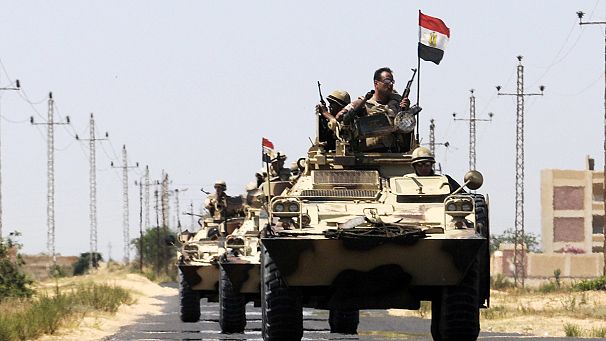
Special Report: The real force behind Egypt's 'revolution of the state'


(Reuters) - In Hosni Mubarak's final days in office in 2011, the world's gaze focused on Cairo, where hundreds of thousands of protesters demanded the resignation of one of the Arab world's longest serving autocrats.
Little attention was paid when a group of Muslim Brotherhood leaders broke free from their cells in a prison in the far off Wadi el-Natroun desert. But the incident, which triggered a series of prison breaks by members of the Islamist group around the country, caused panic among police officers fast losing their grip on Egypt.
One officer pleaded with his comrades for help as his police station was torched. "I am faced with more than 2,000 people and I am dealing with them alone in Dar al Salam, please hurry," the policeman radioed to colleagues as trouble spread. "Now they have machine guns, the youth are firing machine guns at me, send me reinforcements."

In all, 200 policemen and security officers were killed that day, Jan 28, called the Friday of Rage by anti-Mubarak demonstrators. Some had their throats slit. One of the Muslim Brotherhood leaders to escape was Mohamed Mursi, who would become president the following year.
Egypt's Interior Ministry, which controls all of the country's police forces including state security and riot police, never forgot the chaos. In particular the Wadi el-Natroun prison break became a powerful symbol inside the security apparatus of its lost power. Officers swore revenge on the Brotherhood and Mursi, according to security officials.

When army chief Abdel Fattah al-Sisi appeared on television in July this year to announce the end of Mursi's presidency and plans for elections, it was widely assumed that Egypt's military leaders were the prime movers behind the country's counter revolution. But dozens of interviews with officials from the army, state security and police, as well as diplomats and politicians, show the Interior Ministry was the key force behind removing Egypt's first democratically elected president.
Senior officials in Egypt's General Intelligence Service (GIS) identified young activists unhappy with Mursi's rule, according to four Interior Ministry sources, who like most people interviewed for this story, asked to remain anonymous. The intelligence officials met with the activists, who told them they thought the army and Interior Ministry were "handing the country to the Brotherhood."
The intelligence officials advised the activists to take to the streets and challenge Mursi, who many felt had given himself sweeping powers and was mismanaging the economy, allegations he has denied. Six weeks later, a youth movement called Tamarud - "rebellion" in Arabic - began a petition calling for Mursi to step down.

Though that group's leaders were not among the youth who met the intelligence officials, they enjoyed the support of the Interior Ministry, according to the Interior Ministry sources. Ministry officials and police officers helped collect signatures for the petition, helped distribute the petitions, signed the petition themselves, and joined the protests.
"They are Egyptians like us and we were all upset by the Brotherhood and their horrible rule," said a 23-year-old woman in the Tamarud movement who asked not to be named.

For the Interior Ministry, Tamarud offered a chance to avenge Wadi el-Natroun; the reversal of fortunes has been remarkable. The state security force, both feared and despised during Mubarak's 30-year rule, has not only regained control of the country two and half years after losing power, but has won broad public support by staging one of the fiercest crackdowns on the Muslim Brotherhood in years.
The interior minister openly speaks of restoring the kind of security seen under Mubarak. A renewed confidence permeates the police force, whose reputation for brutality helped fuel the 2011 uprising. Egyptians now lionize the police. Television stations praise the Interior Ministry and the army, depicting them as heroes and saviors of the country.

The Interior Ministry's most dreaded unit, the Political Security Unit, has been revived to deal with the Brotherhood. Under Mubarak, officers in that department were notorious for treating citizens with a heavy hand and intruding into their lives. When activists broke into the agency's premises shortly after Mubarak was forced to quit on February 11, 2011, they found and posted online documents, videos and pictures of what they described as a torture chamber with a blood-stained floor and equipped with chains.
The Interior Ministry has apologized for "violations" in the past and has said they will not be repeated.
Key to the turnaround has been the Interior Ministry's ability to forge much closer ties to the army, the most powerful and respected institution in Egypt. It was a tactic that began almost as soon as Mubarak stepped down.

FUMING SILENTLY
Weeks after Mubarak was overthrown, the Interior Ministry called a meeting at the police academy in Cairo. The gathering, headed by the interior minister and senior security officials, was the first in a series that discussed how to handle the Brotherhood, according to two policemen who attended some of the gatherings.

Thousands of mid- and lower-ranking officers were angry and said they could not serve under a president they regarded as a terrorist. Senior officers tried to calm them, arguing that the men needed to wait for the right moment to move against Mursi. "We tried to reassure them but the message did not get through," said a senior police official. "They just fumed silently."

The senior state security officer told Reuters there were no explicit orders to disobey Mursi but that a large number of officers decided they would not be "tools" for the Brotherhood.
"I worked during Mursi's time. I never failed to show up at any mission. This included securing his convoys. Yet I never felt I was doing it from the heart," said one major in state security.
"It was hard to feel that you are doing a national job for your country while what you are really doing was securing a terrorist."

Resentment grew when Mursi pardoned 17 Islamist militants held since the 1990s for attacks on soldiers and policemen. One of the militants had killed dozens of policemen in an attack in the Sinai. None of them publicly denied the charges or even commented on them.
Mursi's decision last November to grant himself sweeping powers triggered a wave of public protest. On December 5, protesters rallied in front of the Ittihadiya, the main presidential palace in Cairo. As the crowd grew, Mursi ordered security forces to disperse them. They refused. A senior security officer said there was no explicit order to disobey Mursi but they all acted "according to their conscience."

The Muslim Brotherhood brought in its own forces to try and quell the unrest and Brotherhood supporters tried to hand some protesters to police to be arrested. But the police refused, Brotherhood officials said at the time.
"Do they think the police forgot? Our colleagues are in jail because of the Brotherhood," said a state security officer.

Ten people were killed in the ensuing clashes, most of them Brotherhood supporters. Liberal activists accused Brotherhood members of beating and torturing anti-Mursi protesters.
Mursi miscalculated further by calling off a meeting sought by the army to discuss how to calm the storm, according to two army sources.
"It was a veiled message to stay out of politics, and we got it, as we understood that Mursi was an elected leader and (it) would be hard to defy that," said an army colonel. "But it was clear by then where his rule was driving the state."

"CONSTANT FIGHTS"
In January 2013, Mursi fired Ahmed Gamal, former senior state security officer, as interior minister and replaced him with Mohamed Ibrahim who was the senior-most official with the least exposure to the anti-Brotherhood factions inside the ministry, security sources said. Ibrahim was seen as weaker and more malleable than Gamal, who was blamed by the Brotherhood for not acting harshly enough against anti-Mursi protests.

But appointing Ibrahim, who was previously an assistant to the interior minister for prison affairs, proved to be a costly mistake. He moved to get close to the army, attending events to establish direct contact with army chief Sisi and regularly complimenting the general on his management techniques, said the police major.
Sisi had served as head of military intelligence under Mubarak. He was known to be religious and had the charisma to inspire younger army officers. Mursi believed those younger officers posed less of a threat than the old generals who had served under Mubarak and whom he fired in August 2012, two months after he took office.
But the country's police chiefs had one message for the military: The Brotherhood is bad news.
"We are in constant fights on the streets. This made us tougher than the army and ruthless," said the police major. "We don't understand the language of negotiating with terrorists. We wanted to handle them from day one."

Ibrahim rejected requests by Reuters for an interview and would not answer questions sent by email. Sisi could not be reached for comment.
By early 2013, army officers and Interior Ministry officials had begun meeting in the military's lavish social and sports clubs, some of which overlook the Nile. Over lunch or steak dinners, officials would discuss the Brotherhood and Egypt's future, according to senior state security officers and army officers who took part in the meetings.

The Interior Ministry argued that the Brotherhood was a threat to national security and had to go, according to one senior security officer. In the 1990s, during the Interior Ministry's battle with the Muslim Brotherhood, the ministry had referred to all Islamists as terrorists. It urged the army to adopt the same terminology.
"I have gone to some of those meetings with the army and we spoke a lot about the Muslim Brotherhood. We had more experience with them then the army. We shared those experiences and the army became more and more convinced that those people have to go and are bad for Egypt," the senior security officer said.
"The army like many people who have not dealt directly with the Brotherhood and seen their dirtiness wanted to believe that they have something to offer to Egypt. But for us it was a waste of time."

Officials in the Interior Ministry warned the military that Mursi's maneuverings were merely a way to shore up his power. The Muslim Brotherhood, they told their army colleagues, was more interested in creating an Islamic caliphate across the region than serving Egypt.
"The Brotherhood have a problem with the Egyptian state," said the state security officer. "I am certain that Mursi came to implement the plan of the Brotherhood ... They don't believe in the nation of Egypt to begin with."

Over time, middle-ranking Interior Ministry officers became more vocal with the military. The message got through at the highest level. Early this year, army chief Sisi warned Mursi that his government would not last.
"I told Mursi in February you failed and your project is finished," Sisi was quoted as saying in an interview published this month in the newspaper al-Masry al-Youm.
Interior Ministry officials believed that the Brotherhood planned to restructure the ministry, one state security officer said. Concerned officials discussed the issue in a private meeting in the parliament.
One option was the cancellation of the police academy. Many saw that as a threat to their institution and careers.
"The news became known to young officers. This action is against the interest of the officers. He was fighting their future," said the state security officer.

Muslim Brotherhood officials have denied plotting against the Interior Ministry and say there were no plans to dismantle the police academy. They have previously accused Interior Ministry officials of working to undermine the government, refusing to protect Brotherhood leaders, and trying to turn the public against the group's rule.

"We cooperated with the Interior Ministry all along. We never had plans to undermine it or the police academy. It was the Interior Ministry that refused to work with us," said Brotherhood official Kamal Fahim. "All along they resisted us and tried to turn Egyptians against us."

"DOWN, DOWN"
Pressure from the Interior Ministry on Sisi and the military grew, helped by the emergence in May of the Tamarud.

At first the group was not taken seriously. But as it gathered signatures, Egyptians who had lost faith in Mursi took notice, including Interior Ministry officials. Some of those officials and police officers helped collect signatures and joined the protests.
"Of course we joined and helped the movement, as we are Egyptians like them and everyone else. Everyone saw that the whole Mursi phenomena is not working for Egypt and everyone from his place did what they can to remove this man and group," said a security official.

"The only difference was that the police and state security saw the end right from the start but the rest of the Egyptians did not and had to experience one year of their failed rule to agree with us."

On June 15, the Interior Ministry held a meeting of 3,000 officers, including generals and lieutenants, at its social club in the Medinat Nasr district of Cairo to discuss the death of a police officer killed by militants in Sinai. Islamist militancy in Sinai, mainly targeting police and army officers, had risen sharply after Mursi's election.
Some at the meeting blamed "terrorist elements ... released by Mohamed Mursi," said the state security officer.

Police officers started chanting "Down, down with the rule of the General Guide," a reference to Muslim Brotherhood General Guide Mohamed Badie, now in jail on charges of inciting violence during the Ittihadiya protests.

On June 30 - the anniversary of Mursi's first year in office - angry Interior Ministry officers joined Tamarud members and millions of other Egyptians to demand the president's resignation. Four days later, Sisi appeared on television and announced what amounted to a military takeover. Some security officials called the move "the revolution of the state."

TEARGAS, BULLETS AND BULLDOZERS

For weeks after Mursi's overthrow, Western officials tried to persuade Sisi to refrain from using force to break up Brotherhood protest camps in Cairo. But the hardline Interior Ministry, which had quickly regained its old swagger, pressed for a crackdown. Police officials argued that Brotherhood members had weapons.

"For us, negotiations were a waste of time," said the state security major. "We know what was coming: terrorism. And now after this horrible experience I think everyone learned a lesson and appreciates us and that we were right about those people."

Early on the morning of August 14 policemen in black uniforms and hoods stormed the Rabaa al-Adawiya camp, one of two main vigils of Brotherhood supporters in Cairo.
The police ignored a plan by the army-backed cabinet to issue warnings and use water cannons to disperse protesters, instead using teargas, bullets and bulldozers. Hundreds died there and many more died in clashes that erupted across the country after the raid.

Army officers later asked the police why the death toll was so high, according to a military source.
The interior minister said his forces were fired on first.

"It is one thing for decisions to be taken by officials in suits and sitting in air-conditioned rooms," said a state security officer in charge of some top Brotherhood cases. "But we as troops on the ground knew that this decision can never be implemented when dealing with anything related to this terrorist organization. Force had to be used and that can never be avoided with those people."
Despite the use of force and the deaths, liberal Egyptians who had risen up against Mubarak seemed sanguine.

The liberal National Salvation Front (NSF) alliance praised the actions of security forces. "Today Egypt raised its head up high," said the NSF in a statement after the raid. "The National Salvation Front salutes the police and army forces."
Two years after the Wadi el-Natroun prison break, the Interior Ministry had power again. It announced it would use live ammunition when dealing with protesters it accused of "scaring citizens." Trucks used by the once-dreaded anti-riot security forces now have signs on them which read "The People's Police."

The government has jailed the Brotherhood's top leaders in a bid to crush Egypt's oldest Islamist movement. Muslim Brotherhood officials now face trial in connection with the Ittihadiya protests.
Senior security officers say their suspicions about the Brotherhood were confirmed in documents they found when they raided the group's headquarters. The documents suggested that Mursi planned to dismantle the army under the guise of restructuring, they said. One of the documents, which a state security officer showed to Reuters, calls for the building of an Islamic state "in any eligible spot."
Muslim Brotherhood leaders could not be reached to comment on this document because most of them are either in jail or hiding.

Police officials say they no longer abuse Egyptians and have learned from their mistakes under Mubarak. But not everyone is buying that line.

Muslim Brotherhood leader Murad Ali, who was recently imprisoned, wrote in a letter smuggled out of prison and seen by Reuters that he was put in a foul-smelling, darkened cell on death row and forced to sleep on a concrete floor. Lawyers for other Brotherhood members say prisoners are crammed into small cells and face psychological abuse. One elderly Brotherhood prisoner said guards shaved his head and brought vicious dogs around to scare him, inmates near his cell told Reuters.
There were no complaints of the type of whipping or electrocution seen in Mubarak's days. But Brotherhood members say the current crackdown is more intense. "The pressure never subsides. None of my Brotherhood colleagues sleep at the same place for too long and neither do I," said Waleed Ali, a lawyer who acts for the Brotherhood.


(This story is refiled to clarify in seventh paragraph that GIS is not part of Interior Ministry)
(Writing by Michael Georgy; Edited by Richard Woods and Simon Robinson)
 http://www.reuters.com/article/2013/10/10/us-egypt-interior-specialreport-idUSBRE99908D20131010#!

Sunday, July 7, 2013

Egypt’s Fresh Start or Coup d’État


A four-day struggle between Egyptian protestors and their first democratically elected president Mohamed Morsi started on the 30th of June and ended up with his ouster on the 3rd of July. The multi-million demonstrations, calling for early presidential elections after only one year of Morsi in office, have sparked debate on legitimacy, the value of elections and raised crucial questions on the role of the army and the future of Egypt’s infant democracy.

The ouster, orchestrated wisely by the Commander in Chief (CIC) General Abdel Fatah El Sisy, was accompanied by other decisions such as the temporary suspension of the constitution, reforming some of its articles and the formation of a technocratic cabinet. Awaited for several hours, El Sisy’s decisions cheered up the demonstrators and angered Morsi supporters and allies, leading to violence between the two camps in the following days. Though often described by foreign observers as a coup, the army’s intervention can be seen from a different angle.

The demonstrations were first called for by the youth movement Rebel, launched earlier this year. According to the movement, 22 million citizens signed its petition demanding the resignation of former President Morsi, elected by about 12 million citizens a year ago. The petition also calls for early presidential elections. However, the latest Egyptian constitution, written and approved under Morsi’s rule, does not recognize petitions, which made the signatures a pressure rather than a practical mechanism for change.

The Freedom and Justice Party (FJP) – the political organization of the Muslim Brotherhood (MB) – and its Islamic allies consequently replied with “preemptive” demonstrations and sit-ins launched a week before June 30th named “No to Violence and Yes to Legitimacy”. Ironically, some of the MB speakers and radical figures threatened during the event to “crush” the anti-Morsi protesters. MB speakers not only waged a war of words against anti-Morsi protesters, frequently described as “infidels”, but also against the media; intellectuals; the armed forces; the police; the intelligence service; and the judiciary.


However, the roots of discontent of Morsi’s opponents are much deeper. Even those who do not care about politics found reasons to be furious. For months, Egyptians have suffered from power cuts that reached six hours per day in some places and usually had an impact on water supply – previously a rare experience. For weeks, people have stood for hours in long queues to fuel their cars or suffered due to the resulting traffic congestion. Watching the president and the cabinet describing these crises as “artificial” only increased the public disapproval. Witnessing members of the MB, the FJP and its allies being disproportionately favoured employment and rapidly promoted in the public sector, especially in local administrations, also fueled a widespread anger.

Tuesday, May 28, 2013

On Security, Violence, Al Qaida, Policy & the Army in Sinai...

May 16 Kidnapping Sparks Security Policy Debate in Egypt
May 27, 2013 | Ahmed Abou Taleb

http://globalriskinsights.com/2013/05/27/may-16-kidnappings-indicative-of-insecurity-in-sinai/


On the 16th of May a group of gunmen conducted a daring attack against Egyptian security forces in Sinai . They kidnapped seven people, of which six were border control police and one an army soldier, who were heading back to their homes to spend their holiday. Seven days after the kidnapping the soldiers were freed. Although this is not the first time security personnel have been kidnapped in Sinai this group in particular were received by the President, the Minister of Defense and the Minister of Internal Affairs.

The incident, which led to a strike among border control police officers, resulted in the launch of a military operation to free the soldiers. It also provoked a wider debate on security on the Sinai peninsula, raising questions on whether it has became a new base for Al Qaida in the region. Likely, it draws attention to Egypt’s changing security policy under the country’s new leadership and the potential repercussions on the relationships with both Palestinians and Israelis.

Kidnapping is one of the many sorts of violence used against security authorities in Egypt after the revolution. It became a frequently employed technique by Bedouin tribes in order to contest government decisions or demand the release of condemned and sentenced members of the tribe. While usually used against tourists, kidnappings sometimes extended to police officers.

After the January 2011 revolution, police forces faced increasing attacks against its personnel, camps and police stations, which made it difficult to resume core tasks – especially in the troubled Sinai, where many policemen were substituted with military personnel. Being subject to brutal security measures under Mubarak regime, some of the peninsula’s tribes, particularly in the geographically challenging middle Sinai area, exploited the void. Not only did they start using heavy arms, usually coming from Libya or through Gaza channels, during their smuggling and trafficking activities. They also resorted to extreme force to revenge the police and especially the State Security Service and the public order Central Security Forces.

Army personnel targeting growing in Egypt

Yet, the 16th of May assault has novel elements to take into consideration. It is the first recorded case of an army officer being kidnapped. Bedouin tribes have dared to confront police forces several times but avoided confrontation with the army. During the chaos that followed the 2011 revolution, some military checkpoints were randomly shot at by unidentified armed men, but with hardly any injuries. The only recorded army officer death was during an attack on a police station in July 2011.
Egypt's President Mohamed Morsi

Direct organized violence against the army started for the first time last August, when a jihadist group launched a sudden and shocking attack on a military border camp, during the iftar evening meal in the holy fasting month of Ramadan, leaving 16 army recruits dead. The alarming attack reflected how some radical groups think of the army soldiers as “infidels”, against which fighting in Ramadan is a sort of holy war. With no one held responsible for that attack until now, violence against the military armed forces seems to be subject to a potential increase as well as normalization. Army personnel might no longer enjoy the immunity they have enjoyed in the region and eventually become targets to attacks and kidnappings, as the police personnel have been for the last two and a half years.

Another factor marking this incident is the usage of Al Qaida-like videos, a new technique emerging in Egypt. Few days after capturing the soldiers, the kidnappers issued a video featuring the soldiers being tied and blindfolded, each citing his name and affiliation. The army recruit was in the middle and directed a message to President Morsi and the Minister of Defense on behalf of the kidnappers. Their demands were to release a group of jihadists sentenced to death after having made an armed parade and launching a heavily armed attack on a police station and a court in the capital of Northern Sinai province in July 2011. Another video was released after the liberation of the kidnapped soldiers by a self-claimed jihadist group, which declared its intention to fight the Egyptian military everywhere in the country.

As Al Qaida has become more of an ideology, using a number of guerilla war and media techniques, rather than an organization, it is hard to tell if those who made the videos were directly affiliated with Bin Laden’s or Al Zawhiri’s Qaida. Furthermore, waging internal FARC-style warfare against the army in Egypt seems like a far-fetched and dismissed plot.

However, there is still a potential threat to Egypt’s Army. The military can become an easy target because most of its soldiers are recruits who are serving their one to three years of compulsory military service. Being spread all over the country makes them subject to assaults – on their holiday for example – just like the kidnapped soldiers. Moreover, many of them were......Read More

Tuesday, March 26, 2013

Mubarak, Morsi, and then?


Rate This

Muriel Mirak-Weissbach

Muriel Mirak-Weissbach is a political journalist specialising in economic, political and cultural development in the Arab and Islamic world for thirty years. She is the author of two books published by Ithaca Press Through the Wall of Fire, Armenia – Iraq – Palestine: From Wrath to Reconciliation, and Madmen at the Helm: Pathology and Politics in the Arab Spring.
In his famous novel Animal Farm, George Orwell satirized the outcome of the Bolshevik revolution and Stalinism. His allegorical tale showed how a gang of animals had risen up against the exploitative farmer and seized power, only to reproduce the political structures they had sought to eliminate.


Something similar may be unfolding in Egypt. After the 2011 revolution, in which mass forces mobilized nationally over 18 days and forced President Hosni Mubarak to resign, an interim military government came in, followed by the Muslim Brotherhood, led by Mohammad Morsi, declared winner of the May–June 2012 presidential elections. Now, less than a year after assuming power, Morsi, who pledged to be the president of all Egyptians, is being denounced as ‘no better than Mubarak’, even the ‘new pharaoh of Egypt’. Masses of Egyptians, including many formations that constituted the revolutionary movement that ousted Mubarak, are again taking to the streets this time demanding Morsi’s downfall, carrying posters which explicitly identify him as the reincarnation of the ousted dictator. Some are calling on the military to intervene, at least temporarily, to oversee a transition to democratic rule.

In my book on the psychological aspects of the Arab upheavals,[*] I posed the following question: are dictators, most often characterized by narcissism and other personality disorders, born or are they made? Are they doomed by traumatic childhood experiences and other social conditions to become tyrannical leaders, or are they well-meaning individuals who, once assuming political power, turn into such? Is it the case that ‘power corrupts’?

Egypt, as I witnessed during a recent visit to Cairo, provides a good case study. When he was inaugurated last June, Morsi, a leading figure of the Islamists so long persecuted by Mubarak, enjoyed public support. This was the case despite the fact that the electoral process had not been free from controversy, regarding the procedures leading to the vetting of candidates and the actual voting and tallying.

It did not take long for Morsi to fall from grace, and it was all of his own doing. His first big mistake was to overrule the Supreme Constitutional Court by calling the dissolved parliament back into session. This was the beginning of a continuing challenge to state institutions, the judiciary and military. On 22 November he issued a declaration in which he decreed (à la Mubarak) special powers to the president, i.e. to himself. Thus, all his decisions, decrees, laws etc., were protected from changes or cancellation. He also arrogated the right to take any measures he deemed necessary to protect the revolution. Although public pressure forced him to retract some of these measures, he did not fully receive the message. Instead, he rammed through a constitutional draft put together by an Islamist-dominated rump constituent assembly, announced a referendum and then new elections. Morsi proceeded to fill all possible political as well as civilian positions with people from his party, the Muslim Brotherhood, or, Ikhwan in Arabic. Egyptians call this the Ikhwanization of political and public life and compare it most unfavorably with the nepotism and favoritism characteristic of the Mubarak era. Not only has the Muslim Brotherhood put its people in ministries, but also in leadership positions of businessmen’s associations, religious and civil society organizations, etc. As Mustafa El-Labbad from the Al Sharq Center for Strategic Studies told me in an interview, through this Ikhwanization process, businessmen associated with the Brotherhood are reaping benefits as they did earlier; they are the same ‘compradors, only this time bearded.’

When I asked my Egyptian friends why Morsi was making such egregious errors, jeopardizing the power he and his movement had so long aspired to, the answer I got was: ‘it’s ideological.’ In fact, if these reports are reliable, Morsi’s Brotherhood government would like to introduce a number of demands that can only be understood as issuing from ideological concerns. Among them are the calls for eliminating a traditional Egyptian spring festival, changing the national anthem, removing music from school curricula and the like.
Egyptians of all political tendencies are demanding responsible leadership to lead the country into a new era. This means restoring public order and economic security, and finally introducing institutions of truly representative government. The number of people killed during demonstrations has been rising and the economy is on the verge of collapse. Unless the Morsi regime wakes up to political reality, it will be as readily dispensed with as was the Mubarak regime. Elections called by Morsi for Parliament cannot take place if the opposition, which, though not unified programmatically, represents a secure majority of the population, successfully leads a boycott. And if the economically and politically important governorate of Port Said, which has become a center of protest, refuses to take part, then the elections will be meaningless. Even if the polls were to be held, if only the Brotherhood and other Islamist parties were to take part, and if they were to ‘win’, that would be a Pyrrhic victory, which international bodies would have great difficulty in acknowledging.

What awaits Egypt is something that George Orwell did not contemplate in his fictional scenario: a new revolution. Although it is politically heterogeneous, the opposition can find its unity in a commitment to representative government. Civil disobedience has spread across the country, intellectuals and artists are issuing statements demanding Morsi’s resignation. And the opposition is also wielding that invincible weapon of humor. The most popular weekly television show is ‘The Program’, featuring Bassem Youssef, the Egyptian answer to American political satirist Jon Stewart. Youssef devotes most of his show to biting ridicule of Morsi and the Brotherhood. The 6 April Movement, which was at the forefront of the revolution, launched an initiative to send Morsi to the moon and collected over 20,000 signatures, placing his name on an online competition sponsored by the Axe Apollo Space Academy. Novelist Ibrahim Abdel-Meguid was quoted in Al-Ahram weekly in late February, saying: ‘If he is not getting the message from the demonstrations, and if he is not getting it from the jokes wanting to send him to the moon, then he might get it from the statements addressed to him directly.’ He added: ‘Morsi had his chance, but he failed to make anything of it. His performance shows that he is totally disconnected from what is going on in the country. He must really come from the moon, and he might as well go back there.’

http://www.ithacapress.co.uk/creator/muriel-mirak-weissbach 

Friday, February 22, 2013

My latest article to Think Africa Press

Egypt: A Police Under Fire and in Need of Reform

Suffering from both external and internal pressures, Egypt's much maligned police force urgently needs reforming.

Monday, December 26, 2011

Egypt and the Idealist-Realist Debate in U.S. Foreign Policy

By George Friedman

The first round of Egyptian parliamentary elections has taken place, and the winners were two Islamist parties. The Islamists themselves are split between more extreme and more moderate factions, but it is clear that the secularists who dominated the demonstrations and who were the focus of the Arab Spring narrative made a poor showing. Of the three broad power blocs in Egypt - the military, the Islamists and the secular democrats - the last proved the weakest.

It is far from clear what will happen in Egypt now. The military remains unified and powerful, and it is unclear how much actual power it is prepared to cede or whether it will be forced to cede it. What is clear is that the faction championed by Western governments and the media will now have to accept the Islamist agenda, back the military or fade into irrelevance.
One of the points I made during the height of the Arab Spring was that the West should be careful of what it wishes for - it might get it. Democracy does not always bring secular democrats to power. To be more precise, democracy might yield a popular government, but the assumption that that government will support a liberal democratic constitution that conceives of human rights in the European or American sense is by no means certain. Unrest does not always lead to a revolution, a revolution does not always lead to a democracy, and a democracy does not always lead to a European- or American-style constitution.
In Egypt today, just as it is unclear whether the Egyptian military will cede power in any practical sense, it is also unclear whether the Islamists can form a coherent government or how extreme such a government might be. And as we analyze the possibilities, it is important to note that this analysis really isn't about Egypt. Rather, Egypt serves as a specimen to examine - a case study of an inherent contradiction in Western ideology and, ultimately, of an attempt to create a coherent foreign policy.


Core Beliefs
Western countries, following the principles of the French Revolution, have two core beliefs. The first is the concept of national self-determination, the idea that all nations (and what the term "nation" means is complex in itself) have the right to determine for themselves the type of government they wish. The second is the idea of human rights, which are defined in several documents but are all built around the basic values of individual rights, particularly the right not only to participate in politics but also to be free in your private life from government intrusion.
The first principle leads to the idea of the democratic foundations of the state. The second leads to the idea that the state must be limited in its power in certain ways and the individual must be free to pursue his own life in his own way within a framework of law limited by the principles of liberal democracy. The core assumption within this is that a democratic polity will yield a liberal constitution. This assumes that the majority of the citizens, left to their own devices, will favor the Enlightenment's definition of human rights. This assumption is simple, but its application is tremendously complex. In the end, the premise of the Western project is that national self-determination, expressed through free elections, will create and sustain constitutional democracies.
It is interesting to note that human rights activists and neoconservatives, who on the surface are ideologically opposed, actually share this core belief. Both believe that democracy and human rights flow from the same source and that creating democratic regimes will create human rights. The neoconservatives believe outside military intervention might be an efficient agent for this. Human rights groups oppose this, preferring to organize and underwrite democratic movements and use measures such as sanctions and courts to compel oppressive regimes to cede power. But they share common ground on this point as well. Both groups believe that outside intervention is needed to facilitate the emergence of an oppressed public naturally inclined toward democracy and human rights.
This, then, yields a theory of foreign policy in which the underlying strategic principle must not only support existing constitutional democracies but also bring power to bear to weaken oppressive regimes and free the people to choose to build the kind of regimes that reflect the values of the European Enlightenment.

Complex Questions and Choices
The case of Egypt raises an interesting and obvious question regardless of how it all turns out. What if there are democratic elections and the people choose a regime that violates the principles of Western human rights? What happens if, after tremendous Western effort to force democratic elections, the electorate chooses to reject Western values and pursue a very different direction - for example, one that regards Western values as morally reprehensible and aims to make war against them? One obvious example of this is Adolph Hitler, whose ascent to power was fully in keeping with the processes of the Weimar Republic - a democratic regime - and whose clearly stated intention was to supersede that regime with one that was popular (there is little doubt that the Nazi regime had vast public support), opposed to constitutionalism in the democratic sense and hostile to constitutional democracy in other countries.
The idea that the destruction of repressive regimes opens the door for democratic elections that will not result in another repressive regime, at least by Western standards, assumes that all societies find Western values admirable and want to emulate them. This is sometimes the case, but the general assertion is a form of narcissism in the West that assumes that all reasonable people, freed from oppression, would wish to emulate us.
At this moment in history, the obvious counterargument rests in some, but not all, Islamist movements. We do not know that the Islamist groups in Egypt will be successful, and we do not know what ideologies they will pursue, but they are Islamists and their views of man and moral nature are different from those of the European Enlightenment. Islamists have a principled disagreement with the West on a wide range of issues, from the relation of the individual to the community to the distinction between the public and private sphere. They oppose the Egyptian military regime not only because it limits individual freedom but also because it violates their understanding of the regime's moral purpose. The Islamists have a different and superior view of moral political life, just as Western constitutional democracies see their own values as superior.

http://www.realclearworld.com/articles/2011/12/06/egypt_and_the_idealist-realist_debate_in_us_foreign_policy_99788.html 

Friday, December 2, 2011

Egypt's Elections 2011

اقرأ تقرير مركز المعلومات ودعم اتخاذ القرار في مجلس الوزراء عن المرحلة الأولى من الانتخابات في الصفحة الجديدة انتخابات مصر 2011 

For more details, look at the Report of Center for Information & Support of Decision Making, Council of Ministers, provided in the new page Egypt Elections 2011


للمزيد من التفاصيل عن الانتخابات البرلمانية المصرية، انظر الصفحة الجديدة انتخابات مصر 2011 

For more details on Egypt's Parliamentary Elections, visit the new page Egypt Elections 2011

Friday, November 25, 2011

رؤية "فوضوية": المرحلة الثانية من الثورة المصرية An Anrchist vision : Egypt in the Next Stage of Revolution


Posted by on Nov 24, 2011

Thousands have taken to Cairo’s streets and about 40 have been killed as government forces use live ammunition and large concentrations of tear gas on demonstrators. Despite the attacks, the people are determined not to allow continued military rule, and are demanding a handover of all government power to civilians.
The Egyptian revolution was not completed in February when Hosni Mubarak stepped down and left power in the hands of the Supreme Council of the Armed Forces. A cynic would describe this as a transfer of power from one wing of the armed forces to another. The SCAF is willing to share political power with politicians who are eager to share with them, but they appear unwilling to relinquish that power entirely.
But there is power in the street too. The government is unable to silence the people with deception or violence. The Muslim Brotherhood, whose leadership opposed renewed demonstrations in hopes of succeeding in upcoming parliamentary elections, has suffered from defections and internal opposition as some members have put the people before party loyalty and rejoined the revolution. It will be a hard struggle to take power from the hands of the military, and the people should not easily give up what they win.
The best result would be to keep power dispersed among the people: To develop the neighborhood and civil associations that people use to cooperatively fill each others’ needs, to topple the military leadership and put their arms under control of the people, to assemble revolutionary courts recognized by popular consensus and put those who have struck violently at revolutionaries on trial. While pursuing the necessary tearing down of the old regime, the crowd should not neglect building alternatives from the bottom up, or another authority will fill the gap left by their absence.
Fortunately, the process of organizing popular revolution provides foundations for institutions that can displace state control with consensual relations. Individual liberty can be best safeguarded, and material and social needs best realized, by voluntary organizations that operate for the benefit of participants and do not impose their will on peaceful people. Egypt does not have to be a centralized state, but can be a coalition of diverse popular networks peacefully cooperating on the basis of affinity.
Egyptians face the difficult decisions of how to proceed with a revolution that the current rulers and those who intend to share power with the current rulers are trying to hold back. This is a problem that might become more common globally as established powers continually fail to meet the expectations of people and make it clear that their power is based on acceptance of force. Whatever course is taken, liberty and the other needs of the people are best secured by building networks outside of the establishment power structures.

C4SS News Analyst Darian Worden is an individualist anarchist writer with experience in libertarian activism. He hosts an internet radio show, Thinking Liberty. His essays and other works can be viewed at DarianWorden.com.

Source: http://c4ss.org/content/9023

Wednesday, November 2, 2011

Analysis of Egypt’s 2011 Parliamentary Electoral System

Analysis of Egypt’s 2011 Parliamentary Electoral System provides insight into the election laws regulating parliamentary elections in Egypt. It sheds light into the current electoral system, its impact on electoral stakeholders such as political parties, voters and disenfranchised groups, including women and Coptic Christians. The paper also touches on the changes the electoral law has undergone during the transitional period.
Other key areas covered in the paper include the effect of occupational quota on the electoral system and the formula for allocation of proportional representation seats.

Elections in Egypt: Analysis of the 2011 Parliamentary Electoral System can be accessed here.

For more information on IFES’ program in Egypt, as well as past Egypt briefing papers, please click here.

http://www.ifes.org/Content/Publications/White-Papers/2011/Analysis-of-Egypts-2011-Parliamentary-Electoral-System.aspx

Wednesday, September 28, 2011

US presses wary ally Egypt on Israel, democracy


AP)  WASHINGTON — In this chaotic post-revolution period, the United States on Wednesday sought to press its wary allies in Egypt's army leadership to bolster ties with Israel and stick to scheduled elections later this year, even though a new set of leaders much less friendly to the U.S. and the Jewish state may be the winners.

Ahead of a meeting between Secretary of State Hillary Rodham Clinton and Egyptian Foreign Minister Muhammed Amr, the State Department said it was encouraged by the way Egypt's military council has defused tensions with its neighbor after protesters recently stormed the Israeli embassy in Cairo. But State officials expressed continued concerns over the interim government's commitment to ending the emergency laws that were a mainstay of abuse during Hosni Mubarak's three-decade rule.

"It is obviously a very important time in Egypt," spokeswoman Victoria Nuland told reporters. "We have a broad and deep relationship working to support the democratic transition in Egypt that is under way."

The American demands on Egypt represent in some ways the twin set of hopes and fears for all the movements for greater democracy in the Arab world. The Obama administration has championed them but hopes to corral their energy so that political transitions from Tunisia to Yemen don't slide back into renewed military domination or unleash a powerful new wave of intolerant populism — as occurred after Iran's Islamic revolution 32 years ago.

With Egypt, the United States is facing a precarious balancing act. It is trying to lay the foundation for renewed relations with a future government that will be more democratic if less amenable to U.S. interests. And it is attempting to convince Egypt's leaders to salvage ties with Israel and maintain counterterrorism and diplomatic efforts that may be deemed vital for American national security, but not necessarily supported by the Egyptian people.

The fraying of relations with Israel has especially concerned the United States, which has been lobbying much of the world in recent weeks against a Palestinian bid for recognition as a state and U.N. membership. Egypt, which under Mubarak often played a key mediation role between the two sides, has come out determinedly for the Palestinian bid over fierce Israeli opposition.

And with elections around the corner, Washington's challenge is only likely to get more difficult. At stake is American influence in a crucial geopolitical space linking North Africa to the Arabian Peninsula. Also in question is how the U.S. projects power in a part of the world where al-Qaida and other Islamist extremists still pose a threat to the United States, and where the six-decade Israeli-Palestinian conflict continues to hamper American relations with Arab countries

Among American officials, the early hopes of a triumph for democracy and rule of law after Mubarak's February ouster, alongside a continuum of U.S.-Egyptian cooperation, have slipped somewhat amid increasingly worrying signs: the apparent chaos in the Israeli embassy storming, the arrests of demonstrators and bloggers, the extension of the Mubarak-era emergency law empowering authorities to detain people without charge and stamp out strikes and demonstrations.

The vote for Egypt's legislative People's Assembly starts Nov. 28 and the less powerful Shura Council on Jan. 29, with both parliamentary houses to begin their session in March. And well-organized Islamist parties could make significant gains, with the hardline Muslim Brotherhood likely to parlay any new power into a far tougher line on cooperation with the United States and Israel.

While any new government would likely honor the 1979 accords with Israel, the result may be one closer to cold peace than regional partnership. Neither the remnants of the old regime nor youth-driven secular groups are keen to assume the banner of Mubarak's unpopular legacy or ignore the voices on the streets which mobilized so forcefully against Mubarak.

Similarly, the U.S. can't push too hard right now against the fragile military council guiding the transition. For all its failings, the administration sees it as the best hope for a stable transition. A collapse in the reform process or a retrenchment away from free and fair elections, and toward a military junta, would provide a devastating example for a Middle East that is still largely in revolt.

With Syrian demonstrators desperately pressing for the end of Bashar Assad's regime, Yemen on the brink of an all-out civil war and Libya's opposition authorities seeking to destroy Moammar Gadhafi's remaining resistance, the U.S. is keen to hold up a successful democratic transition that provides an example to the region and safeguards American interests. Having both won't be easy.
http://www.cbsnews.com/stories/2011/09/28/ap/cabstatepent/main20112857.shtml


Tuesday, August 30, 2011

Wikileaks: NEXT STEPS FOR ADVANCING DEMOCRACY IN EGYPT

This record is a partial extract of the original cable. The full text of the original cable is not available. C O N F I D E N T I A L SECTION 01 OF 04 CAIRO 001351

SIPDIS

NEA FOR A/S WELCH, PDAS CHENEY, DAS CARPENTER
NEA FOR ELA
NSC FOR DNSA ABRAMS
TUNIS FOR MEPI (MULREAN)

E.O. 12958: DECL: 03/06/2016
TAGS:
SUBJECT: NEXT STEPS FOR ADVANCING DEMOCRACY IN EGYPT

Classified by Ambassador Francis J. Ricciardone for reasons
1.4 (b) and (d).

1. (C) Summary and Introduction: Sometime in the next six
years, Egypt will undergo a leadership succession. The
United States' goals for this succession should be to promote
an opening to establish a representative government that will
secure Egyptian stability, prosperity, and friendship for a
generation. There is scant movement in that direction now.
Whether or not 77-year old Hosni Mubarak survives his
six-year term, his regime is ossifying and increasingly out
of touch. His enlightened economic cabinet has a negligible
political base and gets little credit outside of elite
circles. The National Democratic Party's popularity is in
decline. The military still expects to inherit the
Presidency. But the Muslim Brotherhood's confidence is
growing.

2. (C) Egyptians want reform, or at least an end to
stagnation. The disagreements arise over breadth and speed.
Egyptians care more deeply about reforms that will improve
their living standards--and they are growing less patient.
But the GOE insists on its own pace: moderately slow for
economic reforms, glacial for political opening. With no
elections for the next fifteen months, the high visibility
focus of our democracy strategy needs replacement. President
Mubarak's proposed reform program, as stated in his campaign
promises and subsequent speeches, although modest, provides
the starting point for USG engagement. In addition, we
should:

--Urge the regime to broaden its agenda to include electoral,
media, police, and anti-corruption reform--and at least begin
planting the seeds of transformation within the military.

--Continue to help the legal political parties through IRI
and NDI, with a focus on the ruling NDP.

--Continue USG support through USAID and MEPI to Egyptian
civil society, including advocacy for structural reforms
through key legislation and technical assistance.

--Ensure the political success of the economic reform program
and review our military assistance program with a focus on
IMET.

--Broaden our diplomatic strategy to build support for the
democracy agenda among regime elites, including the First
Lady. End introduction and summary.

-----------
Assumptions
-----------

3. (C) Proposed next steps are based on the following
assumptions:

--Mubarak remains our indispensable regional ally but will
move too slowly on the reform agenda. Reforms not blessed by
Mubarak will not be achievable during the remainder of his
rule.

--The NDP will remain the dominant political party in Egypt
with control over the parliament through 2011. The party
leaders themselves recognize that its "popularity" is based
almost entirely on patronage and control of the security
apparatus; internal reforms are needed, but breaking with old
habits and entrenched interests will be slow and difficult.

--The Muslim Brotherhood's appeal will grow as long as it
continues to fill the void in public services left by
government, and the void in political space left by the
absence of any other meaningful opposition.

--The Brotherhood's parliamentary election success--which
confirmed both its organizational skills and popular
appeal--has entrenched GOE resistance to electoral reform.

--Civil Society elites will remain engaged in reform
discussions but without influence or capacity to effect
meaningful systemic change before Mubarak leaves office.

--The economic cabinet will remain in place but will be
reluctant to tackle aggressively painful steps, such as
rationalizing subsidies. Economic reform has not yet
benefitted the Egyptian "street."

--The Emergency Law will be extended in May 2006 for
twenty-four months; the parliament will continue to work on a
replacement anti-terror law ostensibly modeled on western
statutes that will stress state security requirements rather
than the protection of individual liberties.

--The security apparatus will resist change on the grounds
that it is de-stabilizing. The military will be a drag on
reform but will not actively engage unless its economic
equities are threatened or it perceives a serious threat to
stability.

----------
Next Steps
----------

4. (C) Extend ESF-funded technical assistance to GOE
ministries and the parliament to sustain and, if possible, to
accelerate and expand the Mubarak political reform program.
Stated GOE goals include the following:

-- Replace emergency law with anti-terror legislation,
modeled on western anti-terror statutes.

-- Seek Parliamentary input on constitutional reform.

-- New judicial authority law.

-- Amending the press law, including eliminating the
imprisonment penalty for defamation (to protect journalists).

-- New law amending criminal procedures, including
provisional detention.

-- New law aimed at supporting decentralization and
strengthening elected local councils' supervisory roles.

We currently have no direct cooperation with the Parliament.
Previous support has foundered on Egyptian efforts to use
assistance as patronage. Assistance should be low-key;
emphasis should be on the technical. We can provide much
information assistance through normal mission resources, at
minimal cost, outside of USAID programs. We should also
ensure coordination between technical assistance and pilot
programs already underway in the field. For example, efforts
on decentralization legislation should benefit from USAID's
existing work with governorate-level councils. We can use
normal advocacy measures to support reformers pressing for
higher-end reforms than Mubarak now seems to envision, e.g.,
supporting Governors who advocate constitutional change to
permit local election of Governors.

5. (C) Pressing the GOE to expand its reform agenda to
include major electoral, media, and police reform, and
anti-corruption:

--On elections, we favor establishment of an independent
electoral commission, based on the Iraqi model. Given GOE
ambivalence, we should use speakers programs, IVs and other
indirect messaging to promote this idea, until it is adopted
as "Egyptian." IFES also proposes an ambitious civil society
focused project to build domestic support for electoral
reform.

--USAID has already embarked on a $16 million program to
support private media and encourage media privatization.
This effort was dealt a setback when Mubarak himself told
journalists on March 1 that state-owned newspapers would not
be privatized. Nonetheless we should engage the cabinet and
the parliamentary leaders on public sector media reform, even
as we find ways to support private media.

--On police reform, DS and S/CT have presented a proposal for
counter-terrorism training that would expand our in-country
cooperation. Post has also solicited an INL proposal for a
Strategic Leadership Course for senior police commanders
aimed at promoting community policing, regard for human
rights and developing a more professional police corps.
Deployment of in-country police and Justice attaches could
promote new levels of law enforcement cooperation. The
Ministry of Interior and perhaps the Presidency are opposed
to what they regard as a covert intelligence effort, but Mrs.
Mubarak has pressed MOI to accept more U.S. "transformational
police training." We should continue to seek an arrangement
that will address their concerns.

--The GOE needs to pursue a meaningful anti-corruption
program if it wishes to take this cudgel away from the MB.
We can provide technical assistance and public affairs
programming. Global metrics are readily available.

6. (C) Technical support to legal political parties through
IRI and NDI: Having assessed the elections, the institutes
now recognize what the parties need. The NDP will likely not
participate with other parties in the room, so it may be
necessary to develop separate tracks in the program for the
ruling party and the opposition. Even with the NDP on board,
we can expect blowback by anti-reform elements. The
institutes should keep their programs low-key and the USG
apprised. Their programs should incorporate the full range
of Egypt's civil rights priorities, such as bringing more
women and Christians into the political process. The 2007
Shura elections and the 2008 local council elections--and the
development of the legislation promised to reform the
later--will be the key medium-term tests. In addition to
continued support for international implementers like NDI and
IRI, we should also proceed with supporting additional
engagement on Egypt by additional international NGOs such as
Transparency International, Freedom House, and the American
Bar Association.

7. (C) Continue USAID's and MEPI's work with civil society
organizations: The Ibn Khaldun Center and others produced
impressive results on domestic monitoring during the
parliamentary elections and merit continued support. With no
elections for fifteen months, these groups need a new focus.
The next phase should bring civil society into a process for
identifying new priorities and concerted action. This must
be an Egyptian process, but we should advocate our
priorities, such as human rights, religious freedom, women's
and children's rights (including female education), and
involvement by the citizenry in local education policy.
USAID's new Family Justice Program will engage NGOs to raise
public awareness about the legal rights of women and
children, as well as the legal services available to these
disadvantaged groups. These efforts will also face
reactionary criticism of "bribery" and "meddling."

8. (C) Recognize that economic reforms complement
democratic reform: We should revitalize the Free Trade
Agreement and move forward with notification to Congress at
the earliest possible political opening. Failing that, we
should develop new programs to maximize the benefits of the
QIZs. The biggest challenge facing Egyptian manufacturers in
the QIZ program is finding Israeli content. Expanding
outlets for Israeli content would create Egyptian jobs and
exports. USAID could usefully study how to optimize the QIZ
benefit. USAID should also continue work with the Egyptian
economic cabinet on tackling subsidies in a politically
sensitive manner. The current initiative to shift USAID
economic support to "sectoral reform programs" linked to
several benchmarks, including democratization, can play a key
role.

9. (C) Initiate an internal long-range review of U.S.
military assistance: This issue requires much further
discussion but we need to define the linkages between our
military assistance program and Egypt's progress towards
representative government. At a minimum, this review should
expand IMET programs--the most purposefully "transformative"
form of U.S. military assistance--to bring more Egyptian
officers for training in the United States.

-------------------
Diplomatic Strategy
-------------------

10. (C) In addition to programmatic steps, we need a fresh
approach with Mubarak. He resents and ridicules the U.S.
reform agenda. We should aim at influencing the narrow group
of individuals that surround him. These are: EGIS Chief
Omar Soliman, Presidential Chief of Staff Zakariya Azmi,
Prime Minister Ahmed Nazif, and Gamal and Suzanne Mubarak.
(The older Mubarak son Alaa has apparently renounced
politics.) Of these key players, the person with whom we
have the least contact is Suzanne Mubarak. In her meetings
with the Ambassador, the Egyptian First Lady has expressed
concern over Egypt's standing abroad and acknowledged the
importance of, for example, police reform. It was Mrs.
Mubarak that persuaded the Ministry of Interior to change
course and allow UNHCR to have access to Sudanese
asylum-seekers detained after the December 30 tragedy. More
than an advisor, she is a shrewd political player in her own
right, and is able to promote a range of programs, most
recently to combat trafficking in persons. Mrs. Mubarak will
not take on the nuts and bolts of reform, but she could
strengthen the political reform wing of the leadership. The
one-year anniversary of the FLOTUS visit to Egypt will be in
May. It would be gracious and possibly productive to invite
Mrs. Mubarak to the White House for a return visit.

-------------------
Whither the Ikhwan?
-------------------

11. (C) The Brotherhood remains a major challenge. In many
ways, it is Egypt's essential civil society, having been
working in the fields of social welfare and citizen
mobilization since its founding in 1928. Its impressive
political mobilization skills, demonstrated in its success
rate in the 2005 parliamentary elections (88 seats won out of
150 contested), put the NDP and the other opposition to
shame. We cannot engage directly with the Brotherhood, but
we must urge the GOE to find a formula that can co-opt, win
over, or otherwise effectively thwart the direct threat of
the Brotherhood. We have been trying to persuade influential
Egyptians that the GOE/NDP tactics toward the MB (stop/start
repression) is failing, and that they should confront the
MB's ideology head-on, with direct debate by articulate
secularists. The GOE also could press the MB by posing a
number of key wedge issues (QIZs, regional peace, women's
rights, religious minorities, FTA, etc.) as a price for
legalization. Another (possibly tandem) tack would be to
consider a Track II approach that would send ex-USG officials
to meetings with the MB leadership in neutral places to gauge
the depth of the MB's commitment to democratic reform.

----------
Conclusion
----------

12. (C) In all likelihood, it will not be possible to make
great progress on democratic reform as long as President
Mubarak remains in office. Nonetheless, his firm rule offers
space and time to prepare civil society and some institutions
of the GOE for the day of his departure. These proposals
have the advantage of establishing a stronger framework for
cooperation on political action and reform across the
political spectrum for the years ahead, and positioning us to
create and take advantage of any opportunities. We do not
have a silver bullet, but we can press reforms that will
lead, inexorably, to the "death by 1000 cuts" of Egypt's
authoritarian system. There will be no "Orange Revolution on
the Nile" on Mubarak's watch, but we must aim to consolidate
each modest democratic advance. A steady, incremental
approach will continue to stretch Egypt toward a democratic
future.
RICCIARDONE
http://dazzlepod.com/cable/06CAIRO1351/

Wikileaks: Gamal Mubarak saw Tantawi & Suleiman as a threat

ZCZCXRO4822
RR RUEHBC RUEHDE RUEHKUK RUEHROV
DE RUEHEG #0974/01 0941717
ZNY SSSSS ZZH
R 041717Z APR 07
FM AMEMBASSY CAIRO
TO RUEHC/SECSTATE WASHDC 4450
INFO RUEHXK/ARAB ISRAELI COLLECTIVE
RUEHEE/ARAB LEAGUE COLLECTIVE S E C R E T SECTION 01 OF 02 CAIRO 000974

SIPDIS

SIPDIS

NSC FOR WATERS

E.O. 12958: DECL: 04/03/2047
TAGS:
SUBJECT: XXXXXXXXXXXX MP ON PRESIDENTIAL SUCCESSION

REF: A. 2006 CAIRO 4612
B. 2006 CAIRO 6600

Classified By: Minister-Counselor for Economic and Political Affairs,
William R. Stewart, for reasons 1.4 (b) and (d).

1. (C) Summary: In a recent meeting with poloff, XXXXXXXXXXXX
parliamentarian XXXXXXXXXXXX discussed presidential son Gamal Mubarak's
possible succession of his father, and opined that Gamal
increasingly views Minister of Defense Mohamed Hussein
Tantawi and EGIS head Omar Suleiman as a threat to his
presidential ambitions. XXXXXXXXXXXX alleged that Tantawi recently
told him, in confidence, of his deepening frustration with
Gamal. End summary.

---------------------------------------------
GAMAL ANGLING TO "GET RID" OF HIS COMPETITION
---------------------------------------------

2. (S) On March 29, XXXXXXXXXXXX noted to poloff his assessment that
the recently approved constitutional amendments package is
largely aimed at ensuring Gamal Mubarak's succession of his
father, and "a more controllable, stable political scene when
he does take the reins." Opining that "Gamal and his clique"
are becoming more confident in the inevitability of Gamal's
succession, and are now angling to remove potential
"stumbling blocks," XXXXXXXXXXXX said that speculation among Cairo's
elite is that there could be a cabinet reshuffle as soon as
May or June, in which Minister of Defense Tantawi and/or EGIS
head Omar Suleiman would be replaced. "Those two are
increasingly viewed as a threat by Gamal and those around
him," and thus Gamal is reportedly pushing Mubarak to get
them out of the way, so they "could not pose any problems" in
the event of a succession. XXXXXXXXXXXX speculated that "hitches"
to a Gamal succession could occur if Mubarak died before
installing his son: "Gamal knows this, and so wants to stack
the deck in his favor as much as possible now, while Mubarak
is firmly in control, just in case his father drops dead
sooner rather than later."

3. (S) XXXXXXXXXXXX said XXXXXXXXXXXX had commented to him in a recent
private meeting that, "he has had it 'up to here' with Gamal
and his cronies, and the tremendous corruption they are
facilitating." "XXXXXXXXXXXX told me he is having trouble sleeping
at night," he continued, "and that he cannot stand what has
happened to the country, and what may yet happen to the
country." Disappointed by the recent constitutional
amendments, and skeptical about the will of either Mubarak or
Gamal to push forward meaningful political reforms, XXXXXXXXXXXX
said he viewed a post-Mubarak military coup as "the best
possible way out for Egypt ... we are in a terrible spot, and
that is the best of all the bad options available." (Note:
XXXXXXXXXXXX provided no further details about a possible coup
scenario, and appeared to simply be theorizing about the
future. To date, we have not heard other interlocutors
speculate about a possible coup option. End note).

----------------------------
CURRENT GOSSIP IN PARLIAMENT
----------------------------

4. (C) XXXXXXXXXXXX said that parliamentarians are abuzz over rumors
that, under newly amended constitutional Article 136 (which
now gives the president the ability to dissolve the People's
Assembly by executive decree alone, without a national
referendum), the People,s Assembly will be dissolved in
roughly a year, so as to rid it of the "troublesome" 88
Muslim Brotherhood MP's. New elections would then be held,
but "as under the new constitutional amendments, there will
be no direct judicial supervision of elections to help to
guard against fraud, the government can be expected to
engineer the results" so that there are far fewer MB MP,s in
the new parliament. "The government is happy to deal with
fairly tame and non-threatening oppositionists such as
XXXXXXXXXXXX, Wafd, and Taggamu. But they do not want such a
powerful bloc of MB MP,s to remain, particularly when they
would make the most noise in the event of a Gamal succession."

5. (C) In terms of his personal political aspirations, XXXXXXXXXXXX
told poloff he has XXXXXXXXXXXX the XXXXXXXXXXXX, founded by XXXXXXXXXXXX

---------------------------------------
XXXXXXXXXXXX
---------------------------------------

6. (C) XXXXXXXXXXXX noted that hisXXXXXXXXXXXX (per ref B, a
XXXXXXXXXXXX), is XXXXXXXXXXXX at the XXXXXXXXXXXX, due to what XXXXXXXXXXXX termed the continuing XXXXXXXXXXXX. According
to XXXXXXXXXXXX, MinDef Tantawi called him XXXXXXXXXXXX to
ensure that XXXXXXXXXXXX was satisfied as to how XXXXXXXXXXXX was being
XXXXXXXXXXXX. XXXXXXXXXXXX said he engaged XXXXXXXXXXXX with XXXXXXXXXXXX, asking him to help get XXXXXXXXXXXX, as he has already XXXXXXXXXXXX and
"XXXXXXXXXXXX" XXXXXXXXXXXX allegedly checked with XXXXXXXXXXXX,
then replied that XXXXXXXXXXXX cannot be XXXXXXXXXXXX before he XXXXXXXXXXXX, as, "we are under terrible foreign pressure to
XXXXXXXXXXXX, so cannot XXXXXXXXXXXX, as they will
then criticize us for not XXXXXXXXXXXX too." XXXXXXXXXXXX
subsequent suggestion to XXXXXXXXXXXX both XXXXXXXXXXXX and XXXXXXXXXXXX went
unheeded. However, XXXXXXXXXXXX allegedly told XXXXXXXXXXXX that he had
instructed XXXXXXXXXXXX to not
undertake any procedures to divest XXXXXXXXXXXX of his
XXXXXXXXXXXX; XXXXXXXXXXXX
therefore believes XXXXXXXXXXXX will be able to re-assume XXXXXXXXXXXX

7. (S) Comment: While XXXXXXXXXXXX is a useful interlocutor and a
well-placed parliamentarian, we stress that he is the only
Embassy contact to date who has raised with us the spectre of
a post-Mubarak military coup. While discussion of
presidential succession is a favorite parlor game in Cairo
salons, hypothesizing about the acutely sensitive topic of a
coup is certainly not regularly undertaken in Egyptian
circles.
RICCIARDONE


http://dazzlepod.com/cable/07CAIRO974/