Showing posts with label violence. Show all posts

Tuesday, May 28, 2013

On Security, Violence, Al Qaida, Policy & the Army in Sinai...

May 16 Kidnapping Sparks Security Policy Debate in Egypt
May 27, 2013 | Ahmed Abou Taleb

http://globalriskinsights.com/2013/05/27/may-16-kidnappings-indicative-of-insecurity-in-sinai/


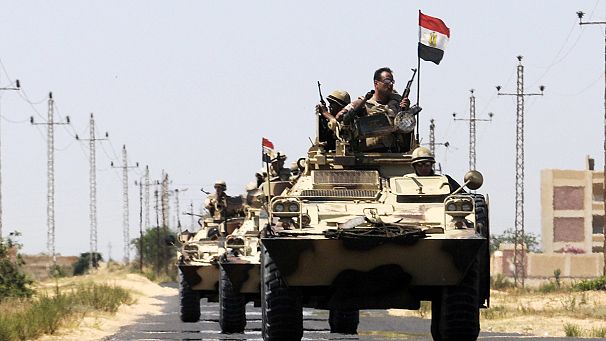
On the 16th of May a group of gunmen conducted a daring attack against Egyptian security forces in Sinai . They kidnapped seven people, of which six were border control police and one an army soldier, who were heading back to their homes to spend their holiday. Seven days after the kidnapping the soldiers were freed. Although this is not the first time security personnel have been kidnapped in Sinai this group in particular were received by the President, the Minister of Defense and the Minister of Internal Affairs.

The incident, which led to a strike among border control police officers, resulted in the launch of a military operation to free the soldiers. It also provoked a wider debate on security on the Sinai peninsula, raising questions on whether it has became a new base for Al Qaida in the region. Likely, it draws attention to Egypt’s changing security policy under the country’s new leadership and the potential repercussions on the relationships with both Palestinians and Israelis.

Kidnapping is one of the many sorts of violence used against security authorities in Egypt after the revolution. It became a frequently employed technique by Bedouin tribes in order to contest government decisions or demand the release of condemned and sentenced members of the tribe. While usually used against tourists, kidnappings sometimes extended to police officers.

After the January 2011 revolution, police forces faced increasing attacks against its personnel, camps and police stations, which made it difficult to resume core tasks – especially in the troubled Sinai, where many policemen were substituted with military personnel. Being subject to brutal security measures under Mubarak regime, some of the peninsula’s tribes, particularly in the geographically challenging middle Sinai area, exploited the void. Not only did they start using heavy arms, usually coming from Libya or through Gaza channels, during their smuggling and trafficking activities. They also resorted to extreme force to revenge the police and especially the State Security Service and the public order Central Security Forces.

Army personnel targeting growing in Egypt

Yet, the 16th of May assault has novel elements to take into consideration. It is the first recorded case of an army officer being kidnapped. Bedouin tribes have dared to confront police forces several times but avoided confrontation with the army. During the chaos that followed the 2011 revolution, some military checkpoints were randomly shot at by unidentified armed men, but with hardly any injuries. The only recorded army officer death was during an attack on a police station in July 2011.
Egypt's President Mohamed Morsi

Direct organized violence against the army started for the first time last August, when a jihadist group launched a sudden and shocking attack on a military border camp, during the iftar evening meal in the holy fasting month of Ramadan, leaving 16 army recruits dead. The alarming attack reflected how some radical groups think of the army soldiers as “infidels”, against which fighting in Ramadan is a sort of holy war. With no one held responsible for that attack until now, violence against the military armed forces seems to be subject to a potential increase as well as normalization. Army personnel might no longer enjoy the immunity they have enjoyed in the region and eventually become targets to attacks and kidnappings, as the police personnel have been for the last two and a half years.

Another factor marking this incident is the usage of Al Qaida-like videos, a new technique emerging in Egypt. Few days after capturing the soldiers, the kidnappers issued a video featuring the soldiers being tied and blindfolded, each citing his name and affiliation. The army recruit was in the middle and directed a message to President Morsi and the Minister of Defense on behalf of the kidnappers. Their demands were to release a group of jihadists sentenced to death after having made an armed parade and launching a heavily armed attack on a police station and a court in the capital of Northern Sinai province in July 2011. Another video was released after the liberation of the kidnapped soldiers by a self-claimed jihadist group, which declared its intention to fight the Egyptian military everywhere in the country.

As Al Qaida has become more of an ideology, using a number of guerilla war and media techniques, rather than an organization, it is hard to tell if those who made the videos were directly affiliated with Bin Laden’s or Al Zawhiri’s Qaida. Furthermore, waging internal FARC-style warfare against the army in Egypt seems like a far-fetched and dismissed plot.

However, there is still a potential threat to Egypt’s Army. The military can become an easy target because most of its soldiers are recruits who are serving their one to three years of compulsory military service. Being spread all over the country makes them subject to assaults – on their holiday for example – just like the kidnapped soldiers. Moreover, many of them were......Read More

Thursday, January 31, 2013

Thoughts about Egypt's crap


Egypt is revolting …..Again?!
 
Ahmed Abou Taleb


One would think, after following the media’s narratives about the latest turmoil in Egypt, that the situation is as classical as the Egyptian revolution that took place two years ago: people VS the governor. But the fact is, since the SCAF has handed the power to Mohamed Mursi, the Muslim Brotherhood winning presidential candidate, the political scene in Egypt has been getting increasingly complicated. Several factors have been responsible for that.

New “players”
After 21 of the individuals charged with murder, in the Port Said Stadium events, have been sentenced to death, violence erupted in Port Said but joy overwhelmed Cairo.  Families of the convicts accompanied by the city football club’s fan association attacked the prison for long hours trying to free their charged relatives. Meanwhile, the Cairo based Ahly club fan association celebrated joyfully the sentence after 71 of its members have been killed in the stadium events in late 2012.
These events don’t only mark the tension between two clubs and their supporters all over the country but also the politicization of these youth associations. These fan clubs have been widely involved in politics since the revolution and were responsible for a series of political violence incidents that took place since Mubarak’s resignation in February 2011.
Lately, a new youth group has joined this violent struggle. The newly launched “Black Block” has used both violence and road cutting as techniques to pressure the government and oppose the president. However, claiming to be the guardian of the revolution doesn’t seem to be an enough reason to make people forgive the damage they cause to the daily life of an already suffering population.

A representative opposition?!
In fact, the complexity isn’t only due to the involvement of new actors but also due to the absence of some non represented factions whose silence leaves hollow gaps in Egypt’s political scene.  Despite its lately formed large coalition known as the National Salvation Front, the Egyptian opposition has failed to be a representative of the majority of those unfavorable of Mursi.
Whilst a majority of citizens disapprove of attacking police stations, local government buildings and cutting roads, several opposition spokesmen and figures haven’t showed the same feelings. On talk shows, they reluctantly blame such actions and insistently justify it by the fury of youth rebels against a failing regime. This fury theory might be right to some extent. But the recent attacks on prisons in Port Said & Suez have directly threatened the security of people and left them unsure about the identity of those demonstrating in the streets.  Moreover, it left them doubtful about the relation between the opposition and those responsible for violence.

A police under fire
Meanwhile, the tension that ravishes the society and its institutions has extended to reach critical government bodies such as the police. Policemen chased their minister away during a funeral of one of their colleagues because of the non sufficient arming. Over 120 police officers and central security forces soldiers have died in both criminal and politically motivated attacks against them during the last few months.
The Egyptian police have been a constant element of the ongoing problem.  One of the main causes of the revolution in 2011 was its brutality. On the one hand, one of the main criticisms to the post revolution governments is the incompetency of the police forces to provide security. On the other hand, police personnel themselves complain they are always under accusation whether they attempted to enforce law or to respect human rights.
Lacking the ability to reach a balance between law enforcement and respecting human rights makes it necessary for the police to undergo structural changes and doctrine reforms while being under fire.

Most Egyptians feel to a great extent confused and ignored. While political activists and political parties are struggling with the president to share power, people are suffering more and more the security void and the bad economic conditions. People are not only being divided on issues like the constitution but also the legitimacy of the president, the demands of the opposition and the priority of issues to put on top of the political agenda.  The renewed cycle of politically motivated violence makes a lot of people ask if politics is worth all that bloodshed.  

Tuesday, September 25, 2012

CNN: A Stand in the Sinai

This is a CNN Report about the human trafficking from Eastern Africa all the way to Israel passing by Sinai, where smugglers and gangs turn the life of those illegal immigrants into hell. A sad disgusting story, but its not the first to report. Local Newspaper like Al Masry Al Youm & Youm7 had already made extensive reports about these horrific stories

Mais toujours pas de reponse.


Sunday, June 10, 2012

Dots and lines

Its funny and weird how human beings can be seen as dots and lines to shoot at, video games style.

This video shows an  American Apache engagement in Afghanistan with Taliban insurgents.

Thursday, November 3, 2011

Anonymous vs. Zetas Amid Mexico's Cartel Violence


By Scott Stewart
The online activist collective Anonymous posted a message on the Internet on Oct. 31 saying it would continue its campaign against Mexican criminal cartels and their government supporters despite the risks.
The message urged inexperienced activists, who might not be practicing proper online security measures, to abstain from participating. It also urged individuals associated with Anonymous in Mexico not to conduct physical pamphlet drops, participate in protests, wear or purchase Guy Fawkes masks, or use Guy Fawkes imagery in their Internet or physical-world activities. Guy Fawkes was a British Roman Catholic conspirator involved in a plot to bomb the British Parliament on Nov. 5, 1605. The British celebrate the plot’s failure as Guy Fawkes Day each Nov. 5. In modern times, the day has come to have special meaning for anarchists. Since 2006, the style of the Guy Fawkes mask used in the movie “V for Vendetta” has become something of an anarchist icon in the United Kingdom and elsewhere.
It was no coincidence, then, that in an Oct. 6 video Anonymous activists set Nov. 5 as the deadline for Los Zetas to release an Anonymous associate allegedly kidnapped in Veracruz. The associate reportedly was abducted during an Anonymous leaflet campaign called “Operation Paperstorm.”
The Oct. 31 message acknowledged that the operation against Los Zetas, dubbed “Operation Cartel,” would be dangerous. It noted that some members of the collective would form a group of trusted associates to participate in a special task force to execute the operation. It asked supporters to pass information pertaining to drug trafficking to the Operation Cartel task force for publication on the Internet via a software tool developed by Anonymous that permits the anonymous passing of information.
When discussing Anonymous, it is important to remember that Anonymous is not a hierarchical organization, but rather a collective of activists. Individuals who choose to associate themselves with the collective frequently disagree over issues addressed by the collective and are free to choose which actions to support and/or participate in.
With Nov. 5 approaching, and at least some elements of Anonymous not backing down on their threats to Los Zetas, we thought it would be useful to provide some context to the present conflict between Anonymous and Los Zetas and to address some of its potential implications.

Context

The Mexican port city of Veracruz has been the epicenter of this event. Veracruz has been a busy place over the past few months in terms of Mexico’s cartel wars. The port serves as a critical transportation hub for Los Zetas narcotics smuggling. Because of this, STRATFOR has identified Veracruz as a bellwether for determining Los Zetas’ trajectory in the coming months.
In a major recent development in Veracruz, the Sinaloa cartel began an offensive into the Zetas stronghold using the Cartel de Jalisco Nueva Generacion (CJNG), which, under the name “Matazetas” (Spanish for “Zeta killers”), conducted high-profile body dumps of more than 50 alleged low-level Zetas operatives on Sept. 20 and Sept. 22. On Oct. 25, Mexican marines arrested Carlos Arturo Pitalua-Carillo, also known as “El Bam Bam,” who was the Zetas’ plaza boss in Veracruz. The Zetas in Veracruz thus are feeling pressure from both the Mexican government and the CJNG.
The Anonymous Internet collective entered this dynamic in August with its activities in Veracruz. It is common knowledge that members of local, state and federal governments in Mexico support various cartel groups. In the state of Veracruz, it is generally believed that some members of the state government support Los Zetas, the dominant cartel there. In response to this corruption, some who have associated themselves with Anonymous launched Operation Paperstorm. These activists distributed leaflets throughout Veracruz denouncing the state government for supporting Los Zetas. They conducted leaflet distributions Aug. 13, Aug. 20 and Aug. 29. They also released videos on the Internet on Aug. 26 and Aug. 29 condemning the Veracruz state government.
Activities outside Veracruz also played a part in setting the stage. On Sept. 13, the bodies of two people who had been tortured and killed were hung from a pedestrian overpass in Nuevo Laredo, Tamaulipas state. Signs left with the bodies said Los Zetas had killed the pair because they had posted information pertaining to the Zetas on blogs that specialize in reporting on the Mexican cartels. On Sept. 26, the decapitated body of Marisol Macias Castaneda was found in a park in Nuevo Laredo. Macias, who worked for a local newspaper, allegedly posted on cartel blogs using the nickname “Laredo Girl.” A message found with her body said the Zetas killed her due to her online activities.
Following the death of Laredo Girl, Anonymous claimed responsibility for a distributed denial of service attack against the official website of the state of Veracruz. Although her murder occurred outside of the state, Anonymous said its attack on the Veracruz website was in response to Laredo Girl’s death. This indicates that activists understand that Los Zetas are active in both areas and suggests that Veracruz state-based activists are driving the Anonymous campaign against Los Zetas.
Significantly, some individuals associated with Anonymous already were unhappy with the state of Veracruz over its decision to prosecute two individuals who had posted kidnapping reports on Twitter on Aug. 25 that proved false. According to the reports, a group of children had been abducted from a Veracruz school. The inaccurate reports allegedly caused some two dozen traffic accidents as terrified parents rushed to the school to check on their children. The so-called Twitter terrorists initially were charged with offenses that could have carried a 30-year sentence. Some associated with Anonymous, which has absolute freedom of speech on the Internet as one of its foundational principles, took umbrage at the prospect of such stiff penalties — especially given the stark contrast with the impunity enjoyed by many cartel figures in Mexico.
STRATFOR began to focus on the story following the Oct. 6 release of the video in which Anonymous activists threatened to release information about individuals cooperating with Los Zetas if the Zetas did not release the Anonymous activist kidnapped during Operation Paperstorm. In light of the approaching Nov. 5 deadline, we published an analysis of the topic on Oct. 28; the topic subsequently received a great deal of media coverage.
This publicity has generated a very interesting response from Anonymous that emphasizes that it is a collective, not an organization. Some Anonymous activists began to back off the issue, erasing online user accounts formerly associated with the campaign, suggesting the operation against Los Zetas had been a hoax and claiming that no activist had been kidnapped. Other activists suggested that the campaign was dangerous, ill-advised and should be suspended. Still other activists became more strident and determined in their posts, urging that the campaign continue. As noted, Anonymous’ collective nature means activists can select the actions they participate in, including Operation Cartel. It would only take one dedicated individual to continue the operation.
The will to continue was manifested Oct. 29 with the hacking of the personal website of Gustavo Rosario Torres, the former attorney general of the Mexican state of Tabasco. The site was defaced with a message from Anonymous Mexico stating that Rosario is a Zeta. Rosario has long been accused in the Mexican and international media of protecting Los Zetas, and videos long have circulated on YouTube making the same charge. The hacking of his website thus did not provide any startling revelation; Anonymous will have to uncover and publish original and timely information if it hopes to do much damage to Los Zetas.
The determination by some activists to continue the operation against Los Zetas also was reflected in the tone of the Oct. 31 message. Some activists associated with Anonymous clearly feel compelled to continue with the campaign over what they have characterized as an outpouring of public support in the wake of the media coverage. According to their Oct. 31 video statement:
“We received many expressions of support and solidarity as well as the voices of people crying for help. We must remember that we are on the side of the people, and we cannot let down the people, especially in critical moments like the one they currently live in.”
We therefore anticipate that some Anonymous activists will continue the campaign. We also believe that Los Zetas will respond.

Blowback

Mexico’s various cartels long have used the Internet to trumpet their triumphs on the battlefield and to taunt and even degrade their enemies. The cartels have posted videos of the torture, execution and desecration of the corpses of rivals. They also frequently monitor narcoblogs and sometimes even post on them. As demonstrated by the September blogger killings in Nuevo Laredo, Los Zetas appear to possess at least some rudimentary capability to trace online activity to people in the physical world. They are known to employ their own team of dedicated cyber experts and to have sources within the Mexican government.
In addition to technical intelligence, the Zetas can use old-fashioned human intelligence to track down their online enemies. People sometimes discuss their online identities with family and friends, and such information can be overheard and passed to Los Zetas in return for money. This danger was recognized in the Oct. 31 video from Anonymous that urges participants in their campaign not to discuss their activities with anyone.
In past Anonymous actions, like the December 2010 attack against PayPal after the WikiLeaks scandal broke, the U.S. and British governments arrested numerous individuals associated with Anonymous who allegedly participated in the attacks. In June 2011, Turkey arrested dozens of activists associated with Anonymous actions conducted against the Turkish government in response to its plan to establish a national Internet-filtering system. This indicates that some activists associated with Anonymous are not nearly as anonymous as they would like to be. Every action on the Internet leaves some sort of trail, making it very difficult to be truly anonymous.
Like other Mexican cartels, Los Zetas do not take affronts lightly. Even if Anonymous cannot provide information that damages Los Zetas smuggling operations, the very fact that the collective has decided publicly to challenge Los Zetas will result in some sort of response. The big question is whether the Zetas possess the capability to trace the organizers of the Anonymous action?
One challenge with tracking an entity such as Anonymous is that it is intentionally amorphous. It is also as transnational as the Internet, and it would be unsurprising if many of those chosen to participate in the operation against Los Zetas are located in the United Sates, Europe and other areas that are outside the Zetas’ immediate reach.
The amorphous nature of Anonymous can also cut the other way, however. If Los Zetas abduct and execute random patrons at an Internet cafe, behead them and place Guy Fawkes masks on their heads, it will be very difficult to prove that they were not associated with Anonymous. Los Zetas also could execute random people and claim they had provided Anonymous with information in order to intimidate people from actually cooperating with Anonymous. As Anonymous noted in its Oct. 31 video, this is dangerous business indeed.

The Big Picture

How the Mexican public reacts to the Anonymous operation must be watched. The criminal cartels and their violence have deeply affected many people in Mexico’s middle and upper classes. STRATFOR talks to many people in Mexico who fear that they or a family member will be kidnapped. In many communities, especially places like Ciudad Juarez, Torreon, Monterrey and Veracruz, businessmen find themselves in a terrible bind. They face ever-increasing extortion demands from the cartels while their business revenues dwindle because the violence associated with those same cartels has frightened people into not going out. This is forcing many small businesses to close. It also is creating a great deal of frustration and resentment.
At the same time, Mexico has become one of the most dangerous countries in the world for journalists, and many media organizations practice heavy self-censorship to protect themselves. In the wake of the September blogger killings, some of the narcoblogs, like Blog del Narco, have exhibited strong signs of self-censorship inspired by fear. As a result, many Mexicans believe the mainstream media are not of any real assistance in the face of cartel violence.
Mexican citizens also are frustrated with their government, which, as noted, is well-known for corruption. This sentiment is feeding Anonymous’ original campaign in Veracruz. This frustration even has led some people to begin discussing the creation of vigilante groups to fight the cartels — though this has been attempted before in Mexico. As we saw in the case of La Familia Michoacana, which began as such a vigilante group, vigilantism frequently does not end well.
This is where Anonymous may fit in. With Mexican citizens unable to rely on their government, the media or even armed vigilante groups for assistance, they may embrace Anonymous, coming to view its form of cybervigilantism as an outlet for their frustration. If Anonymous is perceived as a safe way to pass information pertaining to cartel activities, we may see people from all over the country begin to share intelligence. Such human intelligence could very well prove to be far more damaging to the cartels than any information Anonymous activists can dredge up electronically. As this operation is becoming more widely publicized, the pool of people outside Mexico who might wish to participate will likely grow. The number of people inside Mexico who wish to provide information might grow as well.
Anonymous has taken on many powerful entities in the past, such as major transnational corporations and governments. But the repercussions from participating in such operations were never as grave for online activists as they are in this case. Being identified and detained by Scotland Yard or the FBI is a far different situation than being identified and detained by Los Zetas.
http://www.stratfor.com/weekly/20111102-anonymous-vs-zetas-amid-mexico-cartel-violence?utm_source=freelist-f&utm_medium=email&utm_campaign=111103&utm_term=sweekly&utm_content=readmore&elq=7e19c2a1428b45ea9b018e7d5d0adb40

Wednesday, October 12, 2011

On violence and the human instinct to kill


As Egypt lives these critical events and shocking moments, I thought it would be good to think about the endogenous human love of violence and the human instinct to kill.
“As far back as we can tell, people have devoted some of the best of their minds and bodies to the problems of killing their fellows. Humans are the only animals which take the business of killing other members of their species with such seriousness. Other primates kill members of other species, usually for food. Members of the same species fight amongst themselves for mates, territory and so on, but they rarely fight to death. Killing amongst the non-human primates is equivalent to murder rather than to war. War is predominantly human activity. Despite its frequency, it is an activity which conflicts with the aims of most other human activities, such as the quest for wealth, knowledge, a happy family life and so on, all of which are better pursued under conditions of peace. The paradox is apparent. As Thomas Hobbes remarked, 'Avoid the "state of warre" in order to pursue the "Arts of Peace".

War is not universally abhorred. People’s attitudes towards violence culminating in death and suffering are ambivalent, combining horror for its obvious miseries with fascination for its splendour and the opportunities for gallantry and even for a nobles death which war provides.

Attitudes to war during the twentieth century seems to have altered somewhat, and common belief seems to regard it as a regrettable necessity rather than as something desirable in itself.

War appears as the supreme example of irrationality. It is the wanton destruction of life and the general conditions of human happiness. War may well destroy the human race in its entirety; it will almost certainly still cause much misery and suffering in the future as it has in the past. To link, it with rationality would seem unusually absurd.”

MICHAEL NICHOLSON in Rationality & the analysis of international conflict