2022 Loan Offer.
I am Ahmet Kaplan an International Investment financing Consultant Ltd working for top investment financing companies in Kuwait and Qatar, Switzerland, UK, Hong Kong, Japan, Middle East and Turkey. I help clients and individuals and organisations seeking investment funding for their viable investments or projects anywhere in the world.
We are interested in funding projects and investments from $10 million to $10 billion up to a period of 20 years through project/investment loan approved from top global rated banks or through Joint Venture (JV) project partnership funding with some top global networth investors and politicians from Switzerland, Middle East, Turkey and Africa.
We are currently interested in funding viable businesses, investments or projects in the following areas of interest, after a successful one-on-one investment presentation with the investors team of fund managers: We also pay 1% commission to brokers, who introduce project owners for finance or other opportunities.
* Starting up a Franchise
* Business Acquisition & Expansion
* Medical/Healthcare procurement & Supplies
* Capital/Infrastructural Project
* Oil, Gas & Renewable Energy
* Commercial Real Estate Purchase & Development
* Hospitality & Leisure
* Government/NGO Contract Execution
* International Trade Financing
Get in touch if you have a viable project that requires funding.
Yours Truly,
Mr. Ahmet Kaplan
Chief Financial Officer-CFO
Unicap International Investment Consultant Finance Ltd
Kuwait city, Kuwait
Thursday, August 18, 2022
LOAN OFFER 2022


Saturday, August 13, 2022
Monday, July 25, 2022
Seeking for Joint Partnership (JV) investments Assistant
Dear Friend,
My name is Dr.Sabastine Dos Santos (The Private Financial Adviser to the daughter of former president of Angola, Mrs Isabel dos Santos) I got your contact through reliable source, Mrs Isabel dos Santos mandated me to look for a genuine honest person whom some of their funds will be entrusted for safe keeping and Joint Partnership (JV)investments Purposes,due to the current political situation in Angola right now. If you are the honest person, kindly write to me quickly, also you can contact me via my Mobile/whatsapp (+244 943 311 670) for your interest so I can give you further directives on how to get hold of the investment funds of Mrs Isabel dos Santos.
I await your details.
If you are interested, Please furnish me with your.
1) Real Names.
2) Direct Mobile/whatsapp numbers for easy communications.
3) Occupation.
4) Residence address.
I await your prompt response.
Best Regards.
Dr.Sabastine Dos Santos.
Mobile/whatsapp:+244 943 311 670.
Tuesday, May 3, 2022
From Dr Ava Smith from United States
--
Hello Dear,
how are you today?hope you are fine
My name is Dr Ava Smith ,Am an English and French nationalities.
I will give you pictures and more details about me as soon as i hear from you
Thanks
Ava
Hello Dear,
how are you today?hope you are fine
My name is Dr Ava Smith ,Am an English and French nationalities.
I will give you pictures and more details about me as soon as i hear from you
Thanks
Ava
Tuesday, April 26, 2022
From Dr Ava Smith from United States
--
Hello Dear,
how are you today
My name is Dr Ava Smith,Am English and French
I will share pictures and more details about me as soon as i hear from you
Thanks
Ava
Hello Dear,
how are you today
My name is Dr Ava Smith,Am English and French
I will share pictures and more details about me as soon as i hear from you
Thanks
Ava
Saturday, April 23, 2022
Tuesday, April 5, 2022
Saturday, August 6, 2016
Saturday, August 30, 2014
Ansar Jerusalem beheads 4 Egyptians accused of being Israeli 'spies'
By August 29, 2014
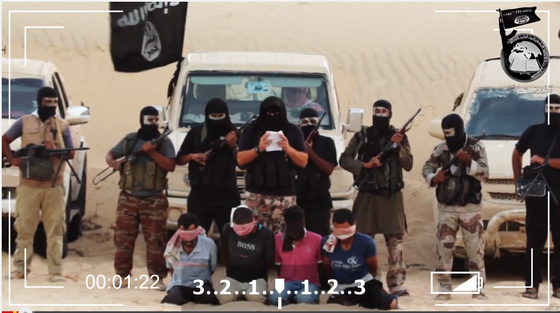
A masked Ansar Jerusalem
terrorist is shown standing behind four blindfolded Egyptian civilians,
who were accused of being Israeli "spies." All four were beheaded later
in the same video.
Tuesday, January 14, 2014
South Sudan’s crisis is far beyond a power struggle
On December 15, around 10
PM, heavy gun fire clashes between the South Sudanese presidential
guards were reported in the capital Juba. The national TV went off air,
and the airport was closed. The following day, President Salva Kiir
appeared in full military attire in a press conference and accused the
former vice president Riek Machar of leading a failed coup.
The death of several hundreds
in few days and the attacks on UN soldiers forced international and
regional mediators to intervene in an attempt to prevent this political
tension from escalating into a civil war. As negotiations are being
arranged, several questions need answers: Are the factors behind this
crisis purely political? How mature is the country’s leadership? And how
fragile is this nascent nation? In fact, several questions will remain
unanswered.
Machar was in the lead, and along with his colleagues he declared a rally to take place few days later. As party seniors invited Machar and his colleagues for an internal dialogue with Kiir during the National Liberation Council (“NLC”) event, the rally was postponed. Bishops and sheikhs gave the opening speech of the NLC reminding all the leaders in the room that discussion was the wise way to solve problems.
But apparently this did not calm the brewing anger. After the first day of the NLC meetings, and specifically on December 14, Machar declared he was pulling out of the meeting and invited his colleagues to do the same.
Last July, Machar was sacked from his position as a vice president, but remained serving as the vice chairman of the ruling SPLM. Commenting on his dismissal with a smile, he declared he will run against President Kiir for his positions as chairman of the SPLM and as president of the Republic.
Machar was not the only challenger to Kiir’s leadership. Pagan Amum, the former secretary-general of SPLM, who was sacked at the same time as Machar, also declared he would run for president in the 2015 elections. Amum was later subject to an internal SPLM investigation and was dismissed from the party – a decision which incited much criticism about Kiir.
Both men had a habit of openly criticizing Kiir’s decisions even when they still served in office. But after their dismissal, they waged a campaign against the SPLM’s leader, calling for internal reform and describing him as an undemocratic president.
In a mosaic society like South Sudan, politics is never the sole motive behind power struggles......Read More
http://globalriskinsights.com/2014/01/08/south-sudans-crisis-is-far-beyond-a-power-struggle/
Friday, November 15, 2013
Qatar: The Small State Guide to Politics and Business?

Qatar model holds potential and risks for small-state development
Qatar is one of the
world’s smallest states, but it also has one of the largest gas
reserves. Small and wealthy, Qatar’s policies have echoed elsewhere. Is
it a guide for other small states to follow?
http://globalriskinsights.com/2013/11/11/is-qatar-the-small-state-guide-to-politics-and-business/
Qatar has the third largest gas reserves in the world valued by BP at 33.6 trillion cubic meters. In a world dependant on energy, Qatar reached the highest GDP per capita in the world in 2012, estimated at USD 88,000 per person, as well as soaring revenues reaching $9.6 billion in April 2012 alone. But the country shares problems with other GCC countries including Bahrain, Kuwait and UAE, where the small local population is outnumbered by a massive migrant one. In 2012, expatriates accounted for 94% of Qatar’s total labour force of 1.3 million. Furthermore, the country heavily depends on the profit generated by exploiting its non-renewable natural resources. In 2012, the Qatar Statistics Authority declared that half of Qatar’s GDP was generated by the oil and gas sector. Whether these statistics are positive or not, the country’s rulers have tried hard to distinguish their small emirate from the rest of the Gulf States. Foreign politics is an obvious example.
Activist foreign policy
On the one hand, adopting unconventional stances has characterized Qatari regional foreign politics. Qatar was one of the first Arab states to establish diplomatic ties with Israel, starting in 1991. It is also one of the very few who maintain a relationship with Israel despite not having peace treaties following previous wars (e.g. Egypt and Jordan) or having a Jewish population (e.g Morocco and Tunisia). In the Gulf, it has many stances different from those of its neighbors who share the same political regime of family led states. Monarch-led countries like Saudi Arabia, UAE, and Bahrain were obviously very hesitant to welcome the Arab Spring, yet Qatar was a strong supporter of almost every regime change in the Arab world. For instance, while the majority of Gulf States restricted their relationships with the former Morsi regime and strongly back the current Egyptian administration, Qatar has sided with the Muslim Brotherhood.
On the other hand, seeking regional leadership has also been one of Qatar’s main foreign policy traits. Several times it offered to act as a mediator in regional and even distant conflicts. It hosted several Darfur peace process rounds and donor conferences, and proposed several initiatives to resolve the Arab-Israeli conflict. Seeking leadership sometimes extended to challenging other Arab countries, including the influential ones. This consequently gained Qatar several foes. The pre-2011 Arab League annual summits witnessed ongoing tension between the Qatari Emir and several other Arab leaders, especially Gaddafi and Assad. Ironically, few years later, Qatar became actively engaged in financing the air strikes against the Gaddafi regime as well as supporting the rebels in Syria’s civil war. It was the first and only Arab state who presented one of its citizens to run for the position of Secretary General of the Arab League in 2011 – a position that have always been dominated by Egypt since the League’s foundation over 60 years ago.
A real democracy?
Seeking an international reputation is also reflected internally. Qatar’s ruling family works hard to appear as modernizing and pro-democracy as possible. In a untypical move in the Middle East, the former Emir of Qatar Hamad Bin Khalifa handed over the power to his younger son Prince Tamim, making him the new ruler of the country. As the new Prince sacked the once powerful PM Hamad Bin Jassem and replaced the guard by a new one, Tamim declared he would continue his father’s track. Domestically, the new Emir seems to face several challenges, starting with re-organizing his own household, up to fixing regional relationships by creating an effective government structure and tackling the country’s social issues. It is too early to judge if this power-shift is a reform step towards government accountability, transparency and maybe a bit of democracy like Kuwait, or if it nothing but a promotional façade to this small country seeking both power and attention. Political freedoms have not seemed to change substantially. A poet was sentenced to 15 years in prison for allegedly inciting the people and insulting the former Emir in a poem in 2010. The verdict was nothing but confirmed during an appeal that took place earlier this month.
Resources and mounting challenges
Business-wise, Qatar is more successful than it is in its internal politics. The Emir seems to have an integral plan to diversify the economy through different approaches, including developing the private sector to attracting financial services entities, promotion of tourism and of course encouraging its sovereign wealth fund, Qatar Investment Authority (“QIA”), to invest in a variety of sectors around the world. The QIA is considered one of the wealthiest in the world, with assets estimated between USD 100-200 billion, and a long list of shares and investments that include Porsche,.........Read more
Sunday, October 13, 2013
Egypt: Between Counter-terrorism & Reintegration
By Ahmed Abou Taleb
On the 23rd of September, after the socialist party Al Tagamo’a filed a case, a Cairo court ordered the Egyptian interim government to ban all Muslim Brotherhood (MB) activities and the organizations derived from it. As this is not the first ban of the Islamist organization in its 85-year history, the decision raised many questions on the impact, as well as the efficacy, of the verdict. While some argue that such decisions are a return to the old regime’s oppression, others assert that the ban is not enough to ensure the country’s stability.
The verdict, which included the seizure of the group’s funds and assets, seems similar to previous decisions by former governments. Yet, it differs from its precedents. In the 1940s, Prime Minister Mahmoud Fahmy Al Nokrashy decided to dismantle the organization only to be assassinated by the Brotherhood’s militia 20 days later. A few years later, Gamal Abdel Nasser decided to dismantle the group after a failed attempt to assassinate him. None of these previous decisions banned the organization’s activities, nor were they issued by a court after a lawsuit.
The court’s decision is controversial for several reasons. It comes after blood was shed during the authorities’ attempts to end some of the organization’s demonstrations and sit-ins, as well as the detention of some of the MB leaders, who allegedly incited and financed violent activities. This prompted the MB to run a huge media campaign in different Arab and Western countries, portraying the MB as a victim of oppression and prejudice practiced by security forces. The campaign succeeded to a great extent in distancing the organization from the attacks against churches, security forces in Sinai and police stations in several cities—as well the presence and use of arms during sit-ins and demonstrations.
Furthermore, some of the youth revolutionary groups, who have stood against the Supreme Council of the Armed Forces (SCAF) since the January 2011 revolution, suspect that the army still has intentions to stay in power. Even though the army and its leader General Abdel Fattah Al Sisi do enjoy massive support at the moment—due to the campaign against terrorism and successful domestic public relations techniques—questions regarding the military’s intentions remain prevalent in public discourse. Hence, some interpret certain decisions.....READ THE ARTICLE
Special Report: The real force behind Egypt's 'revolution of the state'
(Reuters) - In Hosni Mubarak's final days in office in 2011, the world's gaze focused on Cairo, where hundreds of thousands of protesters demanded the resignation of one of the Arab world's longest serving autocrats.
Little attention was paid when a group of Muslim Brotherhood leaders broke free from their cells in a prison in the far off Wadi el-Natroun desert. But the incident, which triggered a series of prison breaks by members of the Islamist group around the country, caused panic among police officers fast losing their grip on Egypt.
One officer pleaded with his comrades for help as his police station was torched. "I am faced with more than 2,000 people and I am dealing with them alone in Dar al Salam, please hurry," the policeman radioed to colleagues as trouble spread. "Now they have machine guns, the youth are firing machine guns at me, send me reinforcements."
In all, 200 policemen and security officers were killed that day, Jan 28, called the Friday of Rage by anti-Mubarak demonstrators. Some had their throats slit. One of the Muslim Brotherhood leaders to escape was Mohamed Mursi, who would become president the following year.
Egypt's Interior Ministry, which controls all of the country's police forces including state security and riot police, never forgot the chaos. In particular the Wadi el-Natroun prison break became a powerful symbol inside the security apparatus of its lost power. Officers swore revenge on the Brotherhood and Mursi, according to security officials.
When army chief Abdel Fattah al-Sisi appeared on television in July this year to announce the end of Mursi's presidency and plans for elections, it was widely assumed that Egypt's military leaders were the prime movers behind the country's counter revolution. But dozens of interviews with officials from the army, state security and police, as well as diplomats and politicians, show the Interior Ministry was the key force behind removing Egypt's first democratically elected president.
Senior officials in Egypt's General Intelligence Service (GIS) identified young activists unhappy with Mursi's rule, according to four Interior Ministry sources, who like most people interviewed for this story, asked to remain anonymous. The intelligence officials met with the activists, who told them they thought the army and Interior Ministry were "handing the country to the Brotherhood."
The intelligence officials advised the activists to take to the streets and challenge Mursi, who many felt had given himself sweeping powers and was mismanaging the economy, allegations he has denied. Six weeks later, a youth movement called Tamarud - "rebellion" in Arabic - began a petition calling for Mursi to step down.
Though that group's leaders were not among the youth who met the intelligence officials, they enjoyed the support of the Interior Ministry, according to the Interior Ministry sources. Ministry officials and police officers helped collect signatures for the petition, helped distribute the petitions, signed the petition themselves, and joined the protests.
"They are Egyptians like us and we were all upset by the Brotherhood and their horrible rule," said a 23-year-old woman in the Tamarud movement who asked not to be named.
For the Interior Ministry, Tamarud offered a chance to avenge Wadi el-Natroun; the reversal of fortunes has been remarkable. The state security force, both feared and despised during Mubarak's 30-year rule, has not only regained control of the country two and half years after losing power, but has won broad public support by staging one of the fiercest crackdowns on the Muslim Brotherhood in years.
The interior minister openly speaks of restoring the kind of security seen under Mubarak. A renewed confidence permeates the police force, whose reputation for brutality helped fuel the 2011 uprising. Egyptians now lionize the police. Television stations praise the Interior Ministry and the army, depicting them as heroes and saviors of the country.
The Interior Ministry's most dreaded unit, the Political Security Unit, has been revived to deal with the Brotherhood. Under Mubarak, officers in that department were notorious for treating citizens with a heavy hand and intruding into their lives. When activists broke into the agency's premises shortly after Mubarak was forced to quit on February 11, 2011, they found and posted online documents, videos and pictures of what they described as a torture chamber with a blood-stained floor and equipped with chains.
The Interior Ministry has apologized for "violations" in the past and has said they will not be repeated.
Key to the turnaround has been the Interior Ministry's ability to forge much closer ties to the army, the most powerful and respected institution in Egypt. It was a tactic that began almost as soon as Mubarak stepped down.
FUMING SILENTLY
Weeks after Mubarak was overthrown, the Interior Ministry called a meeting at the police academy in Cairo. The gathering, headed by the interior minister and senior security officials, was the first in a series that discussed how to handle the Brotherhood, according to two policemen who attended some of the gatherings.
Thousands of mid- and lower-ranking officers were angry and said they could not serve under a president they regarded as a terrorist. Senior officers tried to calm them, arguing that the men needed to wait for the right moment to move against Mursi. "We tried to reassure them but the message did not get through," said a senior police official. "They just fumed silently."
The senior state security officer told Reuters there were no explicit orders to disobey Mursi but that a large number of officers decided they would not be "tools" for the Brotherhood.
"I worked during Mursi's time. I never failed to show up at any mission. This included securing his convoys. Yet I never felt I was doing it from the heart," said one major in state security.
"It was hard to feel that you are doing a national job for your country while what you are really doing was securing a terrorist."
Resentment grew when Mursi pardoned 17 Islamist militants held since the 1990s for attacks on soldiers and policemen. One of the militants had killed dozens of policemen in an attack in the Sinai. None of them publicly denied the charges or even commented on them.
Mursi's decision last November to grant himself sweeping powers triggered a wave of public protest. On December 5, protesters rallied in front of the Ittihadiya, the main presidential palace in Cairo. As the crowd grew, Mursi ordered security forces to disperse them. They refused. A senior security officer said there was no explicit order to disobey Mursi but they all acted "according to their conscience."
The Muslim Brotherhood brought in its own forces to try and quell the unrest and Brotherhood supporters tried to hand some protesters to police to be arrested. But the police refused, Brotherhood officials said at the time.
"Do they think the police forgot? Our colleagues are in jail because of the Brotherhood," said a state security officer.
Ten people were killed in the ensuing clashes, most of them Brotherhood supporters. Liberal activists accused Brotherhood members of beating and torturing anti-Mursi protesters.
Mursi miscalculated further by calling off a meeting sought by the army to discuss how to calm the storm, according to two army sources.
"It was a veiled message to stay out of politics, and we got it, as we understood that Mursi was an elected leader and (it) would be hard to defy that," said an army colonel. "But it was clear by then where his rule was driving the state."
"CONSTANT FIGHTS"
In January 2013, Mursi fired Ahmed Gamal, former senior state security officer, as interior minister and replaced him with Mohamed Ibrahim who was the senior-most official with the least exposure to the anti-Brotherhood factions inside the ministry, security sources said. Ibrahim was seen as weaker and more malleable than Gamal, who was blamed by the Brotherhood for not acting harshly enough against anti-Mursi protests.
But appointing Ibrahim, who was previously an assistant to the interior minister for prison affairs, proved to be a costly mistake. He moved to get close to the army, attending events to establish direct contact with army chief Sisi and regularly complimenting the general on his management techniques, said the police major.
Sisi had served as head of military intelligence under Mubarak. He was known to be religious and had the charisma to inspire younger army officers. Mursi believed those younger officers posed less of a threat than the old generals who had served under Mubarak and whom he fired in August 2012, two months after he took office.
But the country's police chiefs had one message for the military: The Brotherhood is bad news.
"We are in constant fights on the streets. This made us tougher than the army and ruthless," said the police major. "We don't understand the language of negotiating with terrorists. We wanted to handle them from day one."
Ibrahim rejected requests by Reuters for an interview and would not answer questions sent by email. Sisi could not be reached for comment.
By early 2013, army officers and Interior Ministry officials had begun meeting in the military's lavish social and sports clubs, some of which overlook the Nile. Over lunch or steak dinners, officials would discuss the Brotherhood and Egypt's future, according to senior state security officers and army officers who took part in the meetings.
The Interior Ministry argued that the Brotherhood was a threat to national security and had to go, according to one senior security officer. In the 1990s, during the Interior Ministry's battle with the Muslim Brotherhood, the ministry had referred to all Islamists as terrorists. It urged the army to adopt the same terminology.
"I have gone to some of those meetings with the army and we spoke a lot about the Muslim Brotherhood. We had more experience with them then the army. We shared those experiences and the army became more and more convinced that those people have to go and are bad for Egypt," the senior security officer said.
"The army like many people who have not dealt directly with the Brotherhood and seen their dirtiness wanted to believe that they have something to offer to Egypt. But for us it was a waste of time."
Officials in the Interior Ministry warned the military that Mursi's maneuverings were merely a way to shore up his power. The Muslim Brotherhood, they told their army colleagues, was more interested in creating an Islamic caliphate across the region than serving Egypt.
"The Brotherhood have a problem with the Egyptian state," said the state security officer. "I am certain that Mursi came to implement the plan of the Brotherhood ... They don't believe in the nation of Egypt to begin with."
Over time, middle-ranking Interior Ministry officers became more vocal with the military. The message got through at the highest level. Early this year, army chief Sisi warned Mursi that his government would not last.
"I told Mursi in February you failed and your project is finished," Sisi was quoted as saying in an interview published this month in the newspaper al-Masry al-Youm.
Interior Ministry officials believed that the Brotherhood planned to restructure the ministry, one state security officer said. Concerned officials discussed the issue in a private meeting in the parliament.
One option was the cancellation of the police academy. Many saw that as a threat to their institution and careers.
"The news became known to young officers. This action is against the interest of the officers. He was fighting their future," said the state security officer.
Muslim Brotherhood officials have denied plotting against the Interior Ministry and say there were no plans to dismantle the police academy. They have previously accused Interior Ministry officials of working to undermine the government, refusing to protect Brotherhood leaders, and trying to turn the public against the group's rule.
"We cooperated with the Interior Ministry all along. We never had plans to undermine it or the police academy. It was the Interior Ministry that refused to work with us," said Brotherhood official Kamal Fahim. "All along they resisted us and tried to turn Egyptians against us."
"DOWN, DOWN"
Pressure from the Interior Ministry on Sisi and the military grew, helped by the emergence in May of the Tamarud.
At first the group was not taken seriously. But as it gathered signatures, Egyptians who had lost faith in Mursi took notice, including Interior Ministry officials. Some of those officials and police officers helped collect signatures and joined the protests.
"Of course we joined and helped the movement, as we are Egyptians like them and everyone else. Everyone saw that the whole Mursi phenomena is not working for Egypt and everyone from his place did what they can to remove this man and group," said a security official.
"The only difference was that the police and state security saw the end right from the start but the rest of the Egyptians did not and had to experience one year of their failed rule to agree with us."
On June 15, the Interior Ministry held a meeting of 3,000 officers, including generals and lieutenants, at its social club in the Medinat Nasr district of Cairo to discuss the death of a police officer killed by militants in Sinai. Islamist militancy in Sinai, mainly targeting police and army officers, had risen sharply after Mursi's election.
Some at the meeting blamed "terrorist elements ... released by Mohamed Mursi," said the state security officer.
Police officers started chanting "Down, down with the rule of the General Guide," a reference to Muslim Brotherhood General Guide Mohamed Badie, now in jail on charges of inciting violence during the Ittihadiya protests.
On June 30 - the anniversary of Mursi's first year in office - angry Interior Ministry officers joined Tamarud members and millions of other Egyptians to demand the president's resignation. Four days later, Sisi appeared on television and announced what amounted to a military takeover. Some security officials called the move "the revolution of the state."
TEARGAS, BULLETS AND BULLDOZERS
For weeks after Mursi's overthrow, Western officials tried to persuade Sisi to refrain from using force to break up Brotherhood protest camps in Cairo. But the hardline Interior Ministry, which had quickly regained its old swagger, pressed for a crackdown. Police officials argued that Brotherhood members had weapons.
"For us, negotiations were a waste of time," said the state security major. "We know what was coming: terrorism. And now after this horrible experience I think everyone learned a lesson and appreciates us and that we were right about those people."
Early on the morning of August 14 policemen in black uniforms and hoods stormed the Rabaa al-Adawiya camp, one of two main vigils of Brotherhood supporters in Cairo.
The police ignored a plan by the army-backed cabinet to issue warnings and use water cannons to disperse protesters, instead using teargas, bullets and bulldozers. Hundreds died there and many more died in clashes that erupted across the country after the raid.
Army officers later asked the police why the death toll was so high, according to a military source.
The interior minister said his forces were fired on first.
"It is one thing for decisions to be taken by officials in suits and sitting in air-conditioned rooms," said a state security officer in charge of some top Brotherhood cases. "But we as troops on the ground knew that this decision can never be implemented when dealing with anything related to this terrorist organization. Force had to be used and that can never be avoided with those people."
Despite the use of force and the deaths, liberal Egyptians who had risen up against Mubarak seemed sanguine.
The liberal National Salvation Front (NSF) alliance praised the actions of security forces. "Today Egypt raised its head up high," said the NSF in a statement after the raid. "The National Salvation Front salutes the police and army forces."
Two years after the Wadi el-Natroun prison break, the Interior Ministry had power again. It announced it would use live ammunition when dealing with protesters it accused of "scaring citizens." Trucks used by the once-dreaded anti-riot security forces now have signs on them which read "The People's Police."
The government has jailed the Brotherhood's top leaders in a bid to crush Egypt's oldest Islamist movement. Muslim Brotherhood officials now face trial in connection with the Ittihadiya protests.
Senior security officers say their suspicions about the Brotherhood were confirmed in documents they found when they raided the group's headquarters. The documents suggested that Mursi planned to dismantle the army under the guise of restructuring, they said. One of the documents, which a state security officer showed to Reuters, calls for the building of an Islamic state "in any eligible spot."
Muslim Brotherhood leaders could not be reached to comment on this document because most of them are either in jail or hiding.
Police officials say they no longer abuse Egyptians and have learned from their mistakes under Mubarak. But not everyone is buying that line.
Muslim Brotherhood leader Murad Ali, who was recently imprisoned, wrote in a letter smuggled out of prison and seen by Reuters that he was put in a foul-smelling, darkened cell on death row and forced to sleep on a concrete floor. Lawyers for other Brotherhood members say prisoners are crammed into small cells and face psychological abuse. One elderly Brotherhood prisoner said guards shaved his head and brought vicious dogs around to scare him, inmates near his cell told Reuters.
There were no complaints of the type of whipping or electrocution seen in Mubarak's days. But Brotherhood members say the current crackdown is more intense. "The pressure never subsides. None of my Brotherhood colleagues sleep at the same place for too long and neither do I," said Waleed Ali, a lawyer who acts for the Brotherhood.
(This story is refiled to clarify in seventh paragraph that GIS is not part of Interior Ministry)
(Writing by Michael Georgy; Edited by Richard Woods and Simon Robinson)
http://www.reuters.com/article/2013/10/10/us-egypt-interior-specialreport-idUSBRE99908D20131010#!
Wednesday, August 14, 2013
South Sudan Corruption Rampant, Despite Sacked Ministers
August 4, 2013 |

Over the past few weeks, President Salva Kiir of South Sudan has made several controversial decisions that will mark the history of the two-year-old nation. In an already troubled political scene, the president sacked two governors, two ministers and then dismissed his vice president, the secretary-general of his party and the entire cabinet. Amid this power struggle, the suspension of the two ministers following allegations of corruption comes as the first of its kind. It caused controversy and raised concerns that this was a politically motivated decision. But it also highlighted the challenges the infant nation faces, and the need to resist rampant corruption in the country’s complex political environment.
Suspended by the president, Minister of Finance Kosti Manibe and Minister of Cabinet Affairs Deng Alor stand accused of transferring $8 million of public funds from the national treasury into a private account “without the knowledge of the relevant state institutions.” The move came as the ruling Sudan People Liberation Movement (SPLM) suffered cracks within the top leadership. President Kiir’s decision to sack two out of the ten elected state governors – the Lakes State governor, followed a few months later by Unity State governor earlier this month – without explanation incited criticism even from fellow party leaders.
The then SPLM Secretary General Pagan Amum openly criticized President Kiir’s decision describing it as “wrong and politically motivated” decision, warning that the move may generate “mistrust and tribal tensions,” already problematic factors contributing to the country’s instability. A few days later, Pagan Amum himself and Vice President Riek Machar, who previously declared their intention to run the expected 2015 presidential, along with the entire cabinet were dismissed from their positions.
However, using corruption allegations to eliminate political rivals will not deal with the real weight of the problem and its impact on the state building process. Several scandals shocked the country, both during the interim phase that followed the signature of the CPA between Sudan and South Sudan (2005-2011) and after the referendum that led to the country’s independence in January 2011. Yet, rarely was anyone held accountable, which led donors to lose their confidence in the set-up government and the ruling elite.
Government procurement and construction projects are the areas most affected by corruption. One of the more shocking scandals was the grain Dura Saga project, a 2008 government food security program targeting the provision of grain in each state. Estimates suggest billions of dollars were paid to about 290 companies, some of which were one day old, but few reserves and stores were built and almost no food supply was ever delivered. An investigation launched in 2009 reached.......Read More
http://globalriskinsights.com/2013/08/04/south-sudan-corruption-rampant-despite-sacked-ministers/
Over the past few weeks, President Salva Kiir of South Sudan has made several controversial decisions that will mark the history of the two-year-old nation. In an already troubled political scene, the president sacked two governors, two ministers and then dismissed his vice president, the secretary-general of his party and the entire cabinet. Amid this power struggle, the suspension of the two ministers following allegations of corruption comes as the first of its kind. It caused controversy and raised concerns that this was a politically motivated decision. But it also highlighted the challenges the infant nation faces, and the need to resist rampant corruption in the country’s complex political environment.
Suspended by the president, Minister of Finance Kosti Manibe and Minister of Cabinet Affairs Deng Alor stand accused of transferring $8 million of public funds from the national treasury into a private account “without the knowledge of the relevant state institutions.” The move came as the ruling Sudan People Liberation Movement (SPLM) suffered cracks within the top leadership. President Kiir’s decision to sack two out of the ten elected state governors – the Lakes State governor, followed a few months later by Unity State governor earlier this month – without explanation incited criticism even from fellow party leaders.
The then SPLM Secretary General Pagan Amum openly criticized President Kiir’s decision describing it as “wrong and politically motivated” decision, warning that the move may generate “mistrust and tribal tensions,” already problematic factors contributing to the country’s instability. A few days later, Pagan Amum himself and Vice President Riek Machar, who previously declared their intention to run the expected 2015 presidential, along with the entire cabinet were dismissed from their positions.
However, using corruption allegations to eliminate political rivals will not deal with the real weight of the problem and its impact on the state building process. Several scandals shocked the country, both during the interim phase that followed the signature of the CPA between Sudan and South Sudan (2005-2011) and after the referendum that led to the country’s independence in January 2011. Yet, rarely was anyone held accountable, which led donors to lose their confidence in the set-up government and the ruling elite.
Government procurement and construction projects are the areas most affected by corruption. One of the more shocking scandals was the grain Dura Saga project, a 2008 government food security program targeting the provision of grain in each state. Estimates suggest billions of dollars were paid to about 290 companies, some of which were one day old, but few reserves and stores were built and almost no food supply was ever delivered. An investigation launched in 2009 reached.......Read More
http://globalriskinsights.com/2013/08/04/south-sudan-corruption-rampant-despite-sacked-ministers/
Sunday, July 7, 2013
Egypt’s Fresh Start or Coup d’État

A four-day struggle between Egyptian protestors and their first democratically elected president Mohamed Morsi started on the 30th of June and ended up with his ouster on the 3rd of July. The multi-million demonstrations, calling for early presidential elections after only one year of Morsi in office, have sparked debate on legitimacy, the value of elections and raised crucial questions on the role of the army and the future of Egypt’s infant democracy.
The ouster, orchestrated wisely by the Commander in Chief (CIC) General Abdel Fatah El Sisy, was accompanied by other decisions such as the temporary suspension of the constitution, reforming some of its articles and the formation of a technocratic cabinet. Awaited for several hours, El Sisy’s decisions cheered up the demonstrators and angered Morsi supporters and allies, leading to violence between the two camps in the following days. Though often described by foreign observers as a coup, the army’s intervention can be seen from a different angle.
The demonstrations were first called for by the youth movement Rebel, launched earlier this year. According to the movement, 22 million citizens signed its petition demanding the resignation of former President Morsi, elected by about 12 million citizens a year ago. The petition also calls for early presidential elections. However, the latest Egyptian constitution, written and approved under Morsi’s rule, does not recognize petitions, which made the signatures a pressure rather than a practical mechanism for change.
The Freedom and Justice Party (FJP) – the political organization of the Muslim Brotherhood (MB) – and its Islamic allies consequently replied with “preemptive” demonstrations and sit-ins launched a week before June 30th named “No to Violence and Yes to Legitimacy”. Ironically, some of the MB speakers and radical figures threatened during the event to “crush” the anti-Morsi protesters. MB speakers not only waged a war of words against anti-Morsi protesters, frequently described as “infidels”, but also against the media; intellectuals; the armed forces; the police; the intelligence service; and the judiciary.
However, the roots of discontent of Morsi’s opponents are much deeper. Even those who do not care about politics found reasons to be furious. For months, Egyptians have suffered from power cuts that reached six hours per day in some places and usually had an impact on water supply – previously a rare experience. For weeks, people have stood for hours in long queues to fuel their cars or suffered due to the resulting traffic congestion. Watching the president and the cabinet describing these crises as “artificial” only increased the public disapproval. Witnessing members of the MB, the FJP and its allies being disproportionately favoured employment and rapidly promoted in the public sector, especially in local administrations, also fueled a widespread anger.

Thursday, June 20, 2013
Nile Dilemma: Between Development & Water Security
by
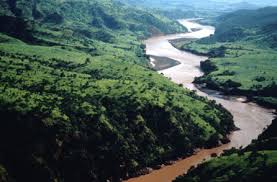
Over the last weeks, the waves of dispute have been disturbing the
often calm waters of the river Nile. Ethiopia, one of the source countries of
the river, has started diverting the Blue Nile, a tributary which supplies most
of the river's waters, in order to proceed with the Renaissance mega dam project.
The sudden move, taken upon the return of the Egyptian president Mohamed Morsi
from Addis Ababa, led to a heated debate in Egypt and sparked a war of words
between the two countries. Although, the project is not new, the river’s two
most populous nations have failed to reach consensus whether politically or
regarding the technical aspects of the dam. Seen by Ethiopia as crucial to its
development and viewed by Egypt as an imminent threat, the Renaissance dam is
apparently triggering an alarming water dispute on the shores of the world’s
longest river.
The Ethiopian government’s decision to divert the Blue Nile,
declared on the 27th of May, is a preparatory step to build its
national project known as the Grand Ethiopian Renaissance Dam (GERD). The
announcement comes before a tripartite committee, consisted of Ethiopian,
Sudanese, Egyptian and international experts, declares the findings of its dam
assessment study including an evaluation of the project’s impact on the two
downstream countries Sudan and Egypt. Situated only 40 km’s away from the
Sudanese border, the dam is expected to generate about 5,250 megawatts of
electricity after its completion in an estimated 4 years period. The Grand dam
means a lot to the East African nation who seeks to be the continent’s first
electricity exporter. It is the biggest project in a development plan
comprising 33 dams, which the country seeks to accomplish in order to improve
its irrigation system as well as produce electricity. The GERD is not only the
most important of these dams, with a cost of 4.8$ billion, but also the most
problematic. For years, Ethiopia’s plan to build such mega projects by the Nile
has been faced by rejection from the Nile’s downstream riparian countries,
Sudan & Egypt, who regard them as a threat to their water share, set by historic
international treaties and agreements.
As a
matter of fact, the water share of the Nile Basin countries is a complicated
issue whose roots date back to the mid 20th century. Measuring the
average annual flow of the Nile water, Sudan and Egypt signed an agreement in
1959 to allocate the 84 billion cubic meters that reach them, at 18.5 and 55.5
billion cubic meters respectively. The remaining 10 billion cubic meters is
lost due to evaporation. But as the world’s largest river, the Nile means much
more than these numbers. The amount of rain falling inside the Nile Basin is
estimated at an annual rate of 1,660 billion cubic meters. However, only about 4%
are exploited including Egypt’s large quota.
Not being a part of the agreement, Ethiopia and other basin countries
decided to make a new framework for the use of this exploited portion,
regardless to the six treaties signed during the British and Italian
colonization (of Egypt & Ethiopia respectively ) between 1891 and 1929 or
the 1959 agreement. In 2010, four countries signed the Entebbe agreement
and were later joined by other basin countries. Boycotted by Egypt and Sudan,
the two countries insisted that the signatories shall not seek to minimize
their water share; a practically impossible demand since the Entebbe
agreement mainly targets the redistribution of the Nile Basin countries’
shares. Consequently, the two countries
have always been allied in their rejection to the GERD. Yet Sudan recently
changed its stance on the project. The Sudanese government discovered that the
dam may be beneficial in terms of regulating the water flow and therefore
minimizing the impacts of the annual summer season floods. It will also prevent
the silt from perturbing the Sudanese small hydroelectric dams’ tribunes.
Besides, Ethiopia promised it will sell Sudan electricity at prime cost.
Egypt
has therefore found itself on its own and in discord with another populous nation
whose interests in development contradicts with its interests of national and
water security. In fact, each of the two countries has its own needs,
solutions, perspectives and challenges.
Ethiopia's tributaries supply about 85 % of the waters of the Nile
through the Blue Nile, known locally as the Abay River. Being on a large
hill, the country is full of waterfalls through which the water flows to the
North towards Sudan and Egypt. Yet the country suffers from primitive
infrastructure especially when it comes to electricity. According the World
Bank, in 2010, only 17 % of the country's 84.7 million people had access to
electricity. Trying to reverse the situation, the Ethiopian government put an
ambitious plan not only to provide 100% of the population with electricity by
2018, but also to be the continent’s first hydropower exporter. Launching the GERD project in April 2011, the
late Ethiopian Prime Minister, Meles Zenawi, proposed the establishment of a
Tripartite Committee, including experts from the three countries, as a good
will gesture to build trust among riparian countries. As a response to concerns
raised by Egypt & Sudan, the committee, which started its work in May 2011,
aimed at assessing the dam’s impacts over them.
Meanwhile
the Ethiopian government ran fundraising campaigns and sold bonds in order to
finance the project. To Ethiopians, the project became hence a milestone to
future development and a national project to which they shall all contribute.
About $350 million
were raised between April and September 2011 from civil servants, private
sector employees, students and private business people as well as Ethiopians in
the Diaspora. The government held celebrations and gave awards to various
individuals and organizations in recognition of their contribution to the
fundraising efforts.
On
the one hand, Ethiopian media highlights the country’s right to develop itself
exploiting its own resources. Sometimes, a comparison is made between Egypt’s
High Dam project in Aswan built in the 60’s and the GERD project to point out
for how long has Egypt been solely benefiting from the Nile and inciting a
change to this “unfair” situation. On the other hand, as much as the GERD might
seem like a national project, it isn’t subject to unanimity. In fact, in order
for the government to proceed with its dam building projects, amongst which the
most important is GERD, it had to evacuate around half a million indigenous
people who live in the dam’s building areas to other zones which aren’t
convenient to their pastoral activities. Most of the evacuations have been done
forcefully and amid intimidation by local authorities, according to
international rights groups, such as HRW, who sees that the country’s
hydropower policies are accompanied with human right violations. Protest to the project has sometimes reached
the extent that the Oromo community refugees in Egypt, demonstrated outside the
UNHCR offices in Cairo calling for the stoppage of the project. The project
hasn’t as well gained the unanimous support of the environmentalist organizations
which have warned from the dam’s effect and accused the Ethiopian government of
not conducting enough studies on its ecological impact.
Nevertheless,
as the committee presented the final report of its long study earlier this
month, the Ethiopian media positively highlighted that “the report
indicates that the design of the GERD is based on international standards and
principles…..[and] that the Dam offers high benefit for all the three
countries and would not cause significant harm on both the lower riparian
countries.” But that wasn’t what the Egyptian media
highlighted, which indicates how deep is still the rift between the two
countries, despite the declared efforts.

According to Egyptian experts on the tripartite committee, the
report recommended more studies. Local media pointed out that the studies were “incomplete”,
especially when it comes to the consequences in case of the collision of the concrete
dam; a vital part in any mega dam study.
But Egypt’s fears far exceed the collision of the dam. While the
rainfall in
some of the Nile Basin countries can reach 20,000 millimeter, Egypt’s share of
rainfall, does not exceed 20 millimeters. The
country’s current share of the Nile, seen as the lion share of the whole river,
is not even enough for its growing population needs. According to the Egyptian government, by
2017, Egypt’s annual water needs will rise to 86.2 billion cubic meters from
the current 71.4 billion cubic meters. Egypt consumes its full share and makes
up for its extra needs by using the remaining of Sudan’s share, by recycling
water, and by using any extra reserves it
has in the 162 billion cubic meters Lake Nasser behind the Aswan High Dam. In
fact, it might be surprising to know that Egypt, with its current rate of 860
cubic meters annually / person, is below the water poverty line set at 1,000
cubic meters annually/ person. Furthermore, any possible scarcity in the Nile
waters will certainly lead to demographic changes. For over 5000 years, the
Egyptian civilization and population have been installed on the river’s shore
with about 96% of the country’s current population living around the Nile
valley which represents 5% of Egyptian land, mainly constituted of desert.
Hence, the country’s struggle for its water share is almost a struggle of
existence. That’s why the consecutive Egyptian
administrations have always been depending on the carrot and stick approach.
They invested in Ethiopia with about $2.2 billion, and put the country on the
list of places where the Egyptian Foreign Ministry Fund provides medical and
logistical assistance, in order to
gain ground in the Horn of Africa nation. They also resorted to military intervention
threats when needed.
As
the people might not be aware of many of the previous figures and numbers, they
have been angry for many other reasons. The performance of the government, led
by the former Minister or Irrigation, raised many questions on how competent it
is as the cabinet neither declared any strategy, nor proposed any plans to
tackle this matter. Moreover, the Egyptian public has been confused by the
various opinions given by scientists and professors, who sometimes exaggerate
and other times trivialize the project and its impact on their lives. While
some scientists claim the project would dry Egypt’s Nile and ask for a military
operation, other allege that all Egypt has to worry about is the period to fill
the dam’s reservoir, confirming this is a negotiable issue. However, the lack of the government’s
transparency and the technical unclarity weren’t the only reasons Egyptians
have been reacting furiously to this topic.
The
construction of the GERD began in April 2011, only two months after the fall of
the Mubarak regime and in the middle of political disturbance. It has been considered
as a slap on the face of a weakening state that was drowning in its own
internal problems. And again, the Ethiopian government declared the diversion
of the Blue Nile, upon the return of an Egyptian delegation headed by the
president from Addis Ababa. Describing the step as surprising, the Egyptian
Minister of Irrigation, who was in the delegation, denied being informed about
it. Moreover, the fact that Addis Ababa declared the diversion before the
tripartite committee’s report meant for many Egyptians that Ethiopia does not
count a lot on the committee’s opinion and will build the dam anyway. Not to
mention the common belief that Israeli experts are contributing to this project
and deliberately harming the country. No evidence confirms such allegations,
but such a conviction is based on the fact that MASHAV (Israel’s Agency for
International Development Cooperation) funds selected irrigation projects in
Ethiopia, a topic usually raised by the Egyptian media when talking about the
East African country.
All
these elements led to a mounting discourse of war on both the official and
public level. In a scandalous “wrongly” aired meeting, between the president
and the chiefs of several political parties, many of the proposed solutions to
the “Nile Crisis” were about military intervention or destabilizing Ethiopia by
the General Intelligence Service units. As
shocking as the meeting and the proposals were, many Egyptians do support a
military intervention bearing in mind that the strict threatening tone by the
previous president and his predecessors was what halted the Ethiopian projects
for decades. Already burdened with the frequent power cuts that started few
months ago, this tired population doesn’t want to add water shortage to the
list of its daily concerns. As the topic got more politicized domestically, the
Egyptian president has lately declared that “all options are possible”, a
sentence which sparked a war of words between the Egyptian government and its
Ethiopian counterpart, and even the Ugandan government in support of Ethiopia.
However,
any military action by Egypt will face a series of difficulties. Distance is
already a major obstacle and logistics are very challenging. Egypt will have to
either acquire aerial refueling capabilities or another country’s permission to
launch an attack from its land. A Wikileaks cable stated that Cairo had previously
threatened to bomb new hydro-infrastructure initiatives on the Blue Nile back
in 2009 and 2010 and was discussing with Sudan if it could launch such attacks
from Sudanese airfields, an option which might cause political turmoil in the
region. Apart from direct military intervention, sending highly trained special
operations unit to sabotage the construction would also be a very politically
complicated and logistically challenging plan.
The current
tension between Egypt and Ethiopia shows the difficulty of reaching a future
agreement on allocation of the Nile's waters between all of its 10 riparian
states. It also shows how the contradiction between development, on the one
side, and water security, on the other side, can be the pattern of tomorrow’s water
conflicts. Although still unclear, the steps adopted by each country will
determine how future disputes amongst the Nile basin countries can be
regulated, whether by using force or by resorting to international law and
arbitration. The role media has been playing in both countries regarding this
issue hasn’t been constructive and may complicate the conclusion of any future
consensus. Egypt sure has many cards to
play before military intervention and Ethiopia certainly can correspond to
Egypt’s technical considerations on the project. It is true resource scarcity can trigger
conflict, but it is also true it can be a driving force for mutual cooperation
and development.
A SHORTER VERSION IS AVAILABLE ON GLOBAL RISK INSIGHTS
Subscribe to:
Posts (Atom)