
Tuesday, March 26, 2013


Monday, March 25, 2013

Thursday, March 21, 2013

Sunday, March 10, 2013
Libya's guns, gangs and the liberation of a masculine sickness
In Benghazi or a US suburb, the gun is a devil whispering to masculine hearts. This picture is less about freedom than power

Libyans celebrate the
second anniversary of the overthrow of Gaddafi. 'At a moment when guns
are proliferating dangerously from Sandy Hook to South Africa, here is a
photograph of what men see in them.' Photograph: Mohammad Hannon/AP
Are the guns in this photograph weapons or toys? The young men flaunting them look like they could have been playing with plastic guns not so many years ago, but the armoury they display here on the streets of Benghazi in Libya is very real. At a moment when guns are proliferating dangerously from Sandy Hook to South Africa, here is a photograph of what men see in them.
These youths, dressed half militarily, half casually – note the baseball cap, the low jeans – are driving round streets that apart from them, look empty. Well you wouldn't want to risk a stray bullet as these heroes celebrate the second anniversary of the uprising that overthrew Muammar Gaddafi. While the khaki- and camouflage-clad pair in the foreground look more or less like some kind of trained soldier with an official role, the car behind them is manned by equally well-armed kids whose dress and behaviour – the hooded youth raises a pistol wildly – is more gangsterish than military.
Why are guns the symbol of freedom at Benghazi's revolutionary celebration? This identification of guns with political liberty is not of course unique to north Africa. Defenders of the gun in the US associate it with citizens' liberties guaranteed by the second amendment to the constitution. They ignore the fact that any such liberties are matched in that venerable document by duties. But whatever you say about it, whatever you claim it means, a gun is fundamentally a piece of power. An armed man is always superior to an unarmed man, said Machiavelli. That is the point of view of the youths in this picture. They may be penniless, hungry, unemployed – who knows – but they possess the most basic form of power: a firearm.
In civil wars and sudden acts of violence, in Syria or an American suburb, the gun itself is an actor, because carrying it is such a temptation. It is a devil whispering to masculine hearts. This picture is about masculinity as much as guns: like a gang, these guys share their knowledge of the gun (if, that is, they do know how to shoot the death sticks they hold). They are bonded by an aura of toughness and strength. The gun freed Libya and it also liberates these kings of the street. It saves them from fear and ensures them respect.
Yet they seem almost strained in their joy. The most professional looking "soldier", on the left, poses with a smile as he rests a machine gun on his shoulder. He seems the most controlled. Yet his companion shakes a rifle in the air and makes a victory sign while yelling, in a way that seems restless, dissatisfied. Is waving a gun aloft enough? Is that all there is? Meanwhile the gangster-style youth behind them seems to be manically aware of his handgun's capacity to cause mayhem. For guns are just props, unless you use them. Their thrill demands ever greater demonstrations of the power they confer. There lies the temptation. This picture shows how societies get sick, when the gun becomes a male accessory.
http://www.guardian.co.uk/commentisfree/2013/feb/19/libya-guns-gangs-masculine-sickness?CMP=twt_gu&goback=.gde_2692730_member_216955786
Wednesday, February 27, 2013
جدليات تنموية
امبارح كنت في اجتماع في المؤسسة المصرية لمحاور التنمية، كان ضيفه د.عبدالمحسن برادة، خبير استراتيجيات تخطيط العمران والاسكان
كان الهدف الرئيسي استعراض بعض مشاريع التنمية ومناقشة مشروع ممر التنمية، بتاع د.فاروق الباز، وأفضل استراتيجيات التطبيق نظرا لأن الد. عبدالمحسن عنده خبرة طويلة في مشاريع التخطيط العمراني وتطبيقها
كان الهدف الرئيسي استعراض بعض مشاريع التنمية ومناقشة مشروع ممر التنمية، بتاع د.فاروق الباز، وأفضل استراتيجيات التطبيق نظرا لأن الد. عبدالمحسن عنده خبرة طويلة في مشاريع التخطيط العمراني وتطبيقها
وممكن يوضح لنا بعض النقط اللي نأخذ بانا منها عند التطبيق
أولا الرجل أشار لمشكلة عويصة وهي أن مصر تفتقر لآليات تحويل الخطط والدراسات النظرية إلى مشاريع على أرض الواقع، وأن عمليات التنفيذ غالبا ما بتصطدم بالقوانين والاجراءات الحكومية. مثلا، في مشروع يسعى لمنح حق الانتتفاع من الأراضي لفئة معينة بصورة معينة لانشاء مجموعة مُحددة من المشاريع، لكن وقت التنفيذ تظهر بقى كل المصطلحات واللعابيك والأوبح القانوني فيتعثر
التطبيق ثم يشيخ المشروع وتموت الفكرة،وهكذا
بيانات محزنة \ مرعبة:
الرجل تفضل وأوضح مرارا مجموعة من المقومات الموجودة في مناطق معينة علشان انتاج طاقة الرياح والطاقة الشمسية (مش كلام بوابين لكن ببيانات وخرائط ومشاريع...الخ) لكن لم يخل العرض من بيانات مرعبة وقصص تحزن
مثلا، البترول اللي في منطقة رأس غارب، على أقصى تقدير هينفذ في خلال 15 عاما
مش مهم، لكن اللي فرق معايا أوي كان الحديث عن مشروع تنمية منطقة غرب الدلتا
 صورة لاحدى المشاريع في المنطقة
نبذة كدة عنها: منطقة غرب الدلتا هي منطقة طريق مصر اسكندرية الصحراوي اللي بنعدي فيها كلنا تقريبا في الصيف. المنتجعات اللي على الشمال (الريف الأوروبي وغيرها) ما هي إلا واجهة تغطي امتداد 25 كم من الزراعات في الصوب و الصناعات القائمة على الزراعة. المنطقي دي بتصدر ما يقرب من 37% من اجمالي صادرات مصر الزراعية. وصل قيمة التصدير من المنطقة دي لوحدها في عام 2005 إلى 6.2 مليار دولار. مشاكل المنطقة هي الاعتماد على المياه الجوفية وعدم وجود طريق سهل وسريع للمطار.
فايزة أبو النجا، قدرت تجيب تمويل لبناء مشروع ري متطور ومتكامل معتمد على مياه النيل وده للاستغناء عن المياه الجوفية، وبعد ما الناس جت ودفعت ما يقرب من 165 مليون دولار ومستثمرين محليين دفعوا حوالي 35 مليون دولار وتم ادراج المشروع في ميزانية 2010 للتطبيق في 2011، طبعا....... للأسف توقف مع الثورة وللآسف الأكبر أن لغاية دلوقتي متكملش ومش باين انه هيتكمل قريبا.
نفس الكلام بالنسبة لمشروع مد طريق سريع من المنطقة دي لمطار برج العرب لتسهيل التصدير وللآسف....
التقديرات حول عائدات التصدير من المنطقة دي انها تُقدر السنة دي بأقل من 2 مليار دولار ..... مفيش سمايلي فيس هنا بس لو فيه كنت حط وش بيعيط
مشروع تاني يكئب كده بردو...ولا بلاش المهم يعني ان كوبري لنقل 200 ألف عامل من الدلتا لمنطقة صناعية متوقف و مش عارف ايه متوقف وايه متوقف بردو وخير يعني انشاءالله
جدليات تنموية:
طبعا كان في أسئلة...الحمدلله لها اجابة...زي عن النموذج التنموي الأمثل وكان الكلام عن حاجة زي دبي...لكن الحوار وصل أن لا يمكن القياس على دبي لأنها ببساطة دويلة يقوم عليها رجل أعمال و(CEO) شاطر اللي هو الشيخ محمد آل مكتوم.....في حين أن مصر دولة عملاقة ومؤسسات عميقة ومشاكل لا حصر لها وبالتالي النموذج ده لا يقارن أصلا... لكن نماذج أخرى تنفع زي التجربة الماليزية و المهندية، عفوا قصدي التركية
وطبعا كان في أسئلة تانية ملهاش اجابة (وما أكثرها)...زي لماذا لا تمتلك مصر (masterplan) طويلة المدى للتنمية ؟
وهل أهمية مشروع قناة السويس الجديد عو بناء ميناء حديث ولا عمل نقطة تمركز صناعية على البحر؟ وايه جدوى الدراسات اللي بتتكلم عن أهميته هتتنتهي في 2015 لوجود مشاريع بديلة تقوم بها دول أخرى و ليه مستعجلين وليه مبنعملش...الخ الخ.
الجدل بقى اللي شعشع بشكل رئيسي امبارح هو: كيف يتم الشروع في تنفيذ خطط التنمية الشاملة .....هل تكون بخطة شاملة تشتغل تبدأ كل الأقطار والمناطق في نفس الوقت؟؟ أم تبدأ ب(pilot project) \ مشروع رائد يُطبق في منطقة ثم تُعمم التجربة؟؟؟؟
وهي دي نهاية حلقتنا النهاردة من جدليات تنموية...نشوفكم اللقاء القادم
Friday, February 22, 2013
My latest article to Think Africa Press
Egypt: A Police Under Fire and in Need of Reform
Suffering from both external and internal pressures, Egypt's much maligned police force urgently needs reforming.

Thursday, January 31, 2013
Thoughts about Egypt's crap
Egypt is revolting …..Again?!
Ahmed Abou Taleb

One would think, after
following the media’s narratives about the latest turmoil in Egypt, that the
situation is as classical as the Egyptian revolution that took place two years
ago: people VS the governor. But the fact is, since the SCAF has handed the
power to Mohamed Mursi, the Muslim Brotherhood winning presidential candidate,
the political scene in Egypt has been getting increasingly complicated. Several
factors have been responsible for that.
New “players”
After 21 of the individuals
charged with murder, in the Port Said Stadium events, have been sentenced to
death, violence erupted in Port Said but joy overwhelmed Cairo. Families of the convicts accompanied by the
city football club’s fan association attacked the prison for long hours trying
to free their charged relatives. Meanwhile, the Cairo based Ahly club fan
association celebrated joyfully the sentence after 71 of its members have been
killed in the stadium events in late 2012.
These events don’t only mark the
tension between two clubs and their supporters all over the country but also
the politicization of these youth associations. These fan clubs have been
widely involved in politics since the revolution and were responsible for a
series of political violence incidents that took place since Mubarak’s
resignation in February 2011.
Lately, a new youth group has
joined this violent struggle. The newly launched “Black Block” has used both
violence and road cutting as techniques to pressure the government and oppose
the president. However, claiming to be the guardian of the revolution doesn’t
seem to be an enough reason to make people forgive the damage they cause to the
daily life of an already suffering population.
A representative
opposition?!
In fact, the complexity isn’t
only due to the involvement of new actors but also due to the absence of some
non represented factions whose silence leaves hollow gaps in Egypt’s political
scene. Despite its lately formed large
coalition known as the National Salvation Front, the Egyptian opposition has
failed to be a representative of the majority of those unfavorable of Mursi.
Whilst a majority of citizens
disapprove of attacking police stations, local government buildings and cutting
roads, several opposition spokesmen and figures haven’t showed the same
feelings. On talk shows, they reluctantly blame such actions and insistently
justify it by the fury of youth rebels against a failing regime. This fury
theory might be right to some extent. But the recent attacks on prisons in Port
Said & Suez have directly threatened the security of people and left them
unsure about the identity of those demonstrating in the streets. Moreover, it left them doubtful about the
relation between the opposition and those responsible for violence.
A police under fire
Meanwhile, the tension that
ravishes the society and its institutions has extended to reach critical
government bodies such as the police. Policemen chased their minister away
during a funeral of one of their colleagues because of the non sufficient
arming. Over 120 police officers and central security forces soldiers have died
in both criminal and politically motivated attacks against them during the last
few months.
The Egyptian police have been a
constant element of the ongoing problem.
One of the main causes of the revolution in 2011 was its brutality. On
the one hand, one of the main criticisms to the post revolution governments is
the incompetency of the police forces to provide security. On the other hand,
police personnel themselves complain they are always under accusation whether
they attempted to enforce law or to respect human rights.
Lacking the ability to reach a
balance between law enforcement and respecting human rights makes it necessary
for the police to undergo structural changes and doctrine reforms while being
under fire.
Most Egyptians
feel to a great extent confused and ignored. While political activists and political
parties are struggling with the president to share power, people are suffering
more and more the security void and the bad economic conditions. People are not
only being divided on issues like the constitution but also the legitimacy of
the president, the demands of the opposition and the priority of issues to put
on top of the political agenda. The
renewed cycle of politically motivated violence makes a lot of people ask if
politics is worth all that bloodshed.

Tuesday, December 18, 2012
U.S. Muslims to reclaim 'Jihad' with an ad campaign

By AFP
Chicago
US Muslims launched an advertising and social media campaign Friday in the hopes of reclaiming the word jihad from extremists who insist on equating the spiritual quest with terrorism.
“MyJihad is to build friendships across the aisle,” says one ad showing an African American man leaning on the shoulder of a Jewish friend.
"MyJihad is to march on despite losing my son," says another ad, featuring a portrait of a mother with her three remaining children.
“MyJihad is to not judge people by their cover,” says a third, framed by two women in headscarves.
It was sparked by a series of hateful ads calling Muslims “savages” and urging people to “defeat jihad” that were plastered on buses and trains in New York, Chicago and San Francisco.
But it also speaks to a larger frustration among “mainstream” Muslims with how a basic tenant of their faith has been distorted and demonized, said Ahmed Rehab who helped launch the campaign.
“Jihad is a term that has unfortunately been widely misrepresented by the actions of Muslim extremists first and foremost, and by attempts at public indoctrination coming from Islamophobes who claim that the minority extremists are right and the majority of Muslims are wrong,” said Rehab, who is the executive director of the Chicago branch of the Council on American-Islamic Relations.“The MyJihad campaign is about reclaiming Jihad from the Muslim and anti-Muslim extremists who ironically, but not surprisingly, see eye to eye on Jihad.”
The ads have been placed on buses in Chicago and Rehab hopes to raise funds to expand the campaign to buses and trains in New York, Washington, San Francisco, Seattle, Houston, Dallas, Cleveland and Oklahoma City.
Organizers are also working to get the ads on buses in Toronto, London, Manchester, Sydney and Melbourne.
http://english.alarabiya.net/articles/2012/12/15/255166.html
Wednesday, November 21, 2012
Profiler: Sacha Dratwa

Social media have become tools for popular movements like the Occupy Wall Street protest and the Arab spring. But Israel may be the first country to launch a propaganda war using Facebook and Twitter.
And the lieutenant running this
virtual smackdown is a 26-year-old snowboarder named Sacha Dratwa, a
Belgian immigrant who leads a team of social media soldiers.
According to Tablet magazine,
for the past two years Dratwa has been in charge of the Israeli Defense
Forces' "YouTube and Facebook presence and turned it into the most
globally visible arm of the Israeli military."
Facebook, the magazine reports,
only became available to Israel around 2008-2009, and it was considered a
kids' toy. (Remember those days?)
But that was then. Now, Dratwa
tells Tablet, "We believe people understand the language of Facebook,
the language of Twitter." His team tweeted, for example, about an
Israeli girl injured by a Hamas rocket, after a photo of a baby killed
by an Israeli missile was posted on Twitter. The IDF commissioned a
Foursquare-style game for frequent visitors to its blog, and it posts
YouTube videos of drone strikes and assassinations.
Want to know more about Dratwa? Just head over to his mostly public Facebook profile. As Gizmodo
points out, the guy running the cyberwar is also just a guy, doing "guy
stuff" like drinking with his buddies, hitting the slopes and
"commanding a cyber propaganda squad."
http://news.yahoo.com/blogs/lookout/israel-social-media-war-run-26-old-201813409.html
Monday, November 19, 2012
Reuter's: Israel’s Iron Dome – graphic of the day

Thursday, October 11, 2012
Poverty Study in Egypt
Take a look at:
Obstaclesto Access Basic Services and Households' Strategies to Manage Risks and Copewith Existing Poverty in Egypt.
Obstaclesto Access Basic Services and Households' Strategies to Manage Risks and Copewith Existing Poverty in Egypt.
معوقات الحصول على الخدمات الأساسية وكيفية مواجهة الأسر للمخاطر والتعايش مع الفقر
Wednesday, October 10, 2012
The Quint Border Region: The World’s Most Under-Reported Terror Hot Spot
By: Kerry Patton
10/09/2012 (11:54am)

Anyone who researches terrorism has likely come
across a place in South America known as the Tri-border region, a remote
area where Brazil, Paraguay and Argentina border one another that is
often mentioned as a safe haven for Islamic radicals. But as more and
more intelligence officers begin to understand this very old South
American safe haven, they also need to start paying attention to another
hotspot: The Quint-border region in Africa.
South America's Tri-border region is certainly
unique. Very few travel inside the region. And for good reason; it is a
remote, semi-lawless and often times extremely dangerous place. But
imagine that there’s a new place in the world that's very similar to the
Tri-border territory -- that includes an additional two nation states.
That’s the Quint-border expanse, and it’s just as remote and lawless,
but also far more dangerous.
The Quint-border region is thousands of miles from
South America situated in the west-southwest region of Africa. It’s
called the “Quint” region because it consists of five different borders
-- Nigeria, Benin, Burkina Faso, Mali and Niger. It’s the location
counterterrorists need to begin paying close attention to in order to
stay on top of our enemy’s initiatives.
The Tri-border region in South America may never
have become what it is today if it weren’t for the treacherous terrain
in the region. It is comprised of heavy jungle with thick canopies
making it difficult even for intelligence, surveillance and
reconnaissance (ISR) air platforms to monitor.
But with all things considered, a lot of hard evidence is missing from much of the continuing claims about this region being South America’s terror “hot spot.”
While there’s little question that the Tri-border region is filled with
illegal activity that ranges from black markets to organized crime, the
extent of Islamist terrorist groups operating in the region remains
questionable.
Terror groups such as Hezbollah, Al-Jihad (Islamic
Jihad), Al-Gama’a Al-Islamiyya (Islamic Group), Hamas and Al-Qaeda
probably had a presence in the Tri-border region - evidence points to
this - but most of this evidence is historical; there’s little proof
that these groups have a significant presence in the region today.
Multiple nation states’ have worked to weed out some of the bad guys
from the region.
Today, there is absolutely no definitive evidence of
any largescale terrorist operations in the region. Yes, some active
terror supporters have been captured in the region as of late, but that
does not mean the region should still be considered a terror hot bed.
When it comes to definitive evidence about terror
hot spots, though, there is substantiation that one such area location
exists, and it’s the Quint-border region. Africa is unique. Over the
years, it has shifted multiple times from a heavily influenced Islamic
region to a Christian zone. Today, it is shifting back to a very
influential Islamic continent. Geospatial mapping shows
a rapid movement of Islamic infiltration throughout Africa, starting in
the north and moving southward. Unfortunately, this Islamic shift is
filled with extreme radicalization.
We rarely hear about such terror safe havens because
they aren’t all that sexy. Most safe havens lack physical violence.
Terrorists are smart and they don’t necessarily enjoy “defecating where
they eat.” But violence has imploded inside Africa’s Quint-border
region.
Northern Nigeria has been ravaged by Islamist
violence in recent years. Boko Haram, an Al Qaeda-linked Islamic terror
group, has consistently been on the offensive, committing mass genocide
against Christian communities living in the northern half of the
country.
Hezbollah also has a relatively heavy presence in the Niger Delta. The official website of the Islamic Movement in Nigeria
quoted an African security expert explaining why Hezbollah has a
relatively large presence in the region: “One reason is the large
population of Lebanese Shi’ites who left their country during the civil
war in the 1970s. They deal in trade, communications, minerals and other
fields. Ironically, so do many of the Israelis in the region, which
means people from both groups may meet up in the business world … the
warning must be taken seriously by business people in the area, at least
for the time being.”
That "warning" comes from multiple threats related
to kidnappings -- a terror tactic frequently used by terrorist groups in
the region.
Mali recently experienced a coup that was heavily
influenced and led by Islamists closely aligned with Al Qaeda. As
mentioned in my May, 2012 Homeland Security Today commentary, West Africa: Al Qaeda’s New Home,
“Today, the nation of Mali has been seized by Al Qaeda elements. This
once democratic nation has been toppled by a military coup, and those
who arguably now control the nation in the aftermath of its instability
have allied themselves with Al Qaeda. And there have been talks between
the National Movement for the Liberation of Azawad (MNLA) Tuareg rebels
and Al Qaeda.”
I further noted that the “Tuareg rebellion of 2012
is an independence war against the Malian government in the Sahara
desert region of the Azawad led by the MNLA, which is composed of former
insurgents and a significant number of returning and heavily armed
Tuareg fighters who fought for either the National Transitional Council
or the Libyan army during the Libyan civil war.”
Niger,
the landlocked country bordering Mali, Nigeria, Benin, Burkina Faso,
Algeria, Libya and Chad, is located in the heart of Africa’s hell. Al
Qaeda in the Maghreb (AQIM) saturates its north, Boko Haram is to the
south, and Mali unrest is to its west. It also sets in the middle of a
major illegal goods trafficking route. Since the French left Niger in
1960, the country witnessed approximately two dozen coups making it
incredibly unstable … and prone to radicalization and a safe haven for
terrorist activities.
Not every nation within the Quint-border region is
filled with violence. Burkina Faso is relatively peaceful with a
relatively strong government that so far has been willing to fight crime
and corruption even though crime remains high. However, Burkina Faso is
an African nation involved in a multi-million dollar a year cigarette
smuggling adventure that contributes to multiple financial advancements
for terror groups. What other illegal activities exist in Burkina Faso
that contribute to an ongoing global terror dilemma?
The small African country of Burkina Faso is also a known drug and weapon smuggling hot zone. According to the US Department of State,
“The organized crime that exists in Burkina Faso mostly revolves around
the smuggling of weapons, commercial goods, illegal drugs and, to a
lesser extent, human trafficking. Burkina Faso is known as a transit
country for these activities although a small portion of these weapons,
goods, drugs, and trafficked humans do remain in the country.”
According to a 2005 US Department of Labor Bureau of International Labor Affairs report,
“Benin is a source, destination and transit country for the trafficking
of children. Children from Benin are trafficked into Cameroon, Republic
of the Congo, Côte d’Ivoire, Equatorial Guinea, Gabon, Ghana, Nigeria,
Togo, the Gulf States and Lebanon; children from Burkina Faso, Niger and
Togo are sold into servitude in Benin.”
Make no mistake; those involved in human trafficking
around the world often have ties to terror networks. They are
identified as transnational criminal organizations, or TCOs. These TCO’s
are major players in the Quint-border region responsible for financing
terror.
There are serious locations in the world that are
prone to mass terror activities. The identified Quint-border region
could easily be construed as the world’s most dangerous hot spot with
significant terror connections. A book could be written about the
region’s activities, but we’ll leave that endeavor to intelligence
officials.
There is enough data to support the foundation of a
good working intelligence report. And this material comes at a critical
time -- the war on terror continues, Africa has imploded with violence,
and the US continues to run amok searching high and low for the snake’s
head of terrorism to be cut off. Unfortunately, that head does not come
in the form of a person; look at Al Qaeda’s capabilities even after the
killing of Osama Bin Laden.
To effectively target terrorists, you must go to the
location where they receive the most active and passive support,
because without this support, they have nothing. There is no question
that when it comes to Islamic terrorists, a great amount of their
support comes from a key region, and that’s the Quint-border region.
Kerry Patton is a combat service disabled veteran
who has worked in South America, Africa, the Middle East, Asia and
Europe focusing on intelligence and security, and has interviewed
current and former terrorists, including members of the Taliban. Author
of, Sociocultural Intelligence: The New Discipline of Intelligence Studies, you can follow Kerry on Facebook or at www.kerry-patton.com.
http://www.hstoday.us/briefings/correspondents-watch/single-article/the-quint-border-region-the-worlds-most-under-reported-terror-hot-spot/d3a2696632954d92c74ec688a04d3bde.html
Tuesday, October 9, 2012
Guevara is dead جيفارا مات
On the 8th of October 1967, this man, Mr. Ernesto Che Guevara, died.
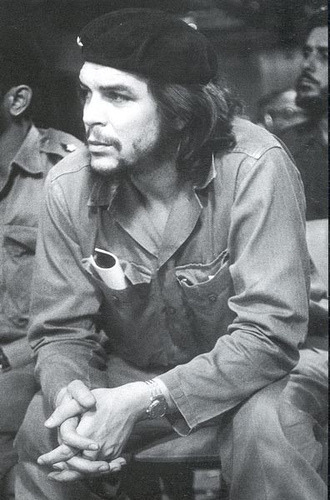
You can look up his life but I prefer to speak of his death .
Look up an extensive chronology of his death here
On Guevara's assassination:On October 9th, 1967, Ernesto "Che" Guevara was put to death by Bolivian soldiers, trained, equipped and guided by U.S. Green Beret and CIA operatives. His execution remains a historic and controversial event; and thirty years later, the circumstances of his guerrilla foray into Bolivia, his capture, killing, and burial are still the subject of intense public interest and discussion around the world.
As part of the thirtieth anniversary of the
death of Che Guevara, the National Security Archive's
Cuba Documentation Project is posting a selection of key CIA,
State Department, and Pentagon documentation relating to
Guevara and
his death. This electronic documents book is compiled from
declassified records obtained by the National Security Archive,
and by authors of two new books on Guevara: Jorge Castañeda's Compañero: The Life and Death of Che
Guevara (Knopf), and Henry Butterfield Ryan's The Fall of Che Guevara
(Oxford
University Press). The selected documents, presented in order of
the events they depict, provide only a partial picture of U.S.
intelligence and military assessments, reports and
extensive operations to track and "destroy" Che Guevara's
guerrillas in Bolivia; thousands of CIA and military records on
Guevara remain classified. But they do offer significant and
valuable information on the high-level U.S. interest in tracking his
revolutionary activities, and U.S. and Bolivian actions leading up
to his death.
http://www.gwu.edu/~nsarchiv/NSAEBB/NSAEBB5/

White House Memorandum, October 11, 1967:
In another daily update, Walt Rostow reports to President Johnson
that "we are 99% sure that 'Che' Guevara is dead."
Rostow believes the decision to execute Guevara "is stupid," but he also
points out his death "shows the soundness of our 'preventive medicine'
assistance to countries facing incipient insurgency--it was
the Bolivian 2nd Ranger Battalion,
trained by our Green Berets from June-September of this year,
that cornered him and got him."

Sunday, October 7, 2012

Twitter, PR & People

How Twitter is Changing Public Relations
The PR industry is changing for
good. Social media networks like Facebook and Twitter have completely
redefined the paradigm of public relations. A couple of years back, it
would have been hard to imagine a micro-blogging service, all of 140
characters messages and that too not landing directly in your Inbox
could be used as an effective means for maintaining public relations.
Social Media vs. Public Relations
It might sound surprising but for a long time, social media was viewed as a competitor to conventional PR techniques. While social media analysts predicted that PR industry is now dead, the latter retaliated by arguing that social media isn’t well suited for public relationships. And then, Twitter happened. As its popularity increased, it reduced the gap between social media and PR industry. And now, with thousands of Twitter’s PR success stories, it is widely viewed as the best PR technique in today’s age of Web 2.0
Is Conventional PR Dead?
Of course not! Twitter is a fascinating way of augmenting your organization’s PR capabilities. It’s not a tool to replace conventional PR techniques. Rather, it helps spread the message to a much wider audience than any other legacy PR mode. You can tweet about a press release or about a new media event for your organization and then see how the news spreads like fire in Tweetverse.
Good Customer Service, Great Public Relations
In order to get good publicity, it is important for an organization to provide good service. Twitter provides an unparallel mode of instant & real-time customer service. Queries can be answered instantaneously and the word spreads faster than wild fire.
Many companies have realized that Twitter is not only a great tool for marketing, it’s also an innovative medium of providing great customer service, thereby leading to a good public reputation and strong public relations.
Brand Monitoring
Twitter is a great place to monitor your brand’s reputation online. You get to know what people are talking about your brand. You can search for people who’d potentially be interested in your brand and reach out to them. Using Twitter’s advanced search functionality and several 3rd party tools, you can determine if your brand is loosing its charm amongst customers and appropriately take corrective action.
Knowledge is Power
The PR industry thrives on knowledge and what better than an easily presentable source of vast knowledge like Twitter. As you follow and interact with more people, you gain more knowledge. Be it peers, competitors or clients, following them on Twitter makes sense as you gain more insights into their opinions.
Twitter is an always online 24 x 7 community with several knowledgeable and thoughtful people, so why not make the best out of it? As a wise man once said, there’s nothing better than learning from the pros.
Bill Gates once said “If I was down to my last dollar, I’d spend it on public relationships”. I’d rather say “If I was down to my last dollar, I’d spend it accessing Twitter to build public relations”
Douglas Idugboe, Digital and New Media Marketing Strategist. Founder and Chief Editor of Smedio! A Canadian Bestselling Author, Marketing Strategist, Speaker and Trainer, Who Loves Technology
Social Media Virality: Why Do People Retweet?
This post is a preview of some of the content in tomorrow's webinar, Virality: How to Catch It, with special guests Jay Baer and Tom Webster. Sign up now!Want to get more retweets? We’ve found the key: Start tweeting about sports.
In a recent study I conducted on the social activity of Argyle's customer base, 21 of our 50 most retweeted accounts were sports-focused. For comparison, no other category had more than three accounts in the top 50. The most retweeted post in Argyle history was from an LA Lakers community site: "Steve Nash, Kobe Bryant, Ron Ron, Pau Gasol and Dwight Howard. That's not a bad starting five." (Hard to disagree.)
Why do accounts that post about sports get such high retweet rates? Should we really all just start tweeting about sports, or are there deeper factors at work?
Before diving into that, let me just take a moment to satisfy the budding statisticians in the audience. I'm defining the "retweet rate" of a given post as the number of retweets it got divided by the number of followers that the account has. So, if an account with 10,000 followers posts something clever and gets 100 retweets, that's a retweet rate of 100 / 10,000, or 1%.
The retweet rate for an account, then, is just the average of the retweet rates of all of its posts. And based on the data we've collected, a "typical" account has a retweet rate of .1%. So for every 1,000 followers the account has, a post receives, on average, about one retweet.
Back to the original question: what's with all these sports-related retweets? To get to the bottom of this question, we have to understand why people retweet.
Why do people retweet a post?
Many community managers make the incorrect assumption that people retweet content because they like said content. This is false. People click links that they think will be interesting. They favorite posts that they find particularly notable. But they retweet content they think will resonate with their followers.A retweet is like retelling someone else’s joke. Sure, you found the joke funny when you heard it the first time. But you're retelling it to someone new because you think they will find it funny.

When someone retweets you, they are telling their followers "Hey! You might like this!" And that begs the question: Who are your followers' followers? And do they care about your content?
Consider Your Followers' Followers
Sometimes there's a natural overlap between your followers and your followers' followers. For instance, if you really love Breaking Bad and you follow @BreakingBad_AMC, it's likely that a healthy number of your followers also watch the show. Therefore, content posted by the community managers running @BreakingBad_AMC have a very receptive group of followers' followers.Now consider that you're the community manager for a company that makes accounting software. Your customers all have one thing in common--they're all accountants. But who follows accountants? (Yes, you're allowed to chuckle at that.) The answer is actually really simple: all kinds of people follow accountants. Their wives, kids, neighbors, friends, coworkers and golf buddies.
Get where I'm going with this? Most of their followers aren't accountants. So if you're the aforementioned accounting software's community manager, tweeting a torrid stream of accounting-related content simply won't get retweeted. You may be incredibly successful at generating clicks and favorites, but retweets will be few and far between.
Use the tried-and-true cocktail party analogy. If you were at a cocktail party and you met an accountant, the last thing he would want to talk about would be work. He'd be worried that your eyes would glaze over and you'd immediately look for a way out of the conversation. In social media, the unfollow button is incredibly close at hand at all times, so that accountant is much more likely to start a conversation about Breaking Bad, both in real life and on Twitter.
(@BreakingBad_AMC isn't an Argyle customer, so I can't run an easy report on their all-time retweet rate. But after eyeballing some of their most recent posts they're getting a retweet rate five to ten times higher than an "average" account. Hardly surprising.)
So what do I do if I sell B2B accounting software?
Many community managers will be in a similar predicament as the aforementioned accounting software community manager. So what do you do if your followers' followers don't care about your content? Some suggestions:- Identify commonalities in your followers' followers. Many of Argyle's followers' followers are 25-40 years old, putting them solidly in the group of people who remember the 90s fondly. On a recent Friday, we created a campaign around the hashtag #90sSentence asking people what their favorite 90s-themed sentence was. These posts got a ton of retweets.
- Participate in targeted hashtag conversations. The goal of a retweet is to amplify your message, but it's not the only way to achieve this. If you regularly participate in a targeted community formed around a hashtag, your message will be seen by exactly the people you care about. Amplification achieved.
- Optimize for different metrics. While retweets are a powerful tool for some brands, it's totally valid for you to optimize your efforts for metrics such as mentions, favorites and clicks while discarding retweets as an important KPI. There's nothing wrong with admitting you're not the LA Lakers.
Subscribe to:
Posts (Atom)